




Why Exclusive Courts for International Financial Centers are necessary in Vietnam?
In Vietnam, while the legal frameworks for investment, finance, banking gradually become more open, the dispute resolution mechanism still primarily rely on the tradition means of civil litigation. This leads to an obvious issue: financial, commercial, and investment disputes that involve great value, high complexity, and foreign elements are to be resolved in a procedural manner similar to that of common civil cases.
Observation from practices show that a financial center could only function effectively if there exist prompt, thorough, and reliable mechanisms for dispute resolution. The legal risks posed by the absence of an appropriate judicial mechanism toward investors could hardly be compensated by any policy or infrastructure incentive.
In response to such demand, the National Assembly promulgated the Law on Exclusive Courts in International Financial Center No. 150/2025/QH15, which takes effect as of 01/01/2026 (hereafter referred to as the “Law on Exclusive Court 2025”). Instead of making amendment to the current laws, the legislators have opted to draft an entirely separate statute to establish an appropriate adjudication system for the international financial activities.
The Law on Exclusive Court 2025 learns from the international experience while also make appropriate adjustments to adapt to the circumstances in Vietnam. This adjudication system does not strictly follow the domestic litigation procedures, and instead adopt a more flexible approach that enhance specialization and performance.
The most important thing about this statute is the change in the legislation mindset. The laws are no longer drafted following a general principle for the entire system, instead, it is recognized that special economic models require separate judicial mechanisms. Therefore, the establishment of Exclusive Courts in International Financial Centers (“Exclusive Courts”) is not only a technical improvement, but also a necessary step to ensure stable and reliable operation of International Financial Centers (IFC)
For more information, please click here to visit the Article “International Financial Center in Vietnam – Opportunity or Challenge?”
Legal position and organizational structure of Exclusive Courts in International Financial Centers within the Court system of Vietnam
Legal position of Exclusive Courts
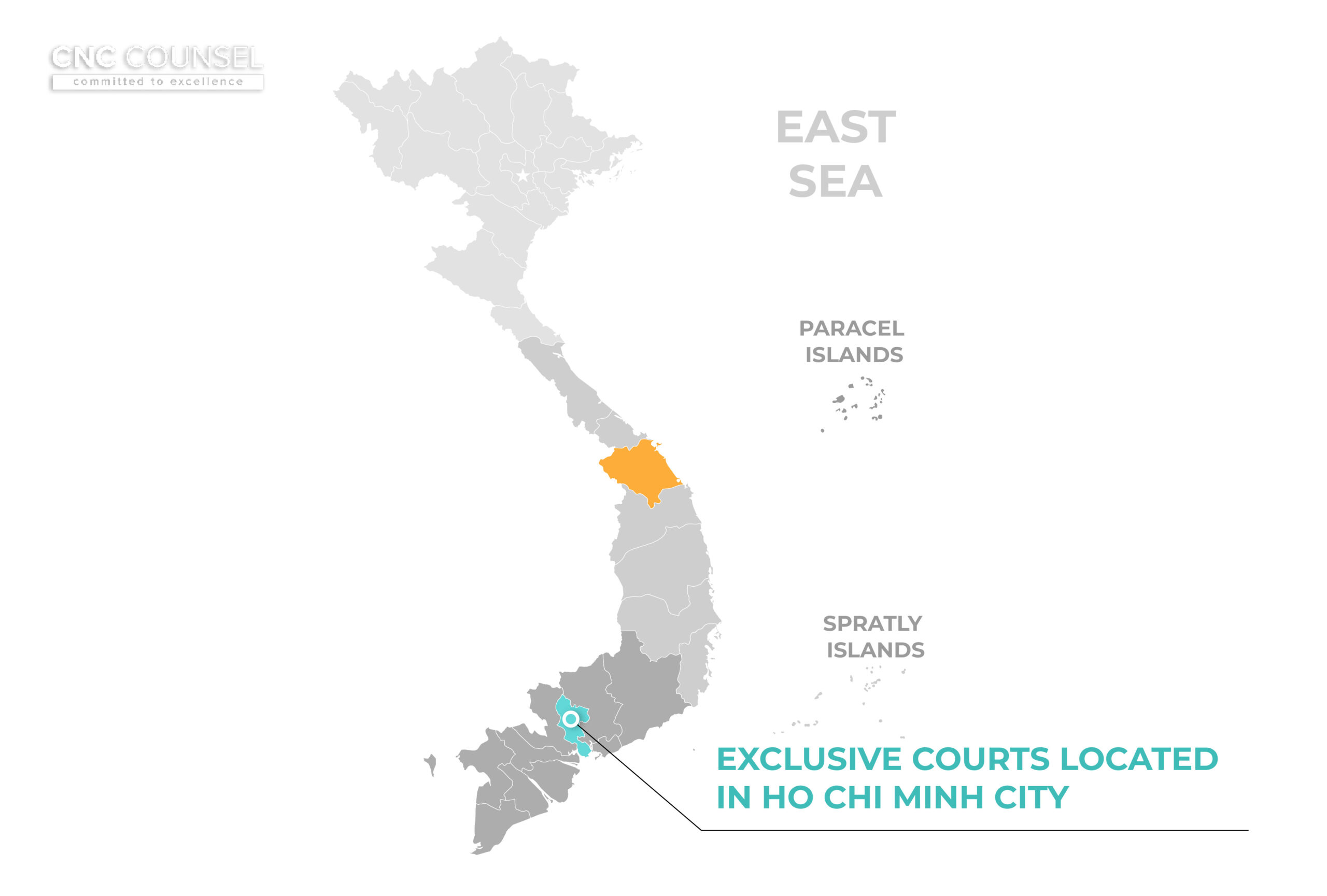
According to Resolution No 222/2025/QH15, the National Assembly decides to establish International Financial Center at two location: Ho Chi Minh City and Da Nang City. Among which, Ho Chi Minh City is planned to become the primary financial center that focus on the capital market, investment bank, and financial technology; while the one located in Da Nang City is planned to serve as a center for innovation, testing of digital financial model, regulatory sandbox, and green finance.
Based on this plan, Law on Exclusive Courts 2025 specifies that Exclusive Courts in International Financial Centers shall be located in Ho Chi Minh City. This selection stems from the status of Ho Chi Minh as the hub for financial and investment activities as well as transactions that involve foreign elements, while also possessing the appropriate judicial human resources and experience to ensure the effective and stable operation of the Court.
Under the Law on Exclusive Court 2025, Exclusive Courts are designed neither as a “subsidiary” of provincial People’s Court nor a specialized court in a traditional sense (e.g. Economic Courts or Financial Courts). Such deliberate separation from familiar identification methods is not solely for technical purposes but also an indication of the legislation intention: separate Exclusive Courts from the normal logic of territory-based organization and tier-based organization.
In nature, this is an exclusive adjudication system that was organized with close connection to International Financial Centers. Accordingly, the jurisdiction is established based on neither the residence of the involved parties nor origin location of the dispute, but the nature of the transaction and the choice of the parties. This approach show that the Exclusive Court is more akin to that of international commercial court rather than an expansion of the local court system[1]
However, this “exclusivity” brings up several fundamental legal issues. First of all, the relations between the Exclusive Court and the Supreme People’s Court should be clearly established to ensure the uniformity of the adjudication system, while also ensuring the flexibility required by the IFC model. Secondly, the jurisdiction boundary of the current courts must be clearly defined so that conflict of jurisdiction or the risks of “inflexible interpretation” could be mitigated
Organizational Structure
According to the Law on Exclusive Court 2025, the organizational structure of Exclusive Court include:
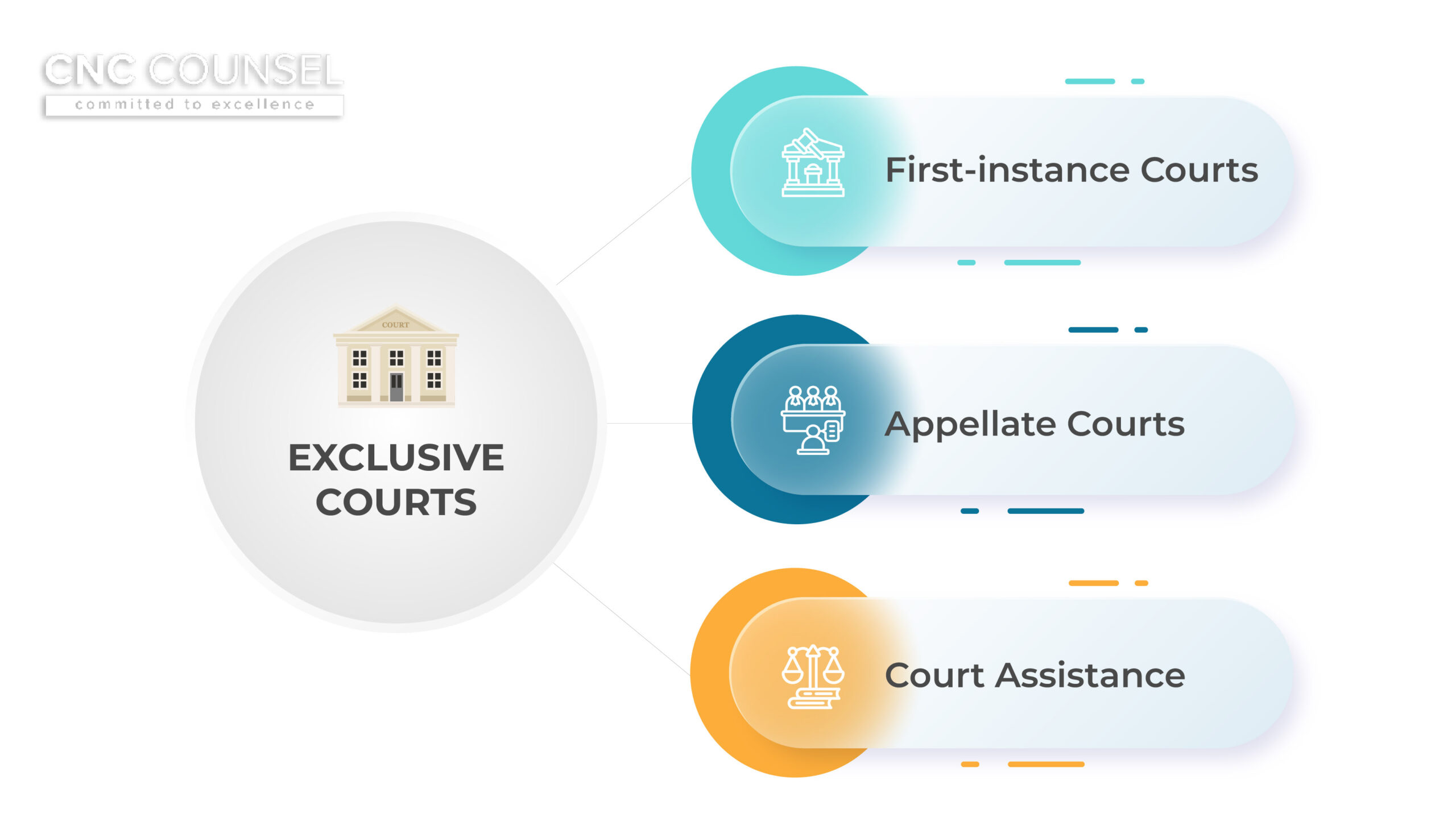
Within an Exclusive Court, there are Chief Justice, Deputy Chief Justice, Chief Judge, Deputy Chief Judge, Judges, Court clerk, as well as other staffs and employees in accordance with the laws.
Evidently, in terms of the organizational structure, the Exclusive Court remains within the general framework of the People’s Court system, thus ensuring the constitutionality and legality. However, the combination between the familiar organizational structure and a unique adjudication system also indicates that legal position of the Exclusive Court is a question of balance, aiming to both preserve the uniformity of the Vietnam’s judicial system and ensure certain “distinctiveness” so that the Law on Specialized Court 2025 could be separated from the traditional means of litigation.
Applicable laws for dispute resolution in the International Financial Center
Besides the establishment the Exclusive Court in an independent manner, applicable laws for dispute resolution at Exclusive Court also plays an important role. This is the core factor that determine whether the Exclusive Court model could escape from the traditional system of adjudication to reach the standards of international commercial courts or just simply stop at being a variation of the current system[2]
Procedural laws: separation from the traditional procedural norms
For such an approach, an obvious issue that should be addressed is whether the Civil Procedure Code could be applied to disputes in International Financial Center. If the answer is “yes”, there exists high possibility of being reverted back to the familiar litigation logic of traditional courts, from the procedures to the paces and methods for litigation.
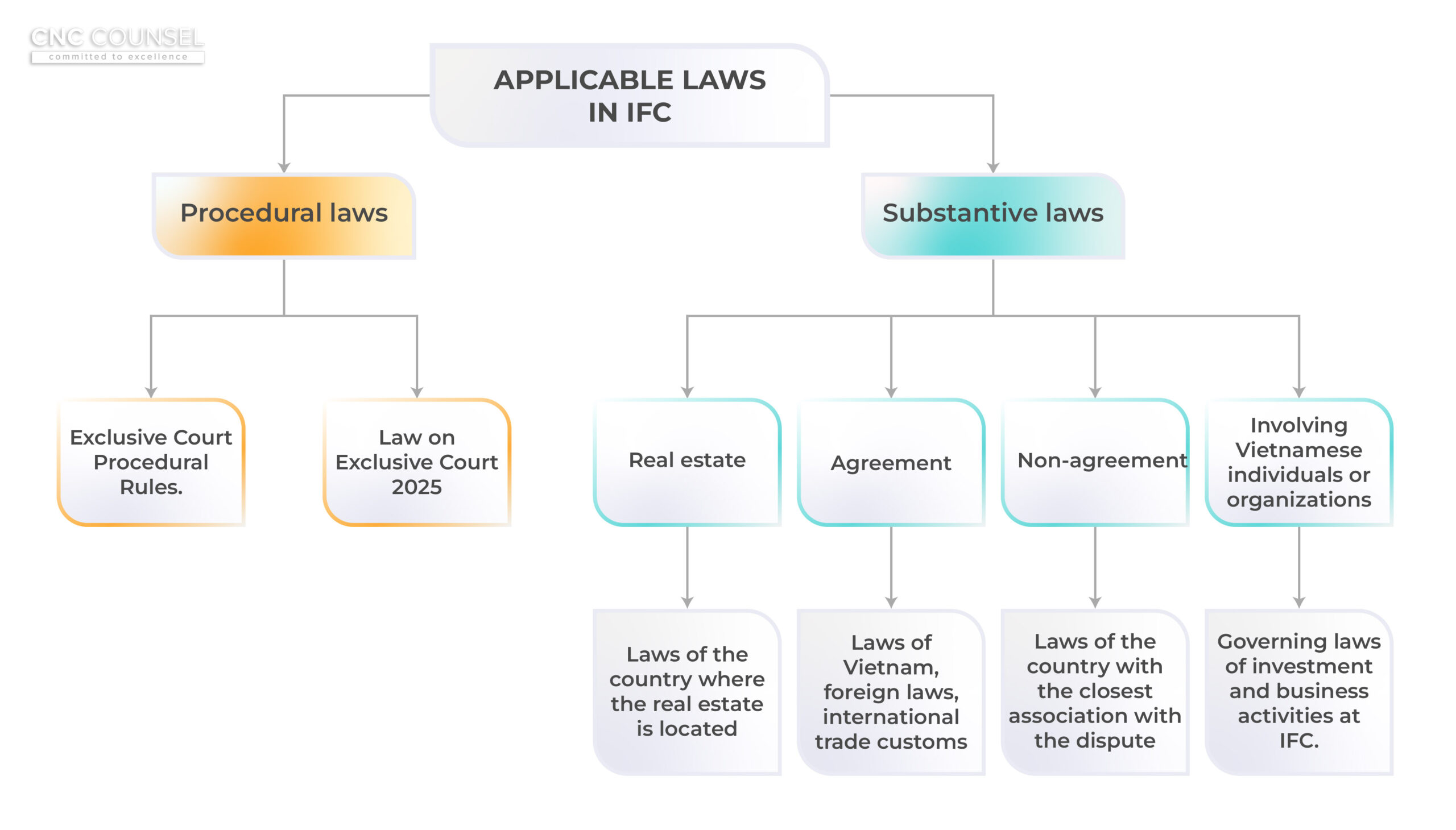
With regard to this matter, the Law on Exclusive Court 2025 has proactively carved its own path. Accordingly, instead of the Civil Procedure Code, the procedural law applicable to dispute resolution at Exclusive Court shall be the Law on Exclusive Court 2025 and the Exclusive Court Procedural Rules issued by the Supreme People’s Court[3].
This approach show that legislators are fully aware of the appeals of an International Financial Center lays not only in the applicable laws, but also the “litigation experience” that involved parties would have. Therefore, the separation from the traditional procedural norms is not only a strategic move, but also a declaration of the Exclusive Court’s policies for adjudication guidance.
Substantive laws: prioritization of the selection by parties, albeit certain limitations
Together with the procedural changes, the Law on Exclusive Court also introduces a mechanism for substantive law selection, which is a clear indication of openness. For transactions in which one of the participating parties is a foreign individual or organization, the Law on Exclusive Court allows the parties to select applicable laws, which include the Laws of Vietnam, foreign laws, or international trade customs.
In the event there exists no agreement, or the agreement fails to determine the applicable law, the law of the country with the closest association with the dispute shall be selected as the default option. This mechanism fully reflects the respect for freedom of choice, which is a fundamental principle of international trade laws.
However, do note that the openness is not absolute. For disputes related to ownerships and other rights to real estate, real estate leasing, utilization of real estate as collateral, the laws of the country where the real estate shall be applied regardless of the agreements made by the parties. This is because real estates are connected to factors associated with the lands and sovereignty of a nation. Therefore, it is only appropriate that the determination of the ownership or other rights to real estates, etc in a country (e.g. Vietnam) would be regulated by the laws of that country.
Notably, in the events that parties to the transaction are all Vietnamese, whether individuals or organizations, Law on Exclusive Court provides guidance for the determination of applicable laws for investment and business activities in International Financial Center. These provisions help forming an “internal legal sphere” in International Financial Centers, where the exclusive legal standards could be operated in a consistent manner, instead of being segregated by general rules that were established for the domestic economic.
Overall, the applicable laws in Exclusive Court have expanded the selection on laws in order to meet the expectations of international parties, while also maintaining foundational limitation to ensure social order and public interests of Vietnam. This balance, when operated in a consistent manner, would decide the extent of the “actual internationalization” of the Courts in International Financial Center model.
Jurisdiction: Flexible Jurisdiction
Aside from the applicable, the jurisdiction of Exclusive Court is also established to be separated from the jurisdiction of normal courts. That being the case, this present the question of which dispute and to what extent does Exclusive Court’s jurisdiction cover? Article 13 of the Law on Exclusive Court 2015 adopts a careful yet transparent approach to the jurisdiction over disputes in International Financial Center.
Disputes within Jurisdiction
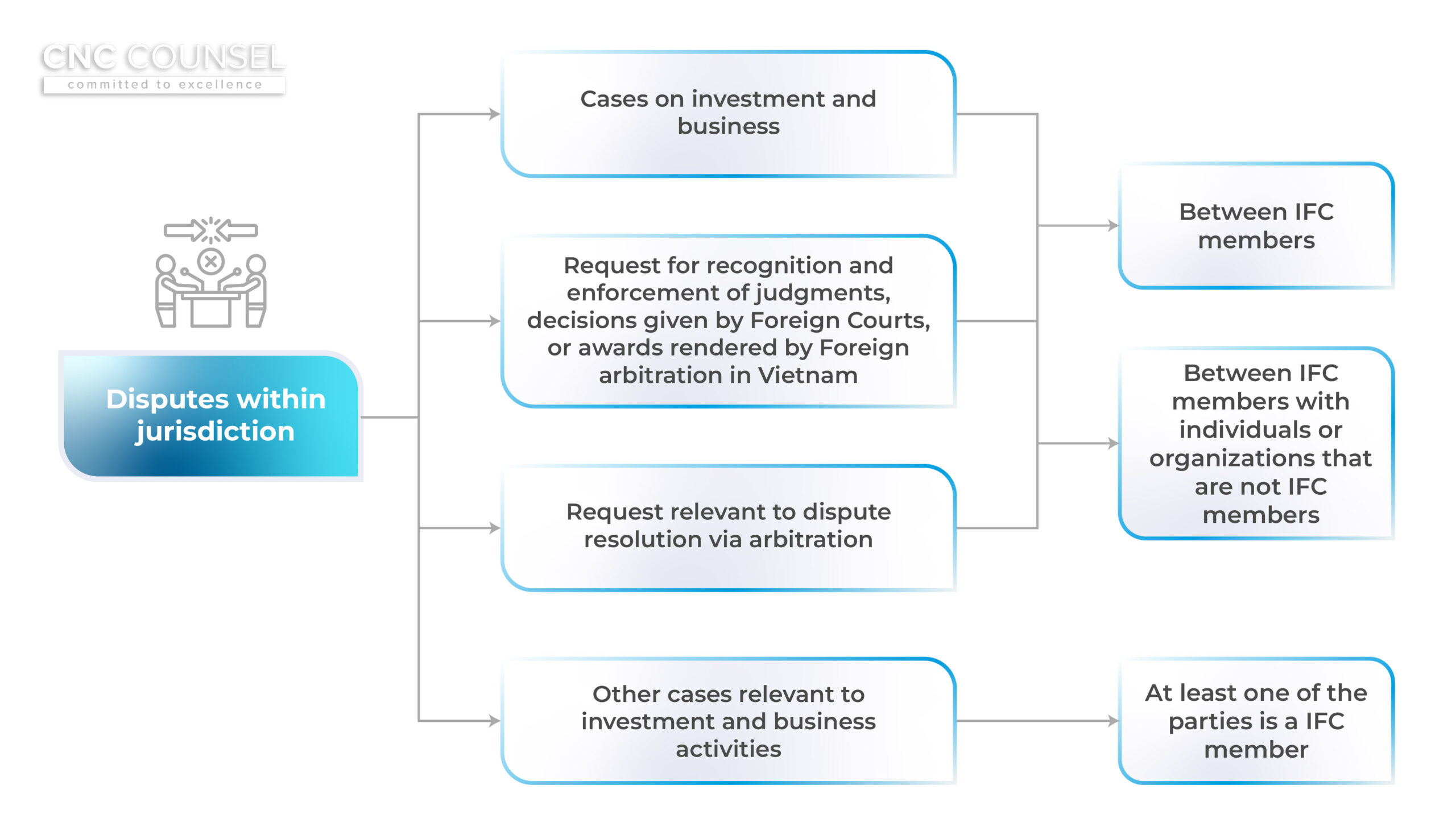
Pursuant to Article 13 of the Law on Exclusive Court, the Exclusive Court has jurisdiction over cases on investment and business matters that occur among International Financial Center members, or between International Financial Center and other non-member individuals and organizations. As such, a case shall only fall under the jurisdiction of Exclusive Court if at least one of the involved parties is a IFC member, this is the core factor for the establishment of ground for jurisdiction, which is a different approach from that of traditional civil litigation where geographical location or nationalities of the involved parties are deciding factors.
While the Exclusive Court has a rather expansive jurisdiction over cases on investment and businesses in IFC or involving IFC members, this jurisdiction does not cover cases related to civil and labor matters, even if one of the involved parties is a IFC member. Consequently, the jurisdiction over these cases belong to traditional Courts, namely the Regional Court in the Court System. This practice raises the question of: whether the current scope of jurisdiction is truly optimal and appropriate to the demand for dispute resolution within the legal sphere of the International Financial Center.
Aside from cases on investment and businesses, the Exclusive Court also has jurisdiction over requests for recognition and enforcement of judgments, decisions of foreign Courts and foreign arbitral awards, as long as the concerned dispute is related to the parties of IFC. Furthermore, the Exclusive Court also has jurisdiction over arbitration-related requests, as well as other cases related to investment and business activities in International Financial Centers under the instructions of the Supreme People’s Court.
Additionally, the Law on Exclusive Court has exclude cases related to public and state interests from the jurisdiction scope of the Exclusive Court. This exclusion is entirely reasonable because disputes associating with public and national interests are often directly related to the public policies, management of public properties, state budget, security, social order, or the exercise of state powers. These are fundamental issues of a nation’s sovereignty that requires the traditional adjudication system and strict control of the state instead of the new model that opts for flexibility and selection of the parties.
Mechanism for the Establishment and Division of Jurisdiction
With regard to the judicial process, the Law on Exclusive Court has fully established the two-tiered judicial system within the Exclusive Court. Accordingly, the First instance Court of the Exclusive Court shall have jurisdiction over cases to be resolved via first instance procedures, while the Appellate Court of the Exclusive Court shall have jurisdiction over cases whose judgments or decisions are appealed. This mechanism ensures the principle of two-tiers adjudication, while also avoiding the “disruption” of jurisdiction when IFC cases are handed over to the traditional courts.
Regarding the conflict of jurisdiction between the Exclusive Court and the People’s Court, the law has opted for a centralized solution. Accordingly, the Chief Justice of the Exclusive Court shall decide whether a case is under the jurisdiction of the Exclusive Court and the Supreme People’s Court shall be the final adjudication body in the event of appeals.
Overall, the adjudication jurisdiction of the IFC Court indicates a notable shift in the legislation mindset of the legislators: jurisdiction shall no longer be decided solely by geographical location, but also the identity of the parties and the nature of the investment and business activities in IFC. However, this shift is under control through limitations with regard to cases involving public interest and the supervision an inspection by the Supreme People’s Court.
Litigation language: Advantage of foreign investors
Law on Exclusive Court 2025 allows the use of English throughout the litigation process at the IFC Court, which include documents, evidence, trials and judgments/decisions (Either in bilingual formats or in English)[4]. This is a fundamental change since language is not only a tool for communication, but also a prerequisite for investors to approach and directly participate in the litigation process.
Practically speaking, this mechanism significantly reduces the cost and time to be expended on translation, as well as the risks of “lost in translation” in complex financial disputes, while also helps increasing the transparency factor for the parties involved, especially if they are foreign investors. Were such provisions absent, the Exclusive Court would hardly function as an international adjudication body despite being referred to as “financial center”.
Judges and staffs: Quality over quantity
One of the deciding factors for the success of the IFC Courts lays not only in the organization structure, but also the person directly responsible for the adjudication. Fully aware of this factor, the Law on Exclusive Court 2025 adopts an approach that focus on the standards and qualities of personnel instead of the number of judges.
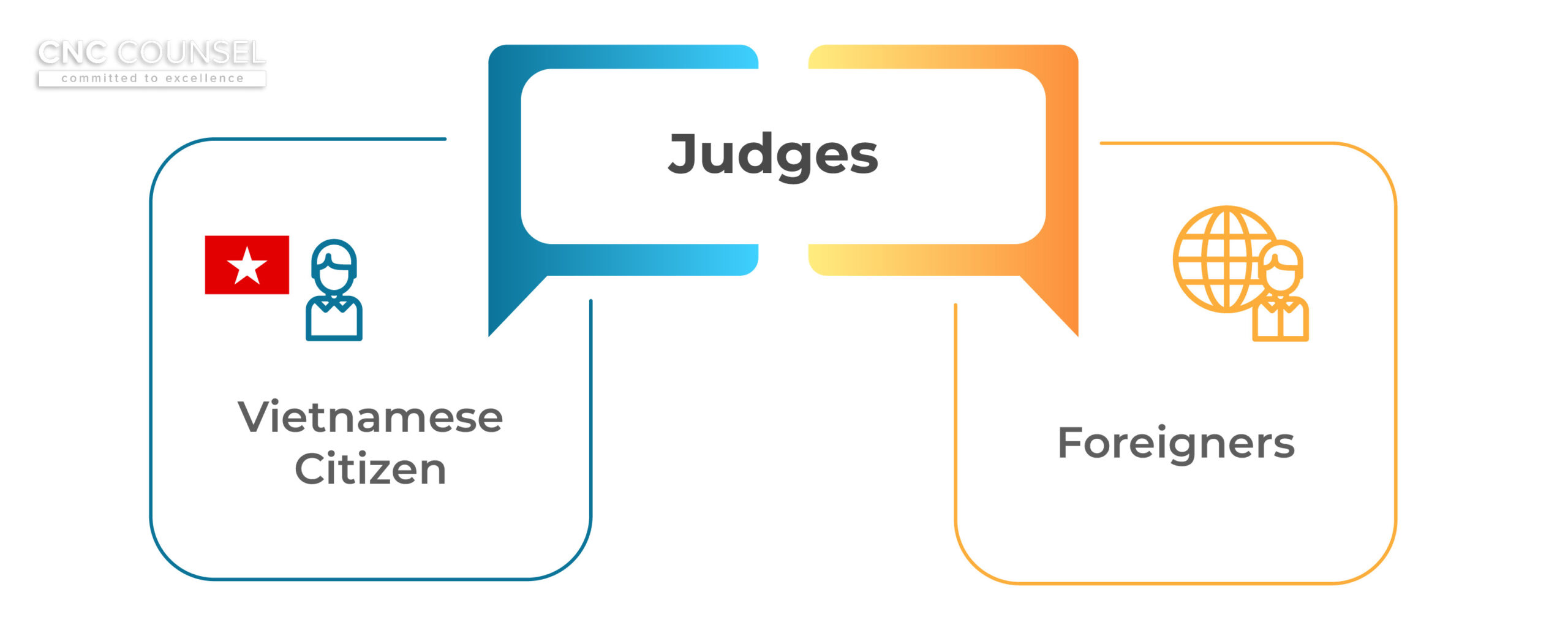
Pursuant to Article 10 of Law on Exclusive Court 2025, the requirements for Vietnamese citizen to become a judge in the Exclusive Court not only include the years of adjudication experience in general, but also put great emphasis on ability to resolve complex international financial – commercial disputes. These requirements cover the ability to approach modern transactions, knowledge of international practice, and foreign language proficiency sufficient to engage with documents and debates in English. Within the context of disputes in the IFC, which often involve layered contracts, complex financial products, and international legal standards, these requirements are not established solely for formality, but are considered minimum standards to ensure the quality of judgments/decisions.
Particularly, aside from Vietnamese citizen, foreigners are also eligible for the position of the judge of the Exclusive Court. This is the first time that the laws of Vietnam have official recognized the appointment of foreign judges in the court system, demonstrating the progressiveness and uniqueness of the Exclusive Court model in comparison to the model adopted by the current Law on People’s Court Organization. However, the selection of foreign judges is subject to strict regulations and requirements on credibility, ethical quality, expertise, knowledge over laws on investments – businesses, seniority in the profession, capability, and health. This regulation both satisfies the requirements for resolution of international investment-business disputes and ensure the credentials of the person directly responsible for the adjudication.
Aside from the expertise standards, the Law on Exclusive Court 2025 also introduces a unique personnel mechanism that allows the appointment and assignment of judges to be made based on the expertise requirements of each case instead of purely administrative assignment[5].
Notwithstanding the above, the policy of “quality over quantity” also presents considerable challenges during the implementation. The establishment of an elite legal team requires not only well-defined standards, but also appropriate mechanisms for training, remuneration, and independence assurance. Otherwise, the risk of “personnel could not keep up with the progression of the laws” could become inevitable. Therefore, the implementation of the Law on Exclusive Court 2025 could only be truly effective when personnel-related regulations are carried out consistently and in line with the spirit intended by the legislators.
Litigation procedures: Flexible, comprehensive, and efficiency-oriented
One of the key pillars that gives the IFC Court its distinctive character lies in the procedural mechanism. Instead of the rigid application of the Civil Code, the Law on Exclusive Court 2025 establishes a separate procedural framework, operated on the basis of this Law and procedural rules issued by the Supreme People’s Court. This approach reflects that the objective is not merely to “go through all procedural steps,” but to resolve disputes efficiently and in a timely manner.
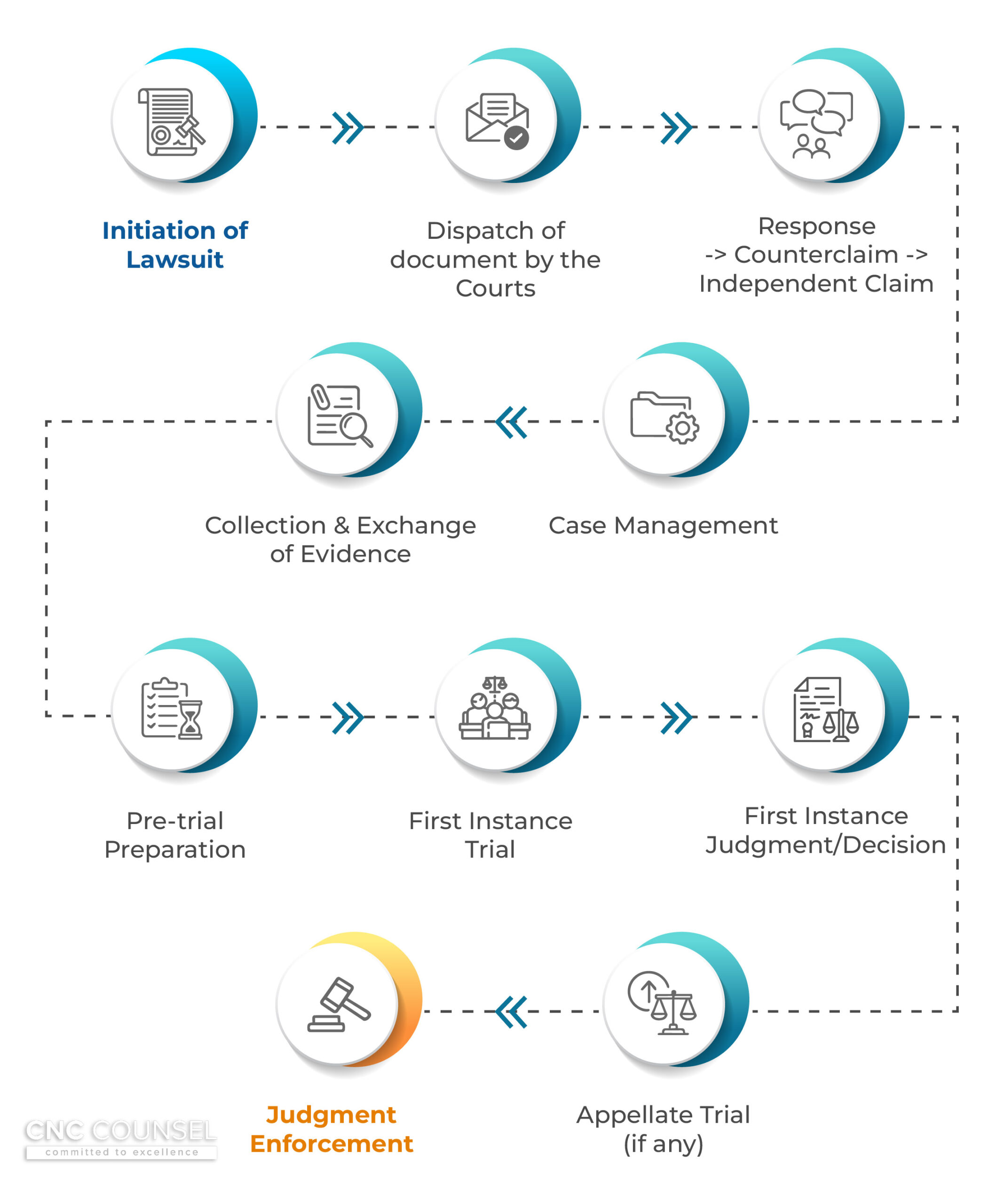
Regarding the general procedures, the litigation proceeding shall be started upon the dispatch of the petition by the Court after having deemed that all the requirements under the Procedural Rules have been satisfied. During the initial phase, the laws allow the defendant to file a counterclaim or third parties to file independent claim, thereby ensuring the comprehensive resolution of all legal relation arising out of a transaction or a chain of transaction.
On the notable points of the dispute resolution procedures in IFC, the first thing should be mentioned is the case management conference hosted by the Judge. Through the conference, the Judge shall proactively determine the scope of the dispute, plan for evidence exchange, the possibility of amicable resolution and mediation, the proceeding schedule. This helps the Court to pre-emptively mitigate the risks of prolonged proceedings.
The second notable point of the Exclusive Court model is that the judgment enforcement shall be also directly handled by the Exclusive Court. In the traditional civil judgment enforcement procedures, the enforcement of court’s judgment would be handled by an independent enforcement agency, which runs the risks of delay and disruption during the implementation. To remedy this flaw, the Exclusive Court 2025 establishes a closed-loop process from adjudication to enforcement, thereby ensuring the continuity, promptness, and effectiveness of the enforcement of judgments/decisions.
Immediately after the judgments/decisions take effect, the Exclusive Court shall have the power to issue decision and make arrangement for enforcement, while also directly apply necessary securing and/or coercive measures. This design significantly shortens the gap between the judgment/decision and its actual enforcement, thereby enhancing predictability and the effectiveness in the protection of rights, particularly in high-value financial and commercial disputes that demand a high degree of promptness.
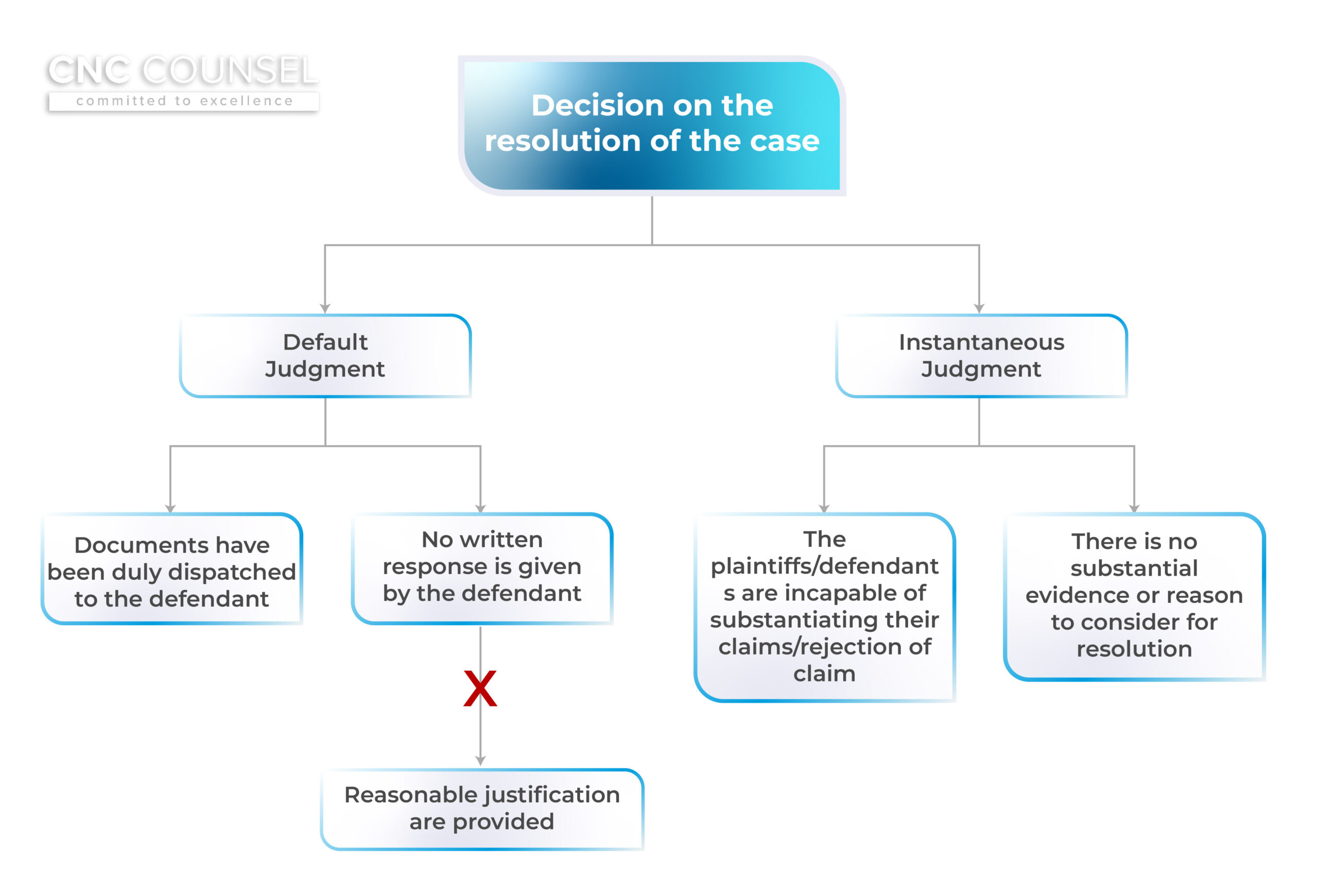
Another notable points of the dispute resolution procedures in IFC lies in the method by which the Court issues and manages the decisions/judgments. The Law on Exclusive Court 2025 grants judges a high degree of proactivity in the determination of the procedural process, as well as the time and method of the decision issuance so that it would align with the nature of the dispute. Through mechanisms such as default judgments in cases where a party fails to give a valid respond, as well as instantaneous judgments where no issues remain to be adjudicated at the trial, the specialized court can resolve cases quickly, efficiently, and at lower procedural cost for the parties
To sum up, the dispute resolution procedures at the Exclusive Court is designed as a hybrid between litigation and arbitral proceedings. While it retains the fundamental nature of litigation, it also incorporates key advantages of arbitration—such as flexibility, specialization, and the ability to meet the demands of complex financial disputes, thereby creating a more effective dispute resolution mechanism compared to the traditional model.
Relation with Arbitration and Mediation: Supportive, not Competitive
IFC allows the member to select the methods of dispute resolution, which include: Foreign Arbitration, International Arbitration, International Arbitration Center under the International Financial Center, Vietnamese Arbitration, Foreign Courts, and Vietnamese Court.[6] The promulgation of the Law on Exclusive Court 2025 does not position the IFC Court as a replacement for, or a competitor to, commercial arbitration and mediation. On the contrary, the exclusive court is designed as a complementary component within the dispute resolution ecosystem, particularly for complex financial and commercial transactions with international elements.
The vital role of the Exclusive Court is demonstrated in its ability to facilitate arbitration activities, including the application of interim relief, collection of evidence, as well as matters pertaining to the recognition, setting aside, or enforcement of arbitral awards in accordance with the law. Concurrently, the Exclusive Court is also an appropriate choice for disputes that could not be resolved or are not facilitated to be resolved by arbitration, where parties would require state judicial power to ensure effective enforcement.
Notably, the Law on Exclusive Court 2025 avoids the “Courts control arbitration” approach that is often a matter of great concern to foreign investors. Instead, the new model favors mutual support, which encourage courts and arbitration to coexist, assist one another, and serve the shared objective of ensuring the effective operation of the International Financial Center.
Validity and Enforcement of judgments and decisions: A closed circle
Pursuant to the Law on Exclusive Court 2025, the judgments and decisions of the IFC Court shall have the same legal validity and enforceability as that of Vietnamese Courts. This provision both affirms the legal position of the Exclusive Court within the state judicial system and ensures the legality and constitutionality of the rendered judgments and decisions.
Remarkably, aside from establishing the legality of judgments and decisions, the Law also set up a centralized enforcement mechanism to be implemented by the Exclusive Court. Through the empowering of the Exclusive Court to issue enforcement decisions and organize their implementation, together with a detailed system of securing and coercive measures, it is clearly reflected that the legislators intend to shorten the duration between judgments/decisions and their actual enforcement, particularly in high-value financial and commercial disputes that demand a high degree of promptness.
From the practical perspective, for investors and entities who partake in international transactions, the effectiveness and enforceability of the judgments and decisions are core factors that determine the reliability of a dispute resolution mechanism. The Law on Exclusive Court 2025 establishes a unified and closed-loop system for adjudication and enforcement, thereby creating an important foundation for judgments and decisions of the Exclusive Court to be regarded as an effective tool for protecting rights and interests.
In other words, the validity and enforcement of judgments and decisions are not only the final phase of the proceeding, but also a practical measurement of the success of the IFC Court model. Once the judgments and decisions are enforced rigorously, timely and consistently, Exclusive Court shall, in addition to the plethora of incentive policies, serve as another vital element that incentivizes both domestic and foreign investors to become IFC members.
Legal loophole and legal risks during implementation
Although the Law on Exclusive Court 2025 has been officially promulgated and given full effects, certain issues could only be evaluated through practical application.
The first issue is the defining and application of jurisdictional boundaries between the IFC Courts and the local courts. Although the Law has established a fairly clear framework of jurisdiction, risks of overlap or divergent interpretations may still emerge in the early stages of implementation, particularly in disputes involving complex parties and legal relations.
The second is the issue of “progressive laws but conservative implementation”, which is frequently encountered by legislation changes. Open provisions on jurisdiction, procedural language, or flexible procedures are only effective if they are applied consistently by judges and relevant authorities.
In addition, questions regarding actual personnel, the mechanism for developing precedents, and consistency in adjudication remain uncertainties that may directly affect the credibility of the Exclusive Court in its initial stage of operation.
Practical perspective for enterprises and investors
From the viewpoint of enterprises and investors, Exclusive Court has opened up a new choice for dispute resolution, but that choice isn’t by default in all circumstances. The decision to choose Exclusive Court or arbitration shall be considered based on the nature of the transaction, the demand for enforcement, and the degree of control over the procedures of each case.
In comparison to arbitration, the Exclusive has the advantages of state judicial power and the ability to support enforcement through coercive measures while still maintaining a higher degree of flexibility than traditional courts. Compared to the current Vietnamese court system, the Exclusive Court ourt differs in its use of language, procedures, and modern adjudicative mindset, making it more suitable for disputes on investments and businesses within the IFC.
To optimally utilize this mechanism, enterprises should proactively make preparations from the contract negotiation phase, which covers the selection of appropriate Courts, coherent dispute resolution strategy, and a team of lawyers who are adept at both domestic laws and international practice.
Managed by
 |
Tran Thi Hanh Nhan | Associate
Phone: (84) 32 703 0033 Email: nhan.tran@cnccounsel.com |
 |
Nguyen Le Anh Thu | Legal Assistance
Phone: (84) 28 6276-9900 Email: thu.nguyen@cnccounsel.com |
Contact
For more information, please contact:
CNC Vietnam Law Firm Co., Ltd:
Address: 2A1 Nguyen Thi Minh Khai, Sai Gon Ward, Ho Chi Minh City
Phone: 028 6276 9900
Hotline: 0916 545 618
Email: contact@cnccounsel.com
Website: cnccounsel
We would be pleased if you could visit the office of CNC, where you could exchange with the most suitable Lawyers for your specific circumstances. However, if you could not make the time for direct meeting, please feel free to contact us via the email: contact@cnccounsel.com or call (+84-28) 6276 9900
Disclaimers:
This article is prepared or used for the purposes of introducing or updating the clients on the issues and/or developments of the legal perspectives in Vietnam. The information contained in this article shall not constitute an advice of any kind, and could be subject to change without prior notice.
————————————————————————–
[1] Weixia Gu, Jacky Tam, The Global Rise of International Commercial Courts: Typology and Power Dynamics,
https://cjil.uchicago.edu/print-archive/global-rise-international-commercial-courts-typology-and-power-dynamics], accessed on 28/01/2026.
[2] Man Yip, Giesela Rühl, New International Commercial Courts: A Comparative Analysis – and a Tentative Look at Their Success, [https://blogs.law.ox.ac.uk/oblb/blog-post/2024/06/new-international-commercial-courts-comparative-analysis-and-tentative-look], accessed on 28/01/2026.
[3] Article 4.2 and Article 6, Law on Exclusive Court 2025
[4] Article 14, Law on Exclusive Court 2025
[5] Article 10.5, Law on Exclusive Court 2025
[6] Article 30.2, Resolution No. 222/2025/QH15