




FIDIC EPC Contracts in Wind Power Projects
FIDIC EPC Contracts have become an increasingly common contractual framework for wind power projects and renewable energy developments in Vietnam and across the region. From CNC’s practical experience, however, the key legal risks in wind projects do not arise from the choice of a FIDIC EPC Contract itself, but from how FIDIC EPC Contracts are applied and operated in real project situations, particularly where engineering decisions, contractual procedures, and commercial objectives such as COD intersect.
Against this background, CNC partnered with IPCEC to deliver the training programme “Applying FIDIC EPC Contracts in Wind Power Projects”, held over two days (30–31 January 2026) in Hanoi, with 48 participants in attendance. The programme was delivered by Mr. Le The Hung and Mr. Tran Pham Hoang Tung.
As an EPC contractor with extensive experience in wind power and renewable energy projects, IPC has accumulated significant hands-on exposure to the practical application of FIDIC EPC Contracts. Accordingly, instead of adopting CNC’s conventional training structure (approximately 70% systematic contract theory and 30% exercises), IPC proposed a case-based methodology, using actual EPC wind projects that are currently under implementation.
With more than a decade of experience in delivering advanced FIDIC-focused training, CNC accepted this proposal and viewed it as an opportunity for CNC’s lawyers, IPC’s legal team, and other participants to engage directly, exchange perspectives, and identify legal issues from multiple angles – ultimately determining which approaches are effective and which require refinement when operating FIDIC EPC Contracts in practice.
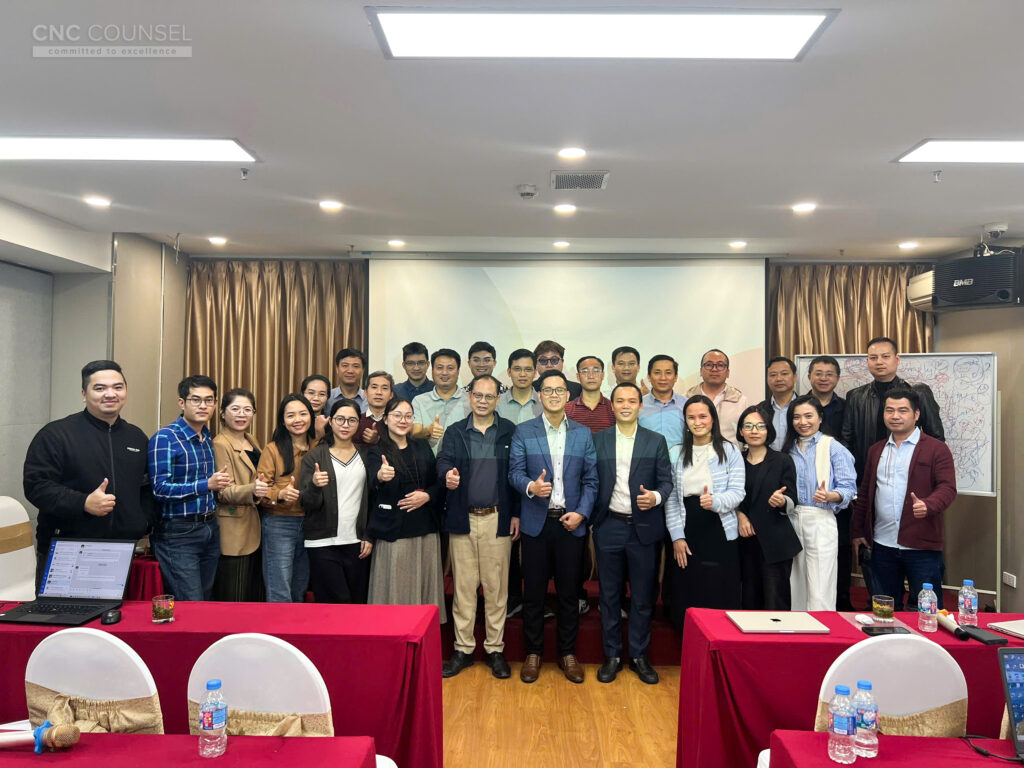
Group photo – Day 1 of the “Applying the FIDIC EPC Contract” training programme.
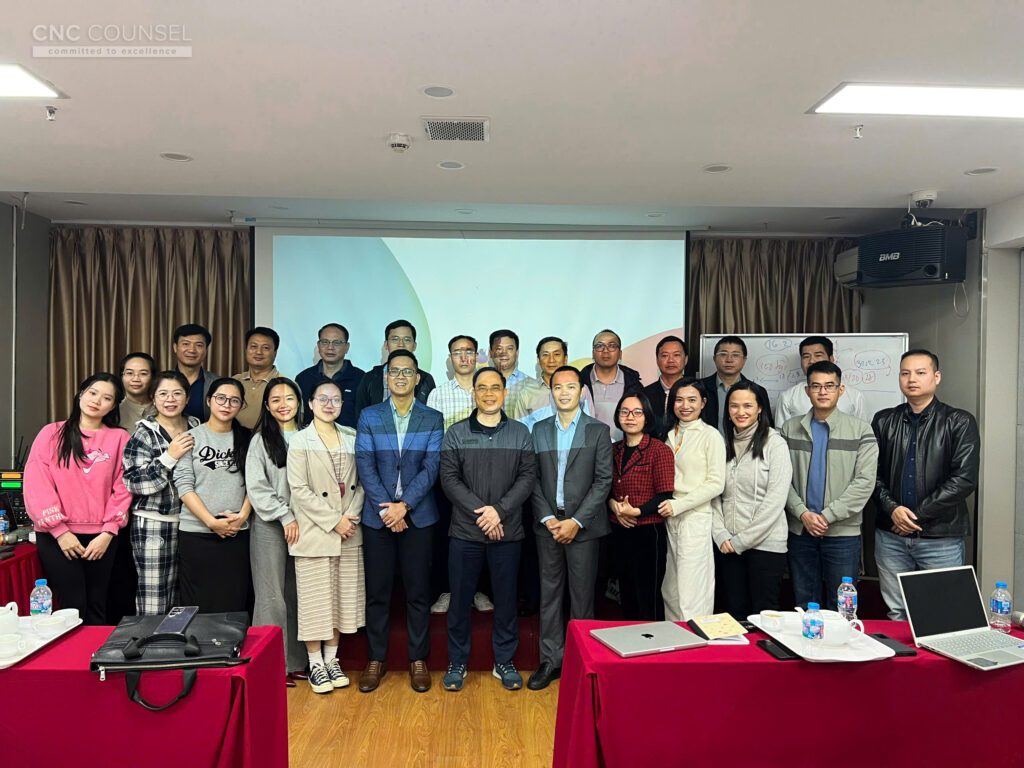
Group photo – Day 2 of the “Applying the FIDIC EPC Contract” training programme.
Applying FIDIC EPC Contracts through Case-Based Learning
The programme was designed around a consistent principle: FIDIC EPC Contracts cannot be understood effectively by reading clauses alone; they must be “operated” through real project scenarios.
Over the two-day training, participants worked with two major wind power projects implemented by IPC:
All discussions focused on the application of FIDIC EPC Contracts (2017 Edition), the structure of contract documentation, and legal issues that have arisen, are arising, or are likely to arise throughout the lifecycle of wind power projects.
To ensure objective and multi-dimensional analysis, participants were divided into two opposing roles: Employer and EPC Contractor. Each issue was assessed through the lens of rights, obligations, risk allocation, and legal strategy, rather than from a single narrative.
CNC further enhanced realism by assigning roles strategically: personnel directly involved in project execution, primarily site management teams with strong operational knowledge but limited formal legal training – were assigned the Employer role. Conversely, personnel from Contract and Legal departments were assigned the Contractor role.
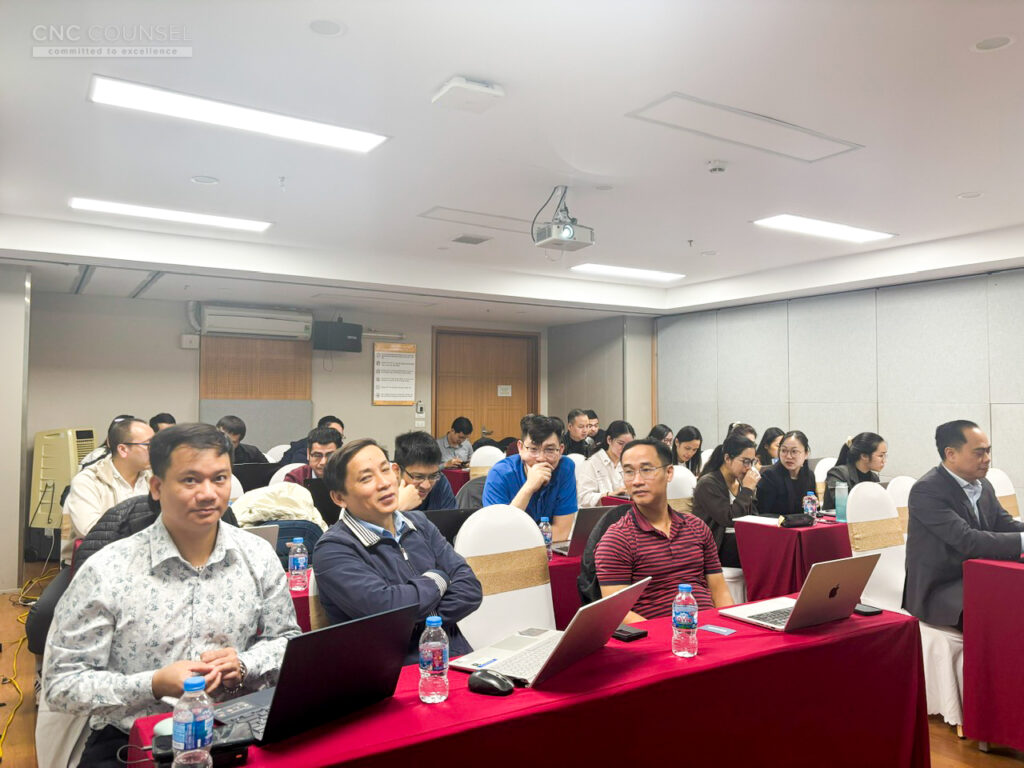
Classroom view of the “Applying the FIDIC EPC Contract” programme before the exercise session.
This structure created a productive tension. The Employer groups relied on site realities and managerial discretion when interpreting the FIDIC EPC Contracts, while the Contractor groups were required to rely on legal reasoning, claims strategy, procedural compliance, and risk allocation principles under FIDIC EPC 2017. This dynamic significantly enhanced engagement and contributed to the depth and quality of the discussions.
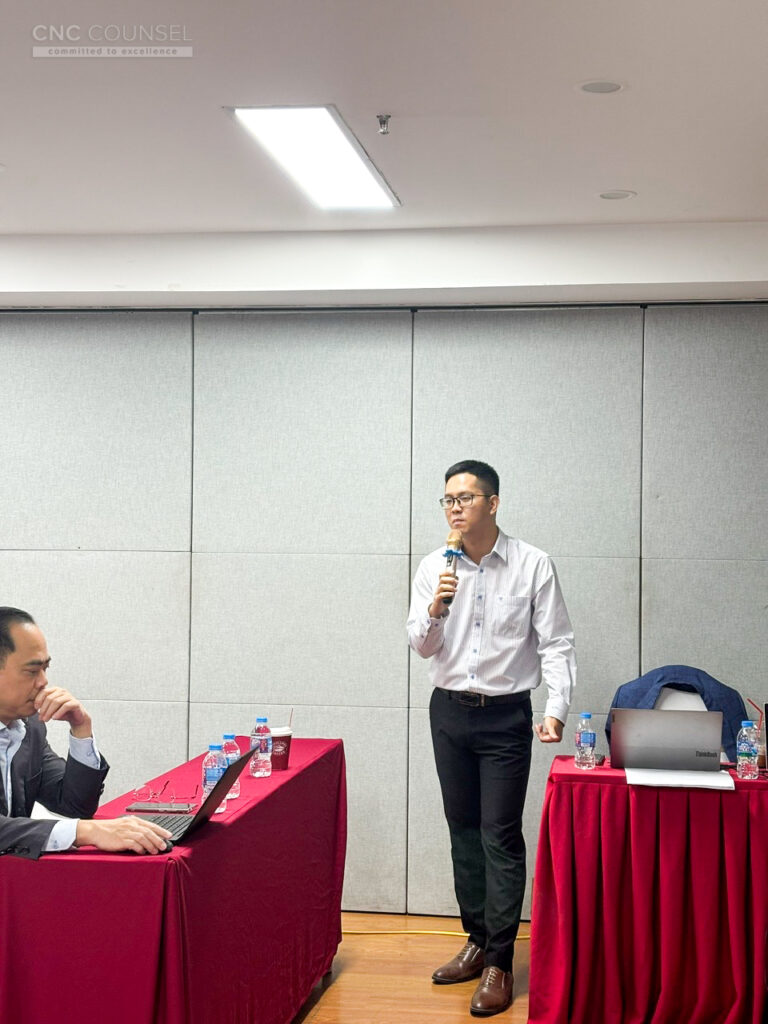
Mr. Tung guiding participants through practical scenarios encountered during the implementation of FIDIC EPC Contracts.
Key Scenarios in Applying FIDIC EPC Contracts to Wind Power Projects
2.1. Site Handover and Access Route Obligations
The discussion addressed:
- The definition and scope of the “Site” in wind power projects
- What constitutes handover of a Site “fit for construction” under FIDIC EPC Contracts
- Employer responsibilities where site handover is fragmented or phased
- Circumstances in which access route arrangements become legal risks, rather than purely technical matters
This issue is critical in wind power projects, which require multiple components to progress concurrently and in coordination, including:
- Land matters: land use rights, land acquisition, compensation, and site clearance
- Logistics and construction access: transport routes, site accessibility, weather constraints, and community or regulatory interference; planning how and when turbines, blades, and towers are transported (how–when–where)
- Taxation: which taxes are exempt or payable, reimbursement mechanisms, and allocation of responsibilities
- Commercial milestones (COD): COD requirements, timelines, and the consequences of failure to achieve COD.
2.2. Changing Access Routes for Safety during the Rainy Season
This scenario examined a dispute over access routes. Under the original plan, the Contractor intended to use a riverbed route during the dry season. Due to project delays, the rainy season commenced before transportation, rendering the original route impracticable. To preserve COD, the only viable solution was the construction of a new bridge across the river.
Participants analysed:
- When access route changes constitute a Variation, and when they fall within the Contractor’s risk under a FIDIC EPC Contract
- The interaction between safety obligations, design responsibility, and construction responsibility
- The legal thresholds for entitlement to time and cost relief.
2.3. Delayed Reimbursement of Taxes Paid by the Contractor
In this scenario, contractual provisions on import duties were relatively clear. The issue arose when the Contractor paid taxes upfront to avoid delays, and the Employer later obtained tax exemptions but failed or delayed reimbursement.
The analysis focused on:
- Distinguishing tax obligations, advances, and reimbursement obligations
- The risk of the Contractor effectively financing the Employer under FIDIC EPC Contracts
- Structuring payment mechanisms to protect Contractor cashflow
2.4. Payment Documentation and Conditions under FIDIC EPC Contracts
Participants examined:
- Which documents constitute conditions precedent to payment
- Which documents are evidentiary or supportive only
- Common errors that lead to legitimate rejection of payment applications
- Organising payment submissions in line with FIDIC 2017 logic, rather than internal practice
A recurring misconception is treating detailed quantity and quality dossiers as absolute prerequisites for payment. Under FIDIC EPC Contracts, payment primarily reflects progress against milestone-based mechanisms, while quality and liability issues are addressed through separate contractual controls.
In essence, payment under an EPC contract reflects, on a relative basis, the Contractor’s progress in performing its contractual obligations, as measured against the agreed milestone-based payment mechanism (whether time-based or progress-based). Where a particular payment cycle shows a material deviation from the original plan, the Employer may make adjustments in accordance with the contractual mechanisms. However, this does not mean that full quality control or acceptance of all works must constitute a condition precedent to payment.
Practice also shows that, influenced by entrenched management habits and certain regulatory requirements, many EPC contractors continue to accept payment conditions that are commercially unfavorable. This represents a financial risk that must be addressed at its root—first and foremost by rethinking how the FIDIC EPC Contract is administered and operated in practice.
2.5. Compliance with Concession Agreements
In one scenario, the FIDIC EPC Contract was executed before the Investor/Employer entered into a Concession Agreement with the Government of Lao PDR. The EPC Contractor had limited visibility of the obligations imposed by that agreement, aside from a general obligation to comply..
With CNC’s guidance, participants clarified:
- The relationship between EPC contracts and state-level investment agreements
- When extra-contractual obligations give rise to additional cost and risk
- How responsibilities should be allocated across the project structure
A key lesson was the importance of separating obligation from cost. Compliance may be mandatory, but cost recovery depends on the risk allocation and claims mechanisms under the FIDIC EPC Contracts.
2.6. ESIA Requirements and Cost Escalation
Similarly to obligations arising under the Concession Agreement, in order to ensure compliance with environmental and social obligations throughout the entire project lifecycle (and not merely during the construction phase), both the EPC Contractor and the Investor/Employer must clearly determine and align on the following:
- Whether ESIA obligations are foreseeable risks or emerging risks
- The contractual basis for price and cost adjustments under FIDIC EPC Contracts
- How to frame claims correctly to avoid rejection on procedural or substantive grounds.
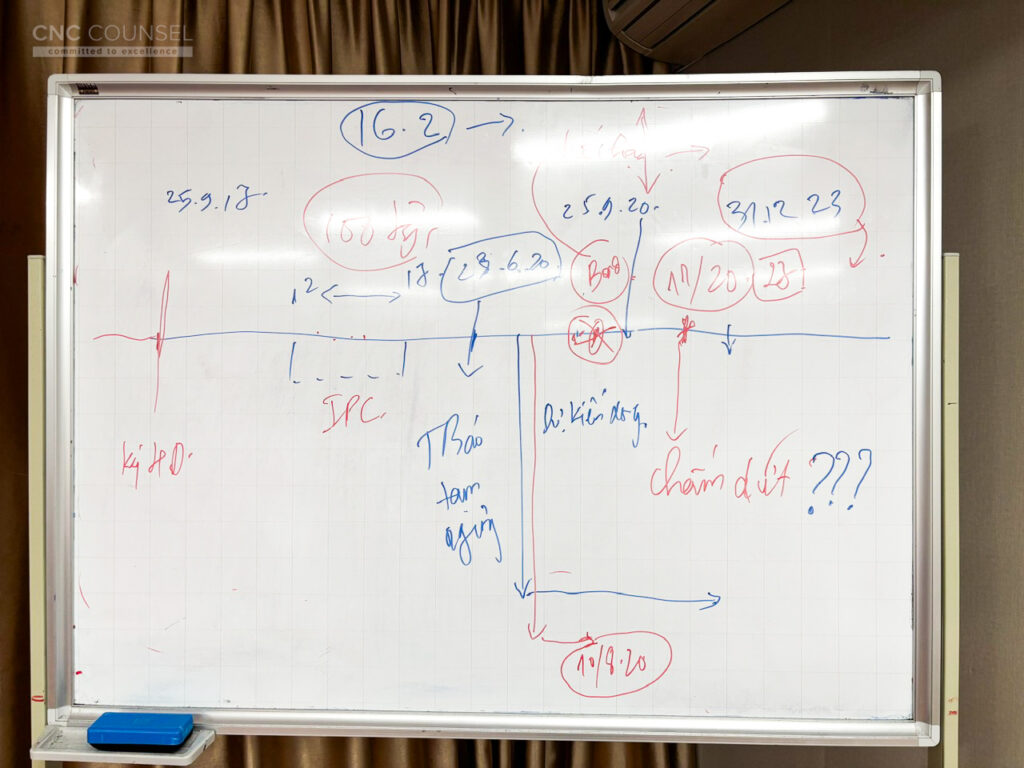
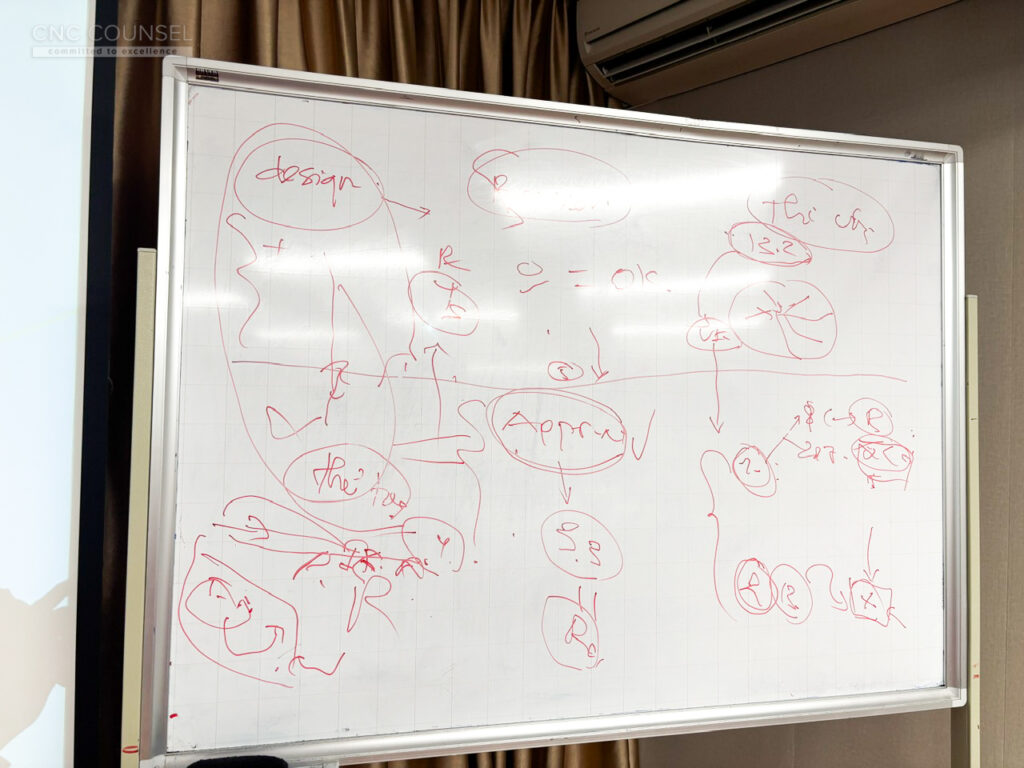

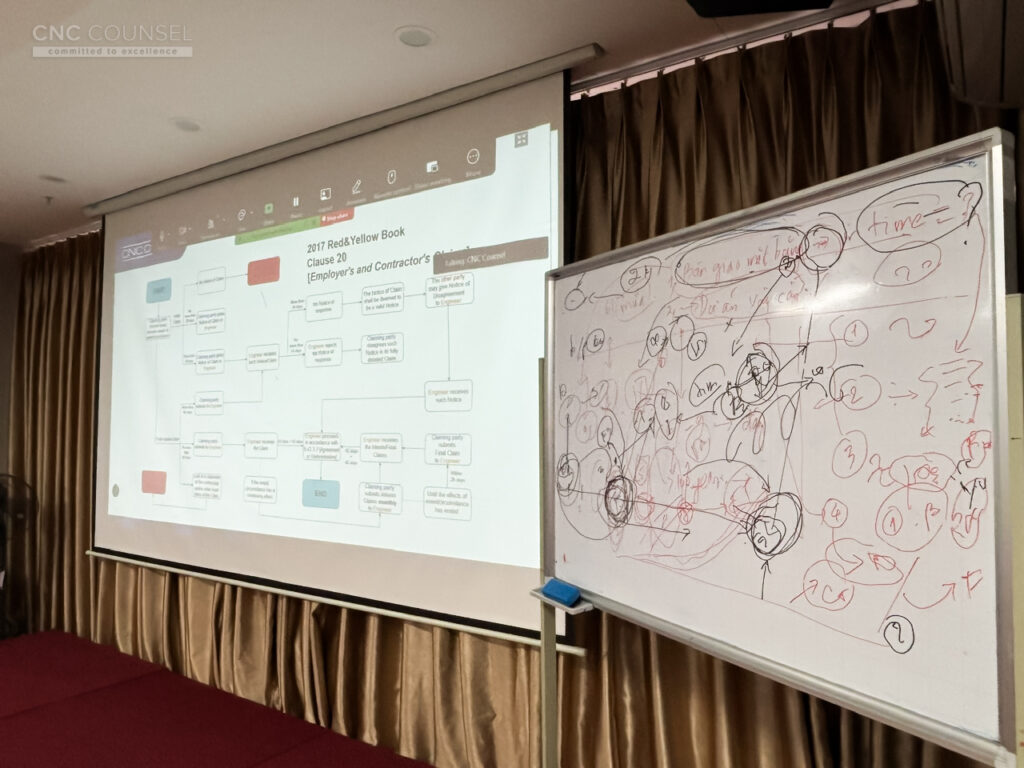

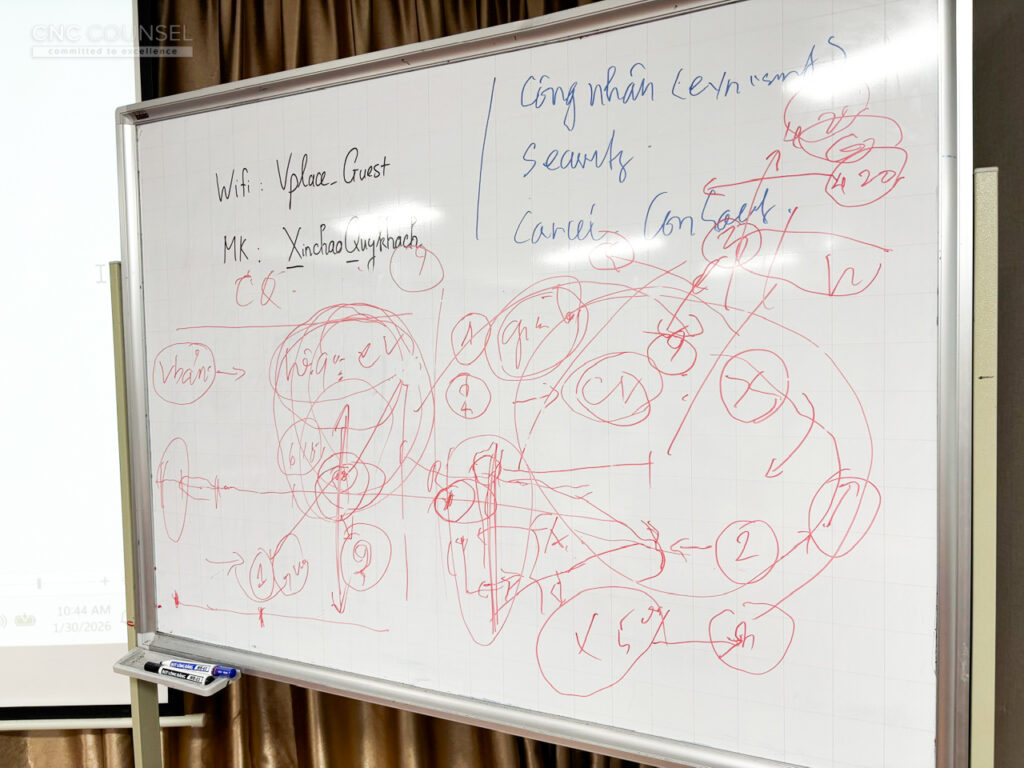
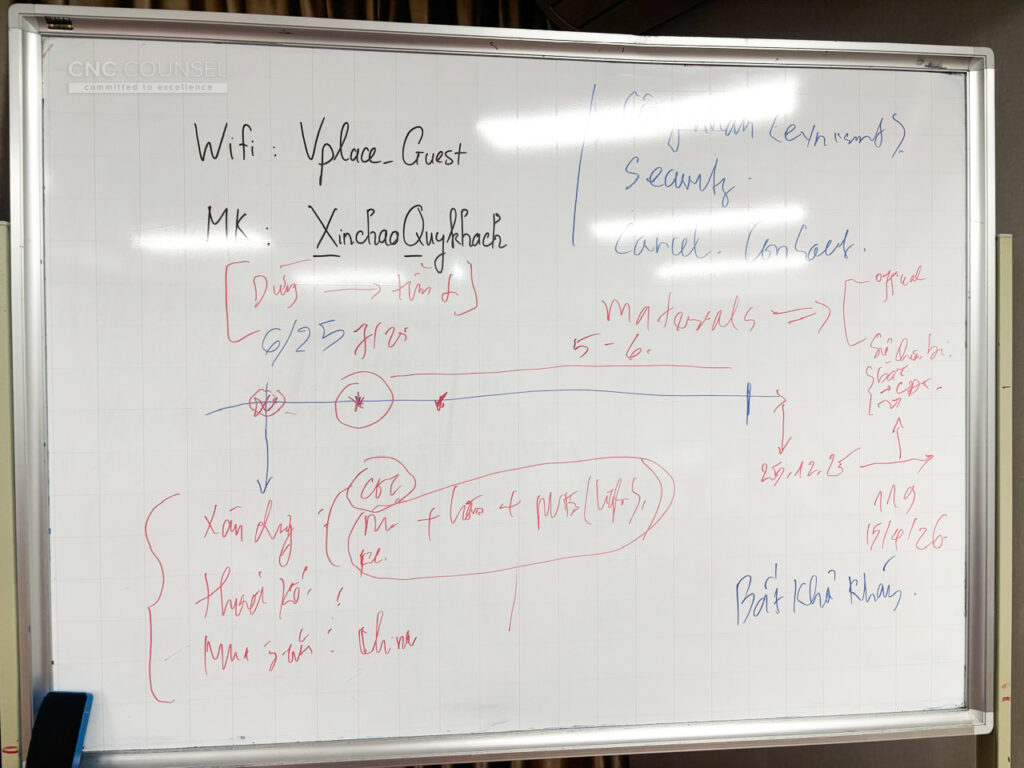
Each scenario illustrated the Parties’ differing approaches to interpreting and applying the FIDIC EPC Contract.
These “matrices” were the direct result of the heated exchanges between the Employer and the Contractor. As many participants put it, they are the kind of matrices that only truly stick once they are “burned into memory.”Kết quả của những tranh cãi nãy lửa giữa Chủ Đầu tư và Nhà thầu chính là những “Ma trận” này. Những ma trận này, theo lời của nhiều học viên là chỉ có đốt uống mới nhớ được.
2.7. Practical Conclusions from the Case Studies
From these scenarios, participants reached three core conclusions when applying FIDIC EPC Contracts in wind power projects:
- FIDIC EPC Contracts do not protect parties automatically if procedures are not followed
- Most disputes arise from contract operation, not from the clauses themselves
- Legal risk typically emerges at the intersection of engineering, law, and site realities
These outcomes further confirm CNC’s capabilities in Construction Contract Management, one of CNC’s strongest practice areas with involvement in numerous major projects in 2025.
👉 Xem thêm Dịch vụ Quản lý Hợp đồng Xây dựng | CNC

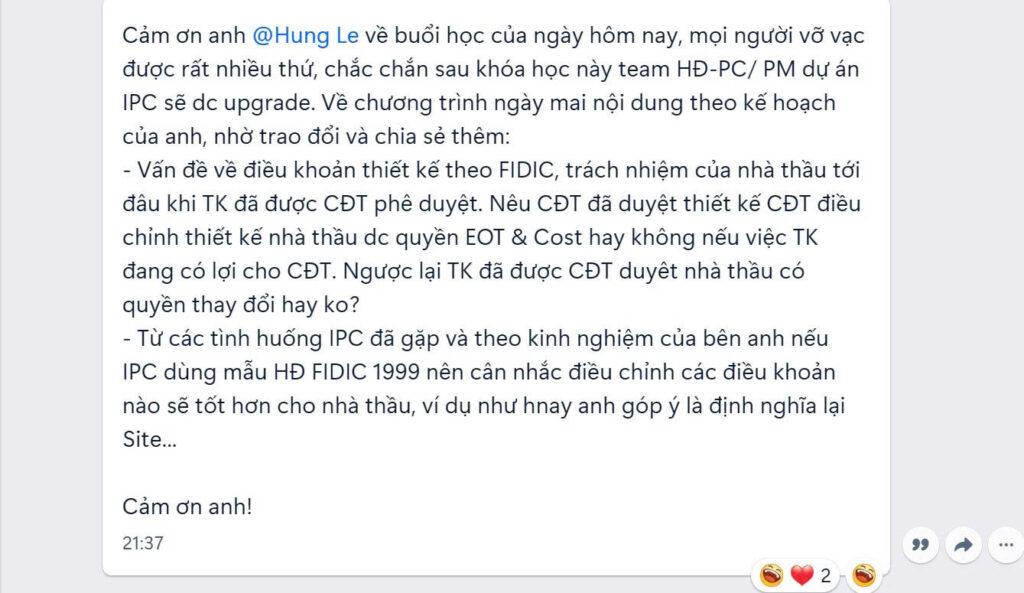
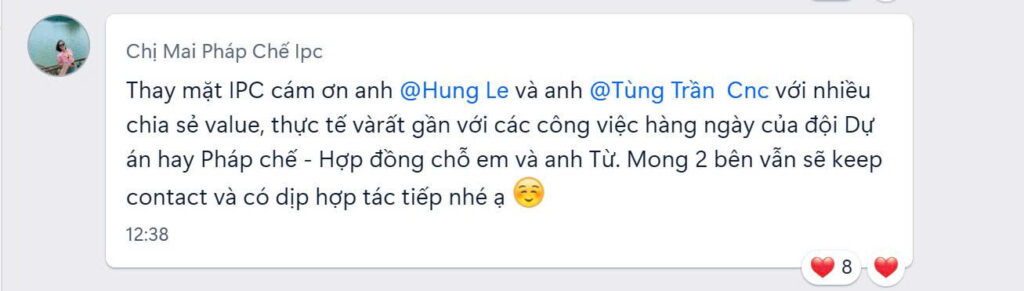

Real-time, candid feedback from participants of the “Applying FIDIC EPC Contracts to Wind Power Projects” training programme
Force Majeure under FIDIC EPC Contracts and Article 420 of the Vietnamese Civil Code
In the SOP Lam Thao project, the EPC Contractor faced labour mobilisation challenges, sharp fluctuations in material costs, and the withdrawal of a subcontractor.
The question arose whether relief should be sought under Force Majeure provisions of the FIDIC EPC Contract or under Article 420 of the Vietnamese Civil Code (2015) concerning fundamental change of circumstances.
To apply the correct mechanism, it is essential to distinguish between:
- Force Majeure under FIDIC EPC Contracts, and
- Fundamental change of circumstances under Article 420
In many cases, reliance on Article 420 cannot substitute for the contractual mechanisms agreed under FIDIC EPC Contracts. Confusing these regimes may result in loss of entitlement or significant legal disadvantage..
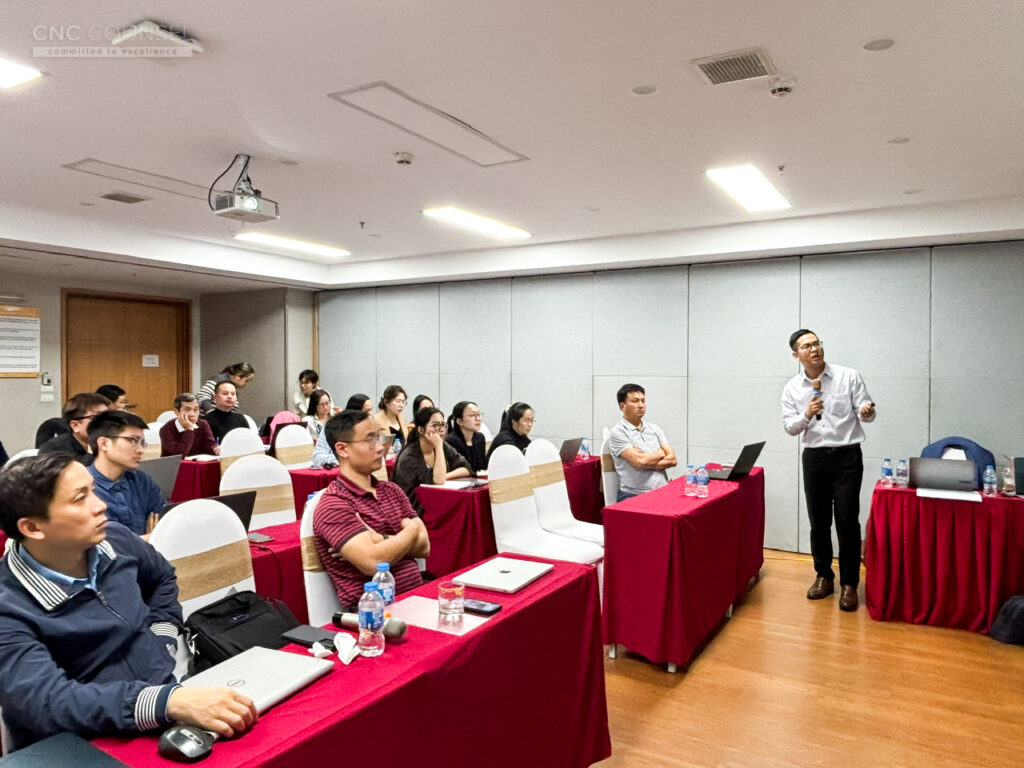
Mr. Tung guiding participants through the claims procedures under the FIDIC Silver Book (EPC/Turnkey).
Structuring FIDIC EPC Contract Documents: Mandatory Principles
CNC highlighted several mandatory principles when organising FIDIC EPC Contract documentation:
- Strict compliance with the Hierarchy of Documents
- Clear separation between Employer’s Requirements and Contractor’s Proposal
- Designing Contract Particulars as a project risk map
- Ensuring all amendments are assessed within the overall FIDIC framework, not in isolation
Improper document structuring can cause a party to lose legal leverage from the outset of the project..
Choosing the Appropriate FIDIC Form: Yellow Book, Red Book, or Silver Book?
Based on wind project experience, CNC emphasised that:
- Where a basic or concept design exists, the FIDIC Yellow Book is often appropriate
- The Silver Book is not universally required and may transfer excessive risk to Contractors
- Selecting the wrong FIDIC form results in misallocation of risk from day one
👉 Xem thêm An Introduction to FIDIC Contracts | CNC
FIDIC 1999 vs. FIDIC EPC 2017: A Systemic Shift
A fundamental change in FIDIC 2017 is the expanded role of the Engineer:
- The Engineer acts as an early-stage dispute resolution entity
- Procedural compliance becomes decisive to entitlement
- Failure to comply with procedures creates immediate legal risk
👉 Learn more about the key changes introduced in FIDIC 2017 at: here.
Core Value of CNC’s FIDIC EPC Training
The IPCEC programme demonstrated that:
- Applying FIDIC EPC Contracts is a thinking process, not a checklist
- Case-based learning enables participants to derive solutions suited to their own projects
- This forms the foundation for CNC to continue developing and delivering advanced, industry-specific FIDIC EPC training programmes, tailored to sectors such as wind power, renewable energy, and infrastructure.
In wind power projects, FIDIC EPC Contracts are not merely contractual templates—they are risk management systems governing the project from inception to completion. Selecting the right FIDIC form is only the starting point. What ultimately determines success is how FIDIC EPC Contracts are applied, administered, and enforced in practice.
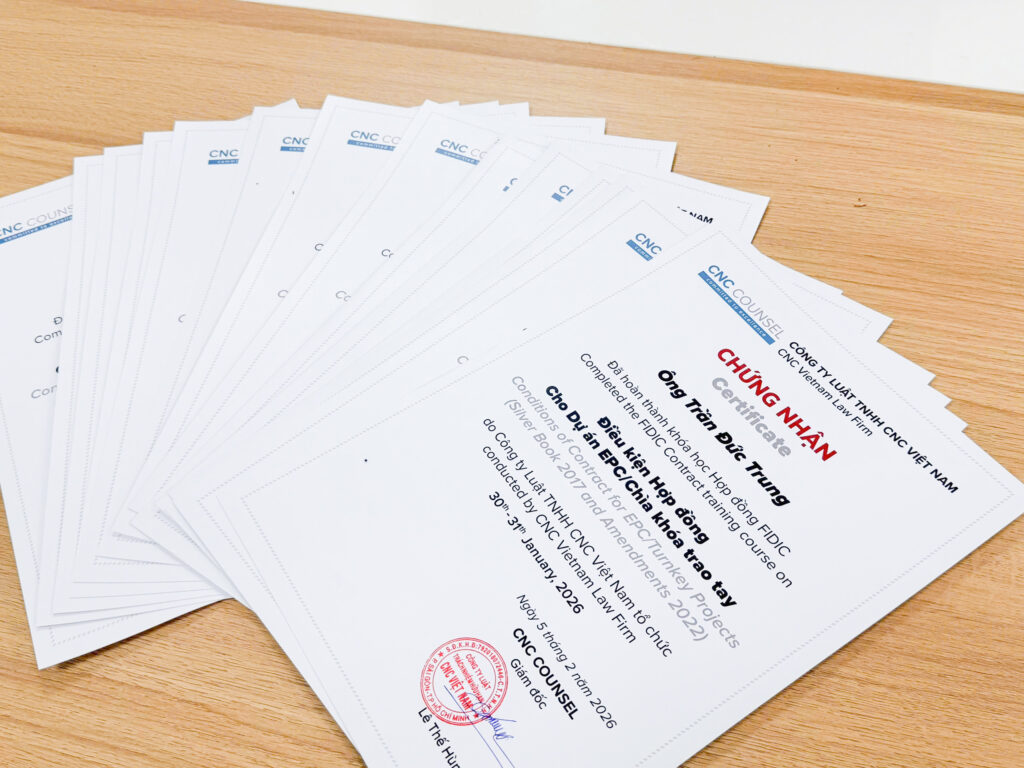

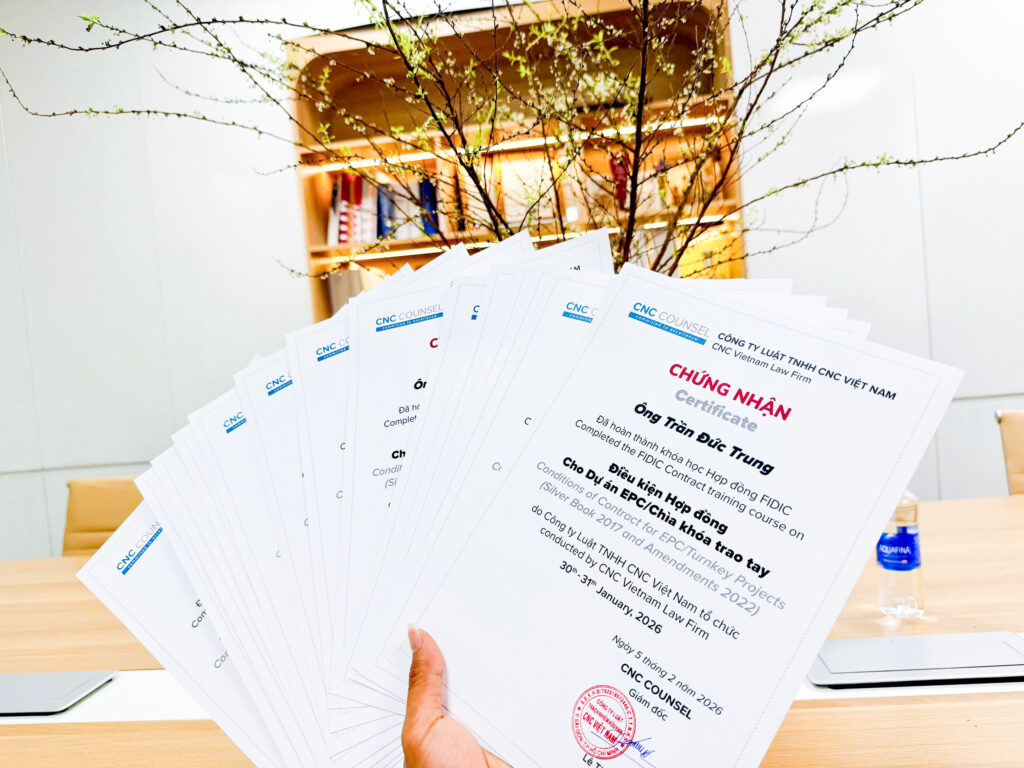
Happy New Year, and congratulations to the 38 participants at IPC who successfully completed the “obstacle course” segment of the “Applying the FIDIC Silver Book for Wind Power Projects” training programme.
If your organisation is preparing a wind EPC project, operating under FIDIC EPC 2017, or facing challenges relating to payment, taxation, ESIA, cost adjustment, or procedural disputes, CNC is ready to assist through tailored FIDIC EPC advisory and training services, grounded in real project experience.
👉 Contact CNC to:
- Receive a customised FIDIC EPC training outline for wind power projects
- Arrange in-house training for Project, Contract, and Legal teams
- Request a focused review of Contract Particulars, payment mechanisms, and claims procedures to mitigate dispute risk
👉 Learn more about CNC’s experience in FIDIC training at: here.
Contact Us
CNC Vietnam Law Firm
2nd Floor, The Rise Building, 2A1 Nguyen Thi Minh Khai Street, Saigon Ward, Ho Chi Minh, Vietnam
Tel: +84 – 028 6276 9900 | Hotline: +84 – 0916 545 618
Email: contact@cnccounsel.com | Website: http://cnccounsel.com
Alternatively, please submit your request using the form below, and a CNC lawyer will contact you within one (1) hour.