




Overview of the Cai Mep Ha Free Trade Zone
Cai Mep Ha Free Trade Zone (the “Cai Mep Ha FTZ”) has been identified as one of the new growth drivers of Ho Chi Minh City, alongside the International Financial Centre. Covering an area of approximately 4,174.35 hectares, the Cai Mep Ha FTZ is planned to be located in Tan Phuoc Ward and Tan Hai Ward, strategically connected to the Cai Mep – Thi Vai deep-water port complex and key transport infrastructure, including National Highway 51, the Bien Hoa -Vung Tau Expressway, Phuoc An Bridge, and Long Thanh International Airport[1].
Under the proposed development orientation, the Cai Mep Ha FTZ is expected to become an international logistics and trade hub, while attracting investment in logistics, high-tech industries, and high-value-added services.
In this article, CNC provides readers with key information on the Cai Mep Ha FTZ, including its development orientation toward becoming a major logistics hub of Ho Chi Minh City.
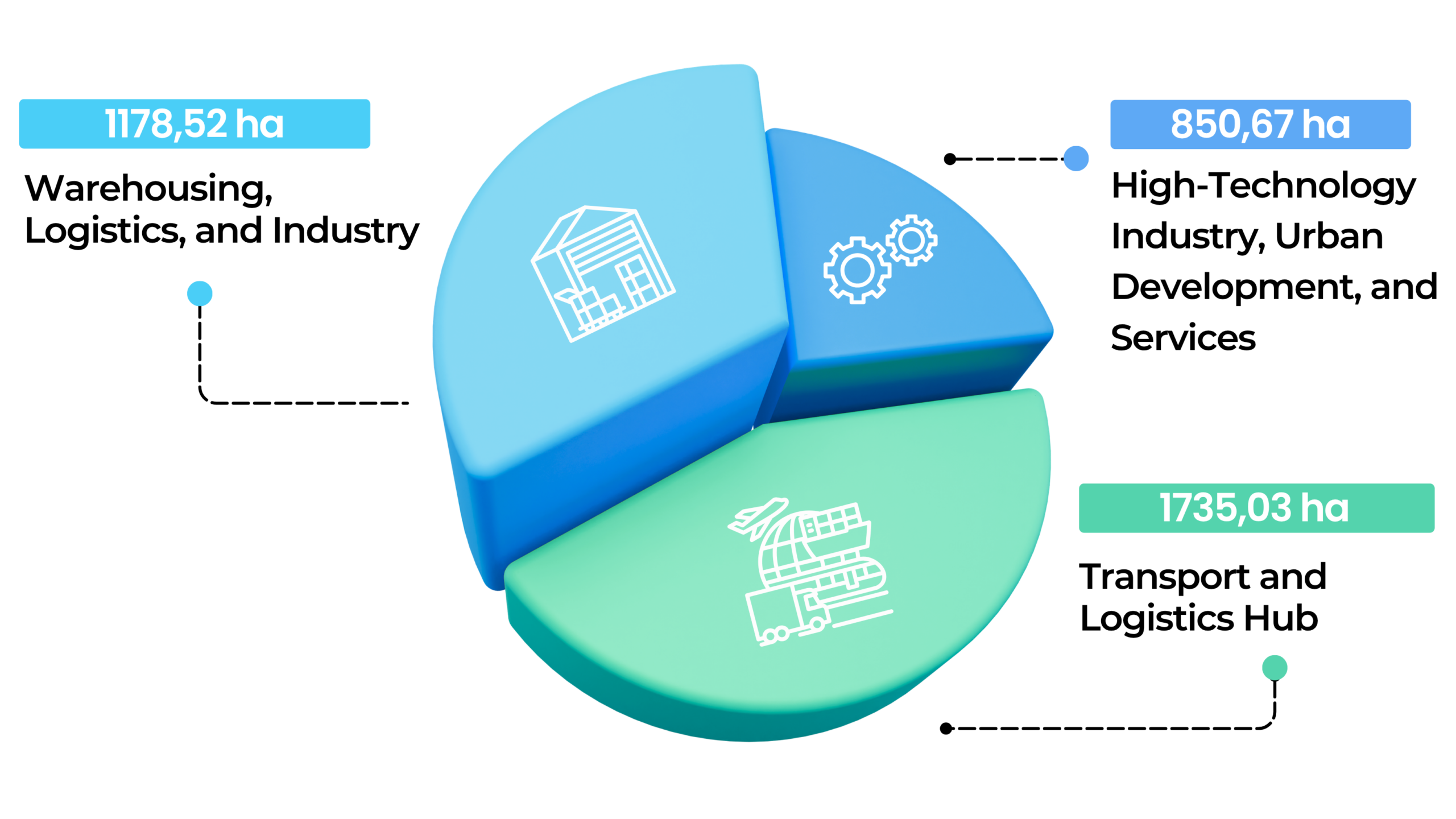
Scale, Spatial Layout, and Development Orientation
The “One Zone, Multiple Sub-Zones” Model
The Cai Mep Ha Free Trade Zone is envisioned to follow a “one zone – multiple sub-zones” model, under which the Free Trade Zone is governed within a unified regulatory framework while being geographically divided into multiple sub-zones, each designated for functions suited to the respective area’s comparative advantages. This model enables Ho Chi Minh City to implement the FTZ on a phased basis while retaining flexibility to expand the FTZ and adjust its boundaries where necessary.
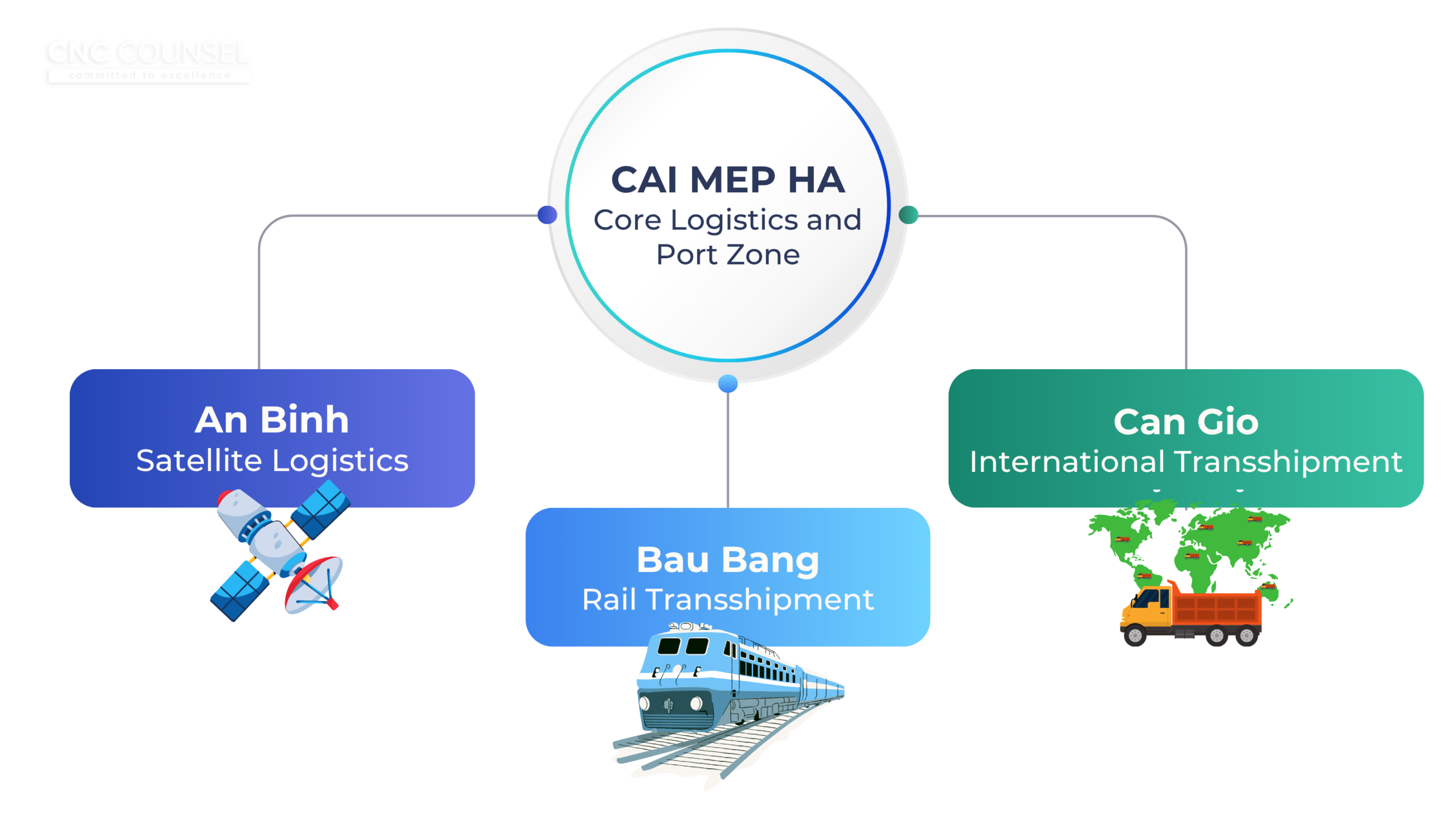
Pursuant to Resolution No. 98/2023/QH15 (as amended on 11 December 2025) and implementing instruments issued by the Ho Chi Minh City People’s Committee, Ho Chi Minh City is authorized to establish a single Free Trade Zone comprising the Cai Mep Ha core zone together with several functional sub-zones[2]. This model permits such sub-zones to be established without geographic contiguity to the core zone, provided that they are administered under a unified management framework through a common management system and infrastructure connectivity.
Legal Framework and Special Mechanisms Applicable to the Cai Mep Ha FTZ
The establishment and operation of the Cai Mep Ha FTZ is based on the special mechanisms enacted by the National Assembly and the Ho Chi Minh City People’s Committee.
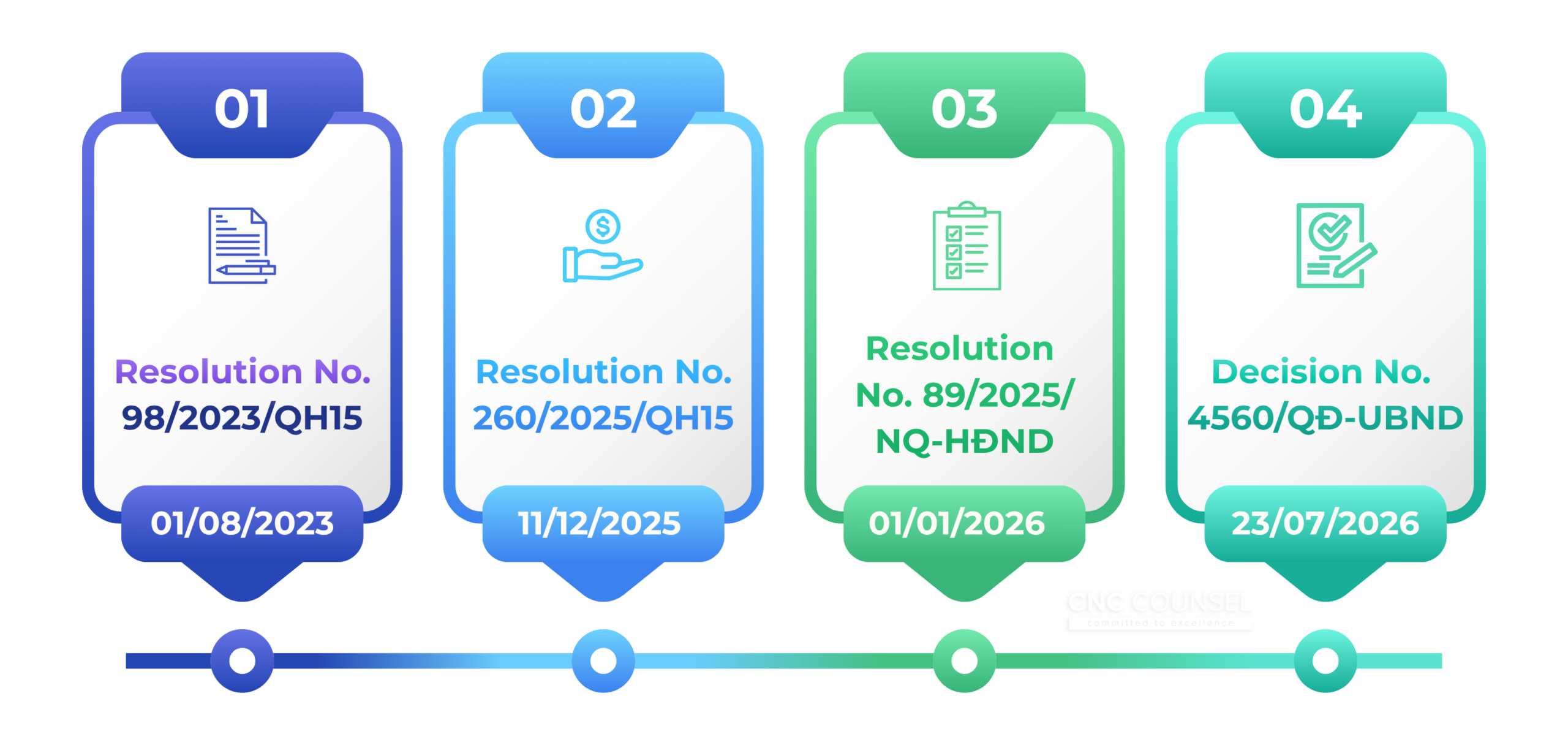
Resolution No. 98/2023/QH15, as amended and supplemented by Resolution No. 260/2025/QH15, provides Ho Chi Minh City with special mechanisms and policies, allowing pilot regulations that differ from generally applicable regulations to be applied in the event of any inconsistency[3]. Resolution No. 260/2025/QH15 further authorizes Ho Chi Minh City to establish a Free Trade Zone (FTZ) with special mechanisms, including streamlined administrative procedures, preferential treatment and exemptions from certain specialized inspection procedures, as well as tax policies applicable to non-tariff zones to functional areas that satisfy the conditions prescribed by law[4]. On this basis, the Ho Chi Minh City People’s Council promulgated Resolution No. 89/2025/NQ-HĐND, prescribing the specific procedures for the establishment and expansion of the FTZ. On 23 July 2026, the Ho Chi Minh City People’s Committee officially issued Decision No. 4560/QĐ-UBND establishing the Free Trade Zone associated with the Cai Mep Ha port area, and defining its boundaries, scale, and directly responsible management authority.
Enterprises investing in the Cai Mep Ha FTZ may benefit from various support mechanisms under applicable law. In particular, corporate income derived from high-tech activities, semiconductors, AI, R&D, energy, and supporting industries is subject to a preferential corporate income tax rate of 10% for 20 years, together with a four-year tax exemption and a 50% reduction for the subsequent 9 years[5]. In addition, Ho Chi Minh City may apply a post-inspection mechanism and a non-tariff zone model with specialized customs arrangements[6]. The City may also apply mechanisms for land allocation and land lease without auction, except for commercial housing[7].
The current legal framework gives Ho Chi Minh City greater flexibility in selecting strategic investors, organizing the management of the FTZ, and implementing special mechanisms to enhance the effectiveness of investment attraction.
Development Potential of the Cai Mep Ha FTZ
Under the applicable development orientation, the Cai Mep Ha FTZ is to be connected with Long Thanh International Airport and the Dong Nai FTZ to establish an inter-regional supply chain, while prioritizing investment in logistics, maritime services, semiconductor manufacturing, artificial intelligence (AI), new materials, renewable energy, biotechnology, and other modern service sectors.
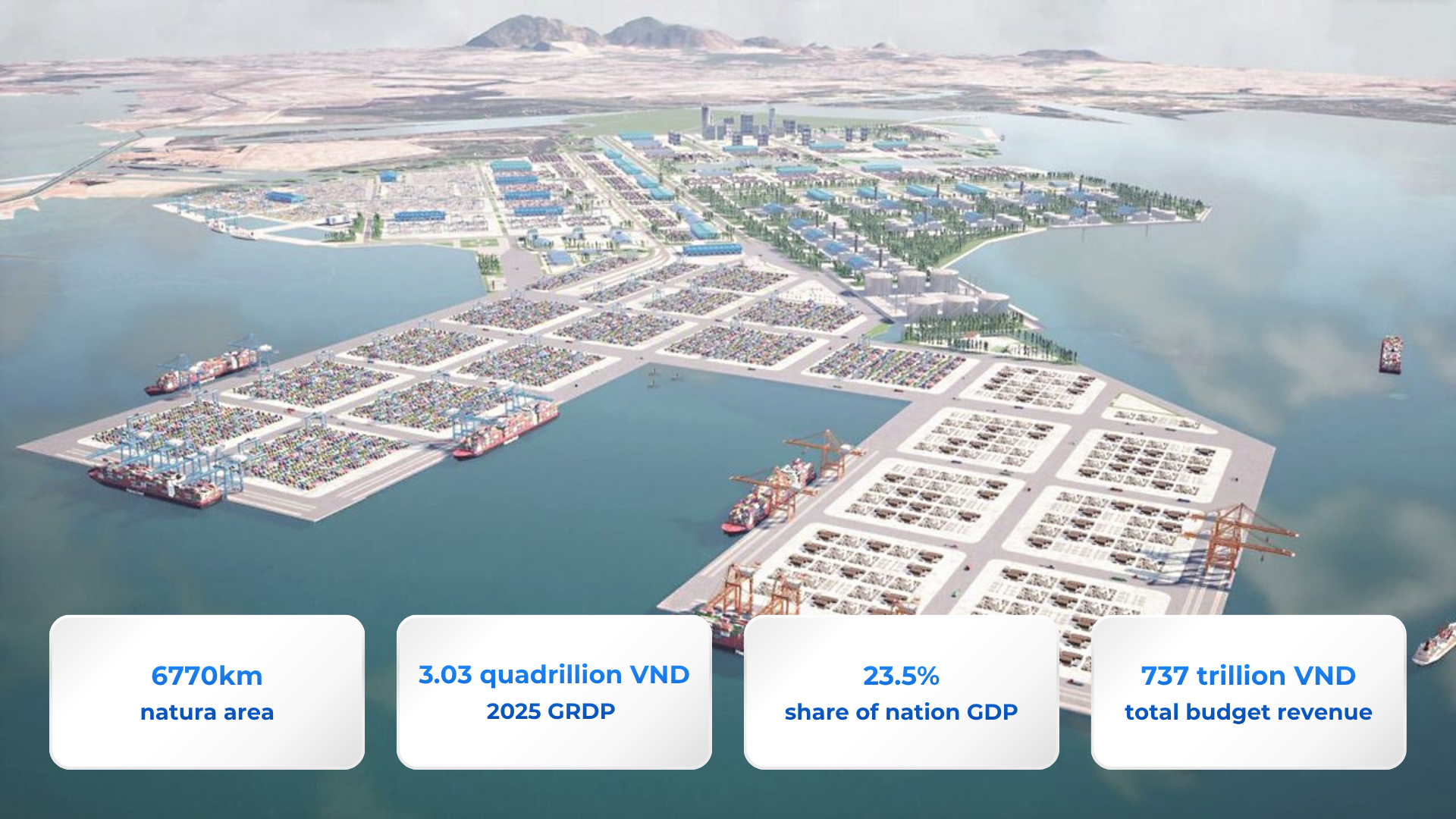
Photo: VnEconomy
Investment Opportunities for Enterprises
For both domestic and foreign investors, the Cai Mep Ha FTZ offers significant investment opportunities arising from the combination of its strategic location, integrated infrastructure network, and special preferential mechanisms. The scope for investment is not confined to the logistics and port sectors, but extends to high-technology industries such as semiconductors, AI, new materials, renewable energy, and biotechnology, as well as to modern trade and services associated with an innovation-driven urban area.
Against the backdrop of the ongoing diversification and relocation of global supply chains into Southeast Asia, the Cai Mep Ha FTZ is expected to become a destination for strategic investors seeking to establish large-scale manufacturing centres, distribution centres, and logistics facilities in Vietnam.
Implementation Roadmap for the Cai Mep Ha FTZ
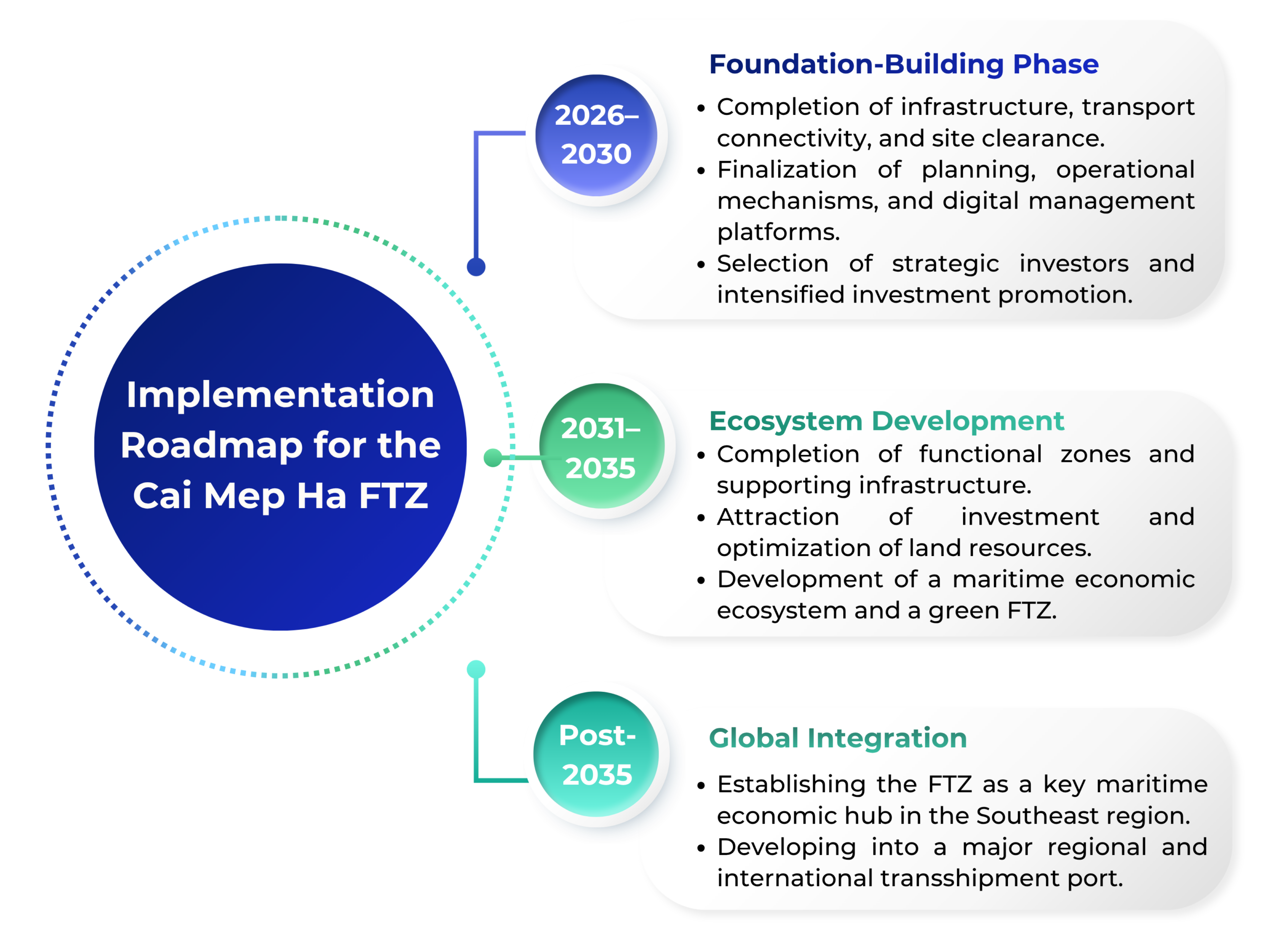
The foregoing roadmap indicates that the implementation of the Cai Mep Ha FTZ[8] is to proceed in phases – from the completion of the legal framework and the selection of strategic investors, through to infrastructure investment and the commencement of the Free Trade Zone’s operations. Ensuring that each phase proceeds on schedule will be critical to the successful implementation of the project.
Advantages and Matters Requiring Attention
The Cai Mep Ha FTZ enjoys several competitive advantages by virtue of its special legal framework, its international deep-water port system, its expanding logistics infrastructure, and its capacity for connectivity with Long Thanh International Airport and other free trade zones within the region. These conditions are favorable to the formation of an inter-regional supply chain and to the enhancement of Ho Chi Minh City’s competitiveness.
Nevertheless, the implementation process gives rise to certain challenges, including site clearance across a substantial area, the completion of the special customs mechanism, the need to develop a high-quality workforce, and the pace of implementation of key infrastructure projects. In addition, the Cai Mep Ha FTZ will face competition from other free trade zones within the region in terms of investment-promotion policy and the quality of logistics services.
Conclusion
The Cai Mep Ha FTZ is well positioned to become Ho Chi Minh City’s principal logistics and international trade hub, by virtue of its locational advantages, infrastructure, and special mechanisms. However, the effectiveness of its implementation remains contingent upon the pace of institutional and infrastructure completion, and upon the capacity to attract strategic investors, thereby enabling the FTZ to fulfil its intended role as a competitive regional logistics and international trade hub by 2035.
What We Can Support?

- Inbound/Outbound Investment: Company Establishment, Investment Registration and Post-registration Services in relation to tax, accounting, labor, insurance, salary, and outsourced legal department;
- Operation Licenses: We could provide support in the application for operation licenses for business activities in fields such as manufacturing, commerce, services, e-commerce, healthcare, education, or food & beverage (restaurants);
- M&A Services: Conduct legal due diligence, structure transactions, draft and negotiate transaction documents, provide advice on competition law compliance (including merger control filings and related approvals), obtain necessary regulatory approvals and licenses, and provide post-closing support;
- Personal Data Protection: Provide support in compliance with the data protection regulations, including the drafting and reviewing of Data Protection Impact Assessment (DPIAs), Data Processing/Transfer Agreement, Privacy Policies, and other necessary documents under the Personal Data Protection Decree (PDPD);
- Dispute Resolution: Litigation and Commercial Arbitration (VIAC SIAC ICC); and
- Legal Retainer Services per the clients’ requests.
Please contact Mr. Chris Luong – Partner through the email address of chris.luong@cnccounsel.com or Ms. Ngan Nguyen – Partner through the email address of ngan.nguyen@cnccousel.com for prompt and timely support.
Managed by
 |
Nguyen Thi Kim Ngan I Partner
Phone: (84) 919 639 093 Email: ngan.nguyen@cnccounsel.com |
 |
Luong Van Chuong I Partner
Phone: (84) 938 04 7969 Email: chris.luong@cnccounsel.com |
 |
Le Nguyen Khanh Linh I Legal Intern
Điện thoại: (84) 28 6276-9900 |
Contact Us
For further information, please contact:
CNC Vietnam Law Firm
Address: The Rise Building, 2A1 Nguyen Thi Minh Khai, Sai Gon Ward, Ho Chi Minh City, Vietnam
Phone: (84) 28-6276 9900 – 081 235 3839
Hotline: (84) 916-545-618
Email: contact@cnccounsel.com
Website: cnccounsel
We would be delighted to welcome you at CNC’s office, where you’ll have the opportunity to consult with the lawyer best suited to your circumstances. Of course, if you are unable to meet in person, simply email us via contact@cnccounsel.com or call us via (+84-28) 6276 9900.
It would be a pleasure for CNC’s lawyers to help you build a solid legal foundation, thus ensuring the success and sustainable development of your project!
————————————
Copyright © CNC Counsel. All rights reserved.
Ownership Rights: This document and the content contained herein (Document) are proprietary resources exclusively owned by CNC Counsel. Access to or use of this Document does not, by itself, create any contractual relationship or lawyer-client relationship between CNC Counsel and any person or entity.
Disclaimer: All Documents are provided solely for informational purposes and may not reflect the most current legal developments. Summaries of laws, regulations, and practices are subject to change. This Document is not intended to constitute legal, professional, or other advice with respect to any specific matter. Nor is it intended to substitute for reference to, or compliance with, the detailed provisions of any applicable law, regulation, rule, or official form. Readers are strongly encouraged to seek independent legal advice before taking, or refraining from taking, any action based on the information contained in this Document. CNC Counsel, together with its editors and authors, makes no representations or warranties as to the accuracy, completeness, or currency of the Document and disclaims all liability to any person or entity arising from reliance on all or any part of the Document. This Document may contain links to external websites, and external websites may contain links to this Document. CNC Counsel is not responsible for the content, operation, availability, or practices of any such external websites and expressly disclaims any liability in connection therewith. Note: Past results do not guarantee similar outcomes in future matters. Each matter is unique and must be assessed based on its own facts and circumstances.
————————————
[1] Article 1 of Decision No. 4560/QD-UBND.
[2] Clause 1, Clause 2, and Point (a) of Clause 3, Article 7a of Resolution No. 98/2023/QH15, as supplemented by Clause 5, Article 1 of Resolution No. 260/2025/QH15.
[3] Clause 5, Article 12 of Resolution No. 98/2023/QH15.
[4] Clauses 1 and 2, Article 7a, as supplemented by Clause 5, Article 1 of Resolution No. 260/2025/QH15.
[5] Article 1.8 of Resolution No. 260/2025/QH15.
[6] Clause 5 and Points (c) and (d) of Clause 7, Article 7a of Resolution No. 98/2023/QH15, as supplemented by Clause 5, Article 1 of Resolution No. 260/2025/QH15.
[7] Clause 6, Article 7a of Resolution No. 98/2023/QH15, as supplemented by Clause 5, Article 1 of Resolution No. 260/2025/QH15.
[8] Article 4 of Decision No. 4560/QĐ-UBND.