




Vietnam: Significant changes to Personal Income Tax with regard to capital investment, share/real estate transfers as of 01/07/2026
On 30/6/2026, the Government issued Decree No. 253/2026/NĐ-CP on detailed stipulation of certain provisions, enforcement preparation measures, and guidelines for Law on Personal Income Tax (“Decree 253”). Decree 253 officially takes effect as of 01/07/2026, serving as the replacement for Decree No. 65/2013/ND-CP and provide update to many provisions to align them with the Law on Personal Income Tax 2025, which takes effect on the same date.
The new regulations provide clarification and serve as supplement for the provisions of Law on Personal Income Tax 2025, thereby directly affecting employees, enterprises, households, and individuals with income originating from real estate transfer, capital investment, as well as other sources.
1. Clarification of taxable income under the Law on Personal Income
One of the most important features of Decree 253 is the explicit definition and classification of taxable income that were previously listed in Article 3 of the Law on Personal Income Tax, which facilitates consistent application by both the taxpayers and the oversight authorities.
First, Decree 253 clarify the difference in scope of taxable income subject to the residency status of individuals, which helps prevent cases where resident individual could avoid tax by having income originating from foreign sources. To be specific[1]:
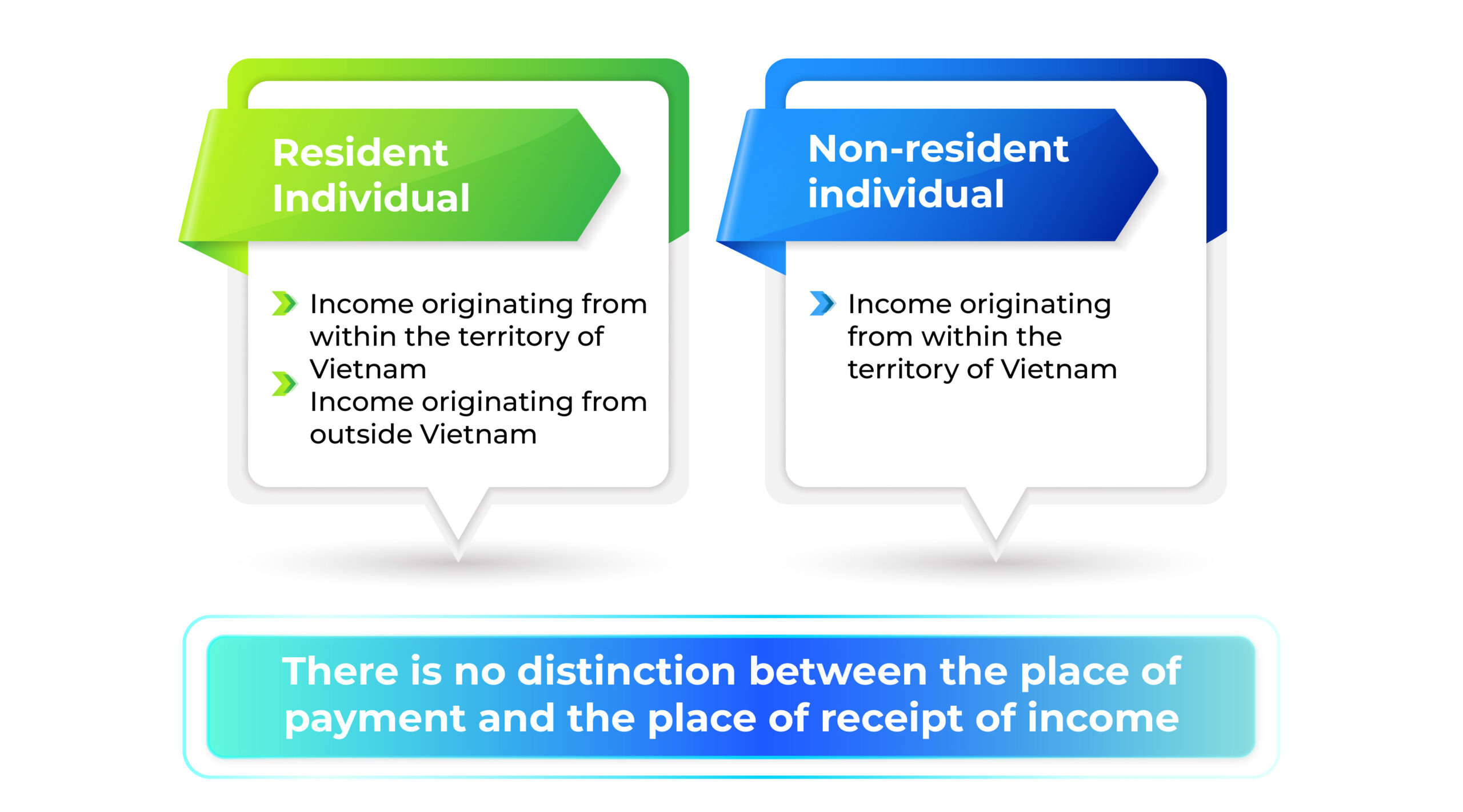
Furthermore, to facilitate the determination of the residency status, Decree 253 also provide clear criteria on the their presence duration (183 days or more in a year) or requirement on regular residence in Vietnam[2]
Second, Decree 253 provides details on traditional means of income, among which, the most notable points introduced by this Decree include:
- For income from business: Decree 253 continue to confirm that income from e-commerce and business on digital platforms are subject to personal income tax[3]. Furthermore, income from all kinds of agency activities, including unique one such as insurance agency, lottery agency, and multi-level marketing agency activities are also classified by Decree 253 as income from business, and therefore subject to personal income tax.
- For income from salary and remuneration: Decree 253 specifies and lists types of incomes that are classified as (i) remunerations and benefits in cash or any other shape or form from organizations and individuals, and (ii) income that does not share characteristics of salaries and remuneration that are not subject to personal income tax. Furthermore, through the “opt-out” method, Decree 253 provide the basis to distinguish allowance, subsidies and other benefits that are considered as income from salaries and remuneration from the rest.
- For income from winnings: Decree 253 clarifies that rewards from competition, events hosted by the employer for employees shall be considered as income from salaries and remunerations instead of those from winnings[4]
- For income from royalties: Decree 253 directly reference the definition provided by the Law on Technology Transfer 2025. Furthermore, Decree 253 also clarifies that in cases where an intellectual property asset is involved in multiple contracts, those contracts must be aggregated for tax calculation on the amount exceeding the prescribed threshold, thereby preventing the artificial splitting of contracts to avoid taxes [5].
Third, Decree 253 expands and clarifies new kinds of income. Accordingly, Decree 253 provides more context on the transfer of unique assets such as gold bar, digital bullion, digital assets, Vietnam’s “.vn” national domain names, and license plates obtained through auction. Notably, in response to the transition toward a green economy, income derived by individuals from the transfer of greenhouse gas emission reduction results and carbon credits has also been officially classified as taxable income[6].
Furthermore, regarding real estate, the scope of taxable income extends beyond existing physical assets to include houses and construction works to be formed in the future, applicable to transfers, inheritances, and gifts,,,.
The coverage of these sources not only captures new cash flows within society but also creates a transparent legal framework for taxpayers to fulfill their obligations.
2. Clarification and addition of cases of personal income tax exemption
According to the Law on Personal Income 2025, cases of personal income tax exemption are listed in Article 4, thereby giving an overall view on types of income that are not subject to this kind of tax. However, since it is simply a list and not much explanation is given, practical application of these provisions might encounter difficulties and inconsistencies since there could be multiple interpretations of the listed cases.
Realizing these potential shortcomings, Decree 253 has provided in details from Article 18 to Article 39 the cases of personal income tax exemption, thereby clarifying the criteria and conditions for a type of income to be eligible for tax exemption. Below is the list of income exempted from personal income tax and their corresponding provisions in Decree 253
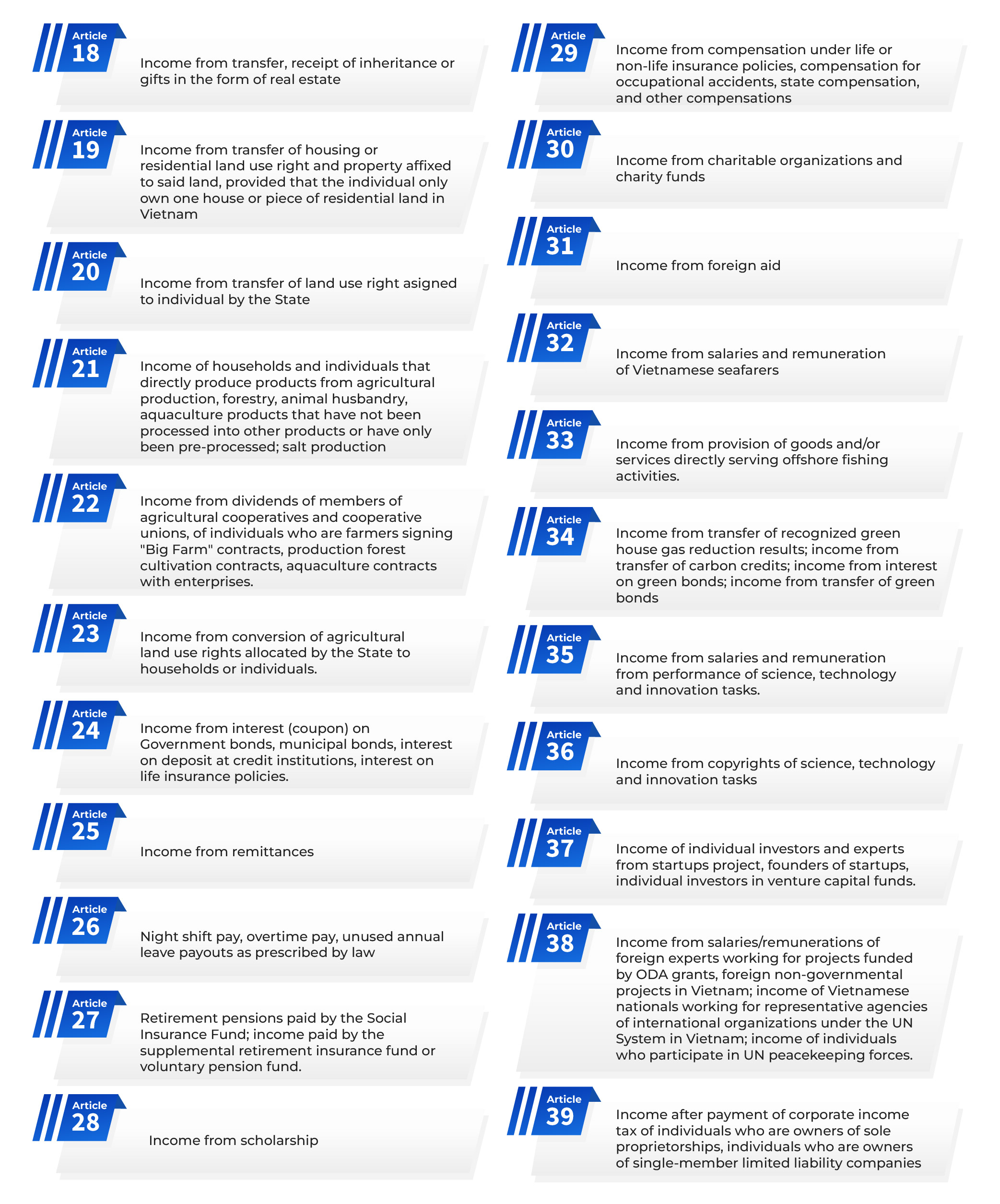
Through detailed stipulation of cases of personal income tax exemption, Decree 253 provides not only clarification but also notable additions such as:
- Tax exemption for income from the division of common property between spouses in the event of divorce[7].
- Tax exemption for interest on certificate of deposit and transfer of certificate of deposit[8]
- Tax exemption for retirement pension paid by foreign entities to individuals residing in Vietnam[9].
Aside from cases of tax exemption specified in Article 4 of the Law on Personal Income Tax, Decree 253 also expand on cases of temporary personal income tax exemption listed in Article 5 of the Law on Personal Income Tax.
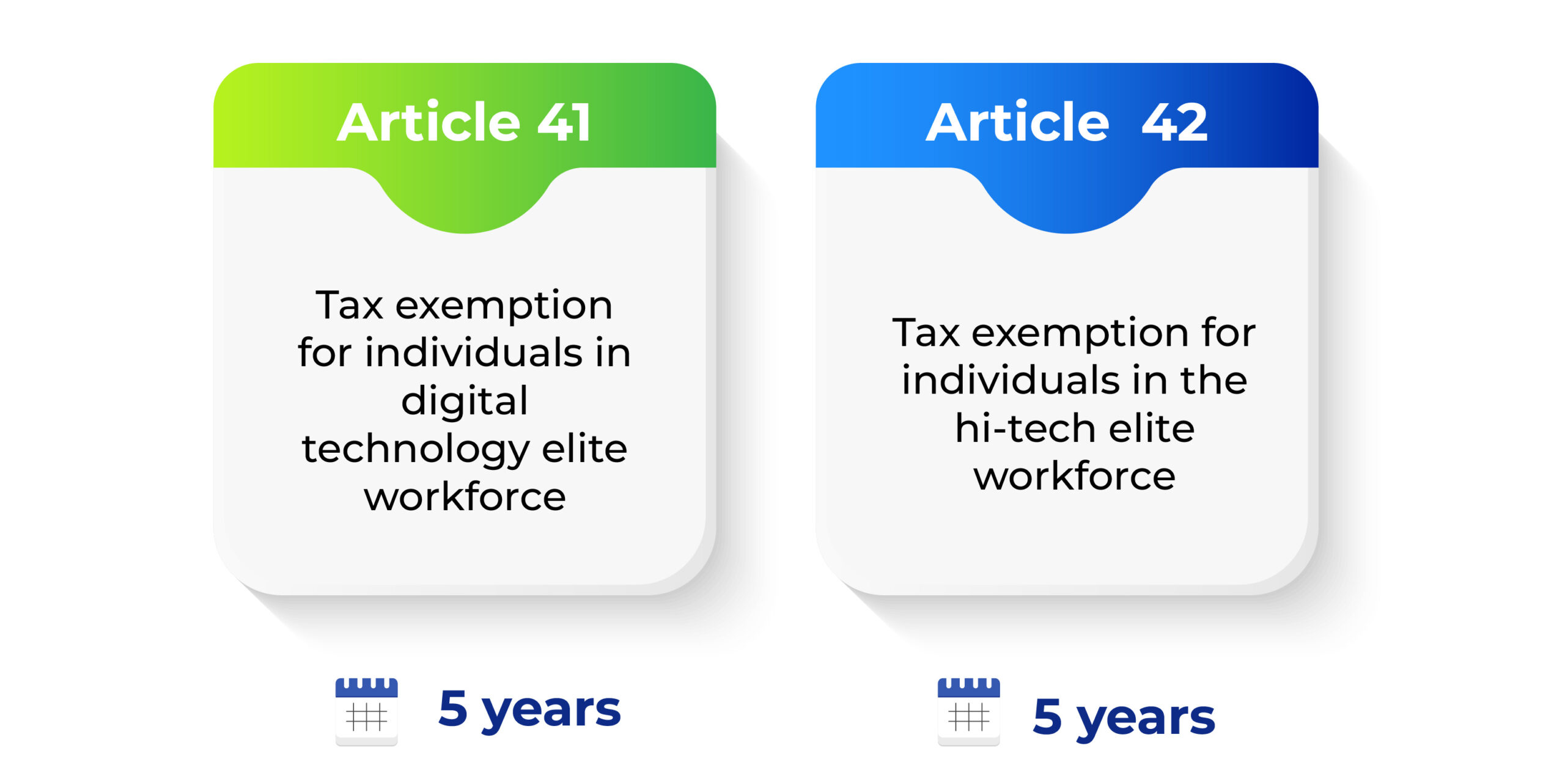
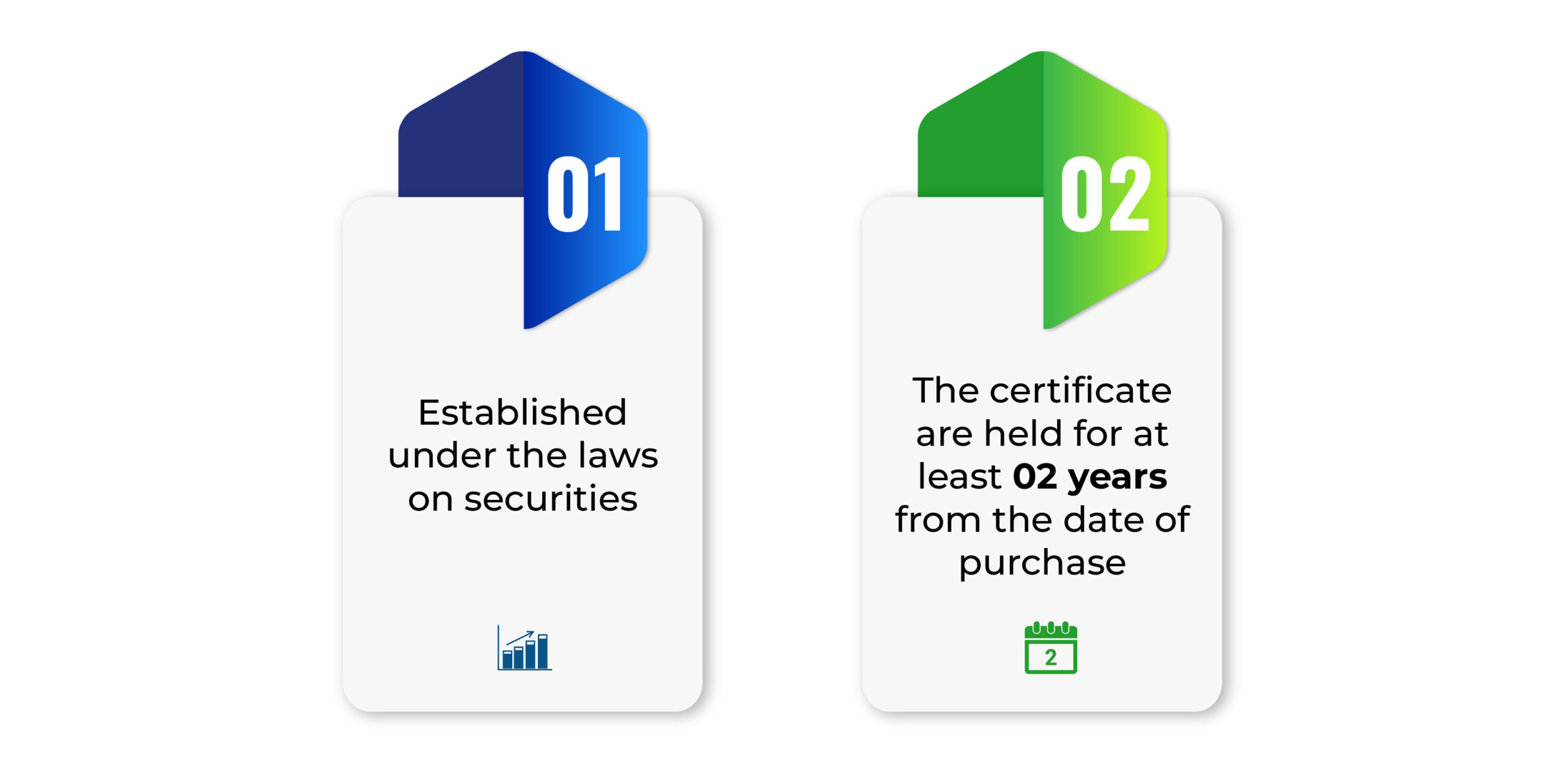
Moreover, Decree 253 also expands on conditional personal income tax exemption applicable to transfer of fund certificates of open-ended funds. Accordingly, for this type of income to be eligible for personal income tax exemption, the following conditions must be satisfied:
Aside from the Articles from 18 to 39 and Articles from 41 and 43, some cases of tax exemption could also be found in other provisions, although it is not explicitly specified as cases of tax exemption, through stating that these type of sums are not subject to personal income tax, it could be inferred that they are also cases of tax exemptions. In which cases, they include:
3. Regulations on Personal Income Tax (PIT) in respect of real estate
3.1. Income related to real estate subject to PIT
As the detailed guidelines of the Law on PIT, all types of incomes that are categorized as income from transfer of real estate under the Law on PIT are also put in the same category by Decree 253, which includes:
- Income from transfer of land use right and property affixed to land such as housing, infrastructure, including off-plan properties.
- Income from transfer of ownership of or use right over housing.
- Income from transfer of lending right over land or water surface.
- Income from capital contribution by means of real estate to establish enterprise or increase the charter capital.
However, aside from the above cases, Decree 253 also adds the case of transfer of sole proprietorship or single-membered limited company owned by a single individual involving real estate to cases of income from transfer of real estate subject to PIT[12].
Aside from the above types of income, in relation to real estate, income of the receipt of gift or inheritance of real estate shall also be subject to PIT, unless they fall under the category of cases eligible for PIT exemption, which shall be delved into in the next part of this article.
3.2 Cases of PIT exemption
Decree 253 continues to maintain tax exemption policy that reflects humanistic policies and development orientations, to be specific:
- Transfer among relatives: Tax exemption for transactions (including inheritance and gift) between spouses; parents and children (including adopted son, daughter-in-law, son-in-law); grandparents and grandchildren; blood siblings.
- Transfer of sole housing or residential land: Decree 253 allows transfer of the sole housing and residential land in Vietnam to be exempted from PIT, provided that the following three conditions are met:
- The transferer only have the ownership over a single house or the land use right of a single piece of residential land at the time of transfer;
- Transferer has owned the concerned property for at least 183 days; and
- The transfer involves the whole property.
However, it should be noted that, the tax exemption in this particular case is not applicable to off-plan property.
- Income from allocation of agriculture land: Tax exemption for the value gained from the free-or-charge allocation of land or the decrease in the land use fee. At the same time, cases of agriculture land conversion to rationalize production shall also be subject to tax exemptions, provided that such conversion does not change the land use purposes.
3.3. Basis and timing for tax calculations
3.3.1. For income from transfer of real estate
Decree 253 Decree No. 253 sets out comprehensive rules governing the tax base and the timing of tax determination for income arising from real estate transfers. The following are some of the key changes introduced under Decree No. 253:
- Regarding PIT rate: For residential individuals, PIT from transfer of real estate shall be determined based on the transfer price multiply with 2%[13].
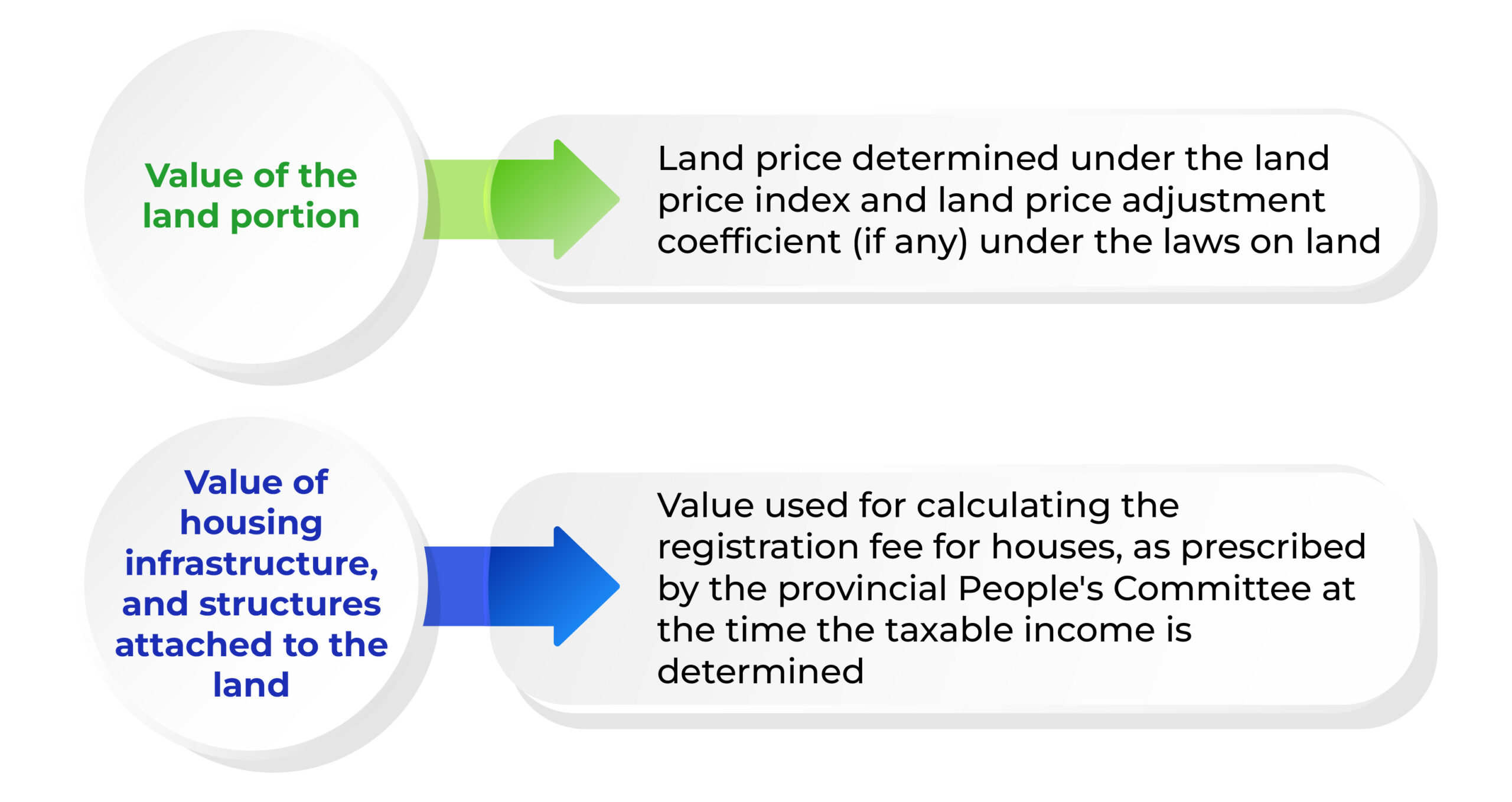
- Determination of the taxable value: Decree No. 253 provides that the price stated in the transfer agreement shall generally be used as the basis for tax calculation. However, for the cases where:
- The agreement does not specify the price;
- The value of the land portion is lower than the land price determined under the land price index and land price adjustment coefficient (if any) under the laws on land; or
- The value of housing, infrastructure, and structures attached to the land is lower than the value used for calculating the registration fee for houses, as prescribed by the provincial People’s Committee at the time the taxable income is determined.
The taxable value shall be determined as follows:
For off-plan properties, the price shall be determined based on the capital contribution ratio and the price for the calculation of registration fee or the Ministry of Construction’s construction investment cost per unit.
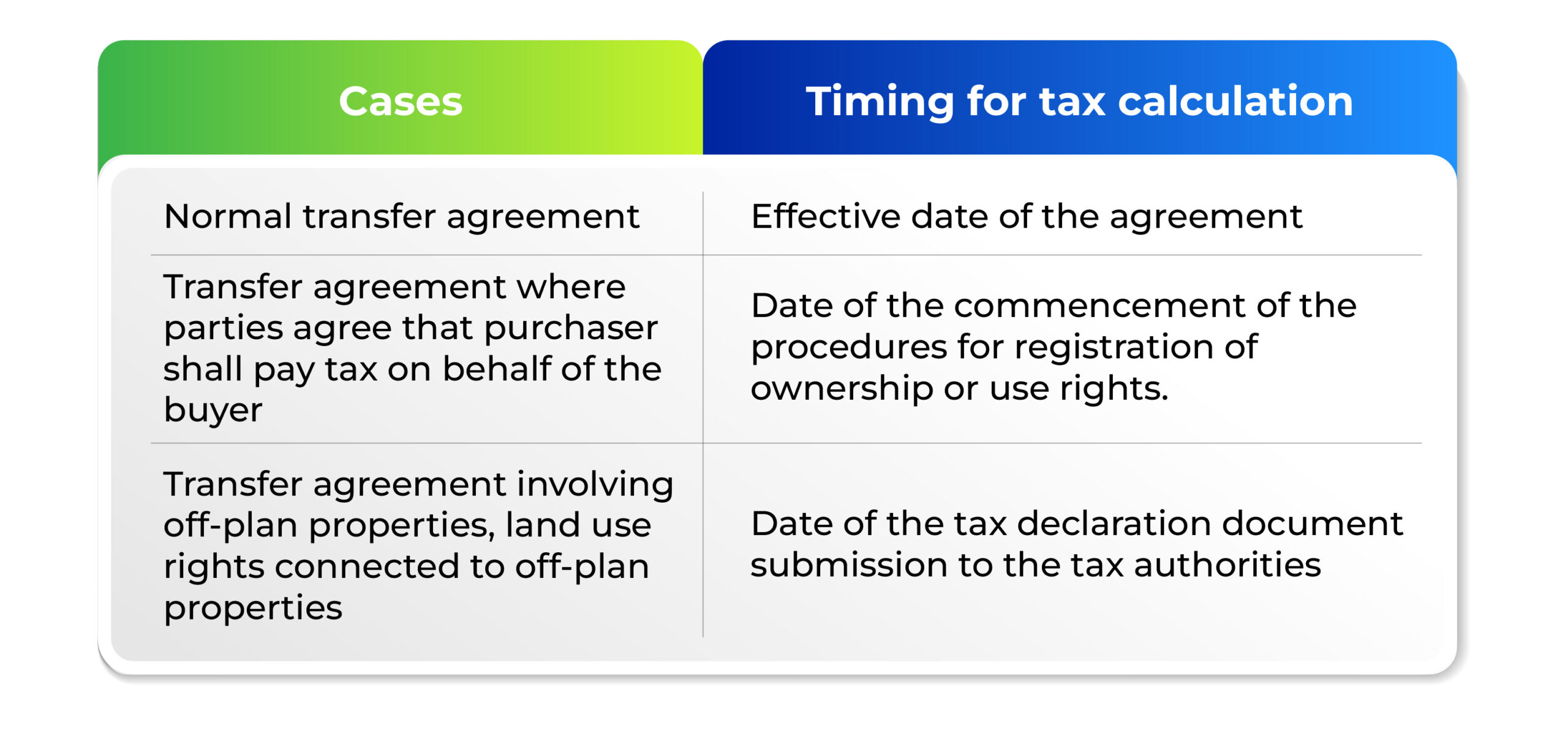
- Regarding the timing for tax calculation: Decree 253 specifies that the timing shall be different depending on the cases as follows[14]:
Do note that, for cases of capital contribution by means of real estate, concerned individuals are not obligated to pay tax at the time of the contribution, such liability shall only arise upon the transfer or withdrawal of the contributed capital, or upon the dissolution of the enterprise.
3.3.2. For income from receipt of gift or inheritance in the forms of real state
Aside from normal transfer activities, income from receipt of inheritance or gifts in the form of real estate shall be subject to a tax rate of 10%[15]. Taxable income is the portion exceeding 20 million dong in each instance. This value shall be determined based on the land price index, adjustment coefficient, or the price for the determination of registration fee of houses and architectural constructions at the time of ownership registration.
4. Regulations on PIT from capital investment activities and securities trading
4.1. Income from capital investment
Aside from loan interests and dividends specified in the Law on Personal Income Tax 2025, Decree 253 has listed 4 more types of income under income from capital investment through clarification on “Income from capital investment under other forms”. The listed types of income include[16]:
- The increase in capital contribution upon the dissolution of the enterprise, change in the operation model, separation, division, merger, and consolidation of enterprises or upon capital withdrawal;
- Income from interests on bonds, bills, and other valuable papers issued by domestic organizations;
- Other types of income from capital investment under other forms in accordance with the law, including capital contribution in the form of materialistic items, land use rights, land-affixed assets, rights over intellectual property, technology, and technical secret;
- Income from dividends paid in securities, shares originating from the capital of the owner issued to the existing shareholders, income from capital gain through dividend.
Regarding the tax rate, Decree 253 provides that the PIT applicable to income from capital investment of residential individuals is fixed at 5% of the taxable income. Taxable income is the entire amount of income subject to tax that is received by individuals in each instance
4.2. Income from securities trading
Decree 253 defines securities trading includes sale of shares, rights to buy shares, bonds, bills, fund certificate, and other types of securities as prescribed by the Law on Securities.
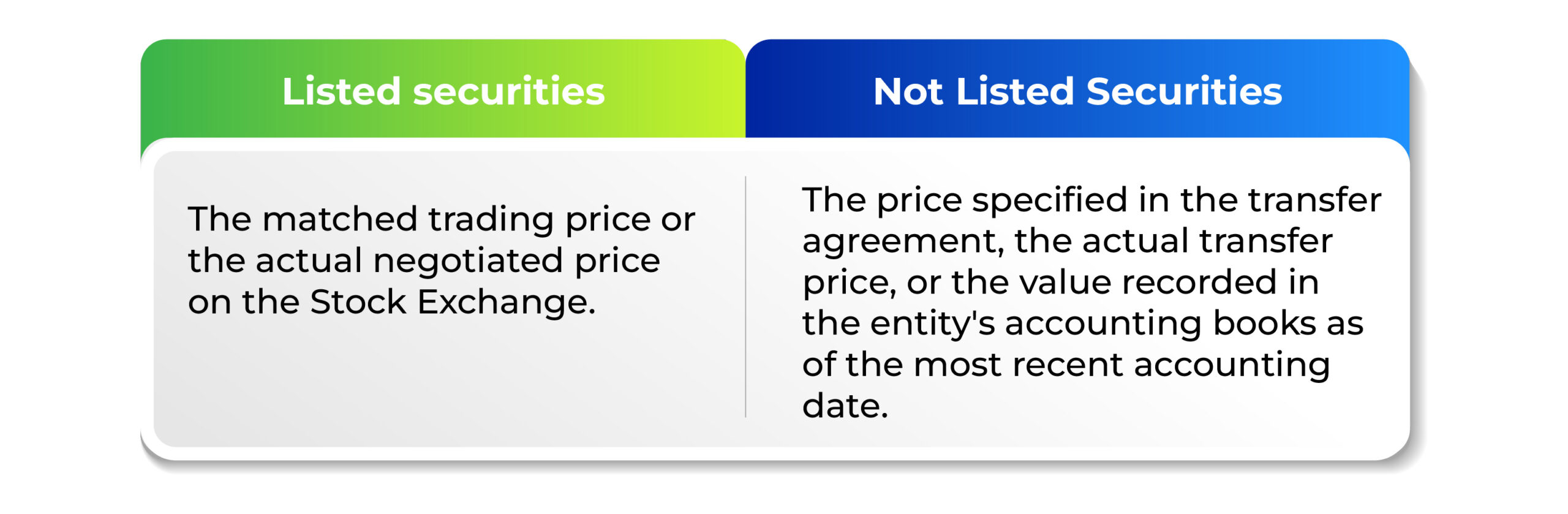
Regarding the tax rate, Decree 253 applies a tax rate of 0,1% on each instance of transactions, based on the taxable value of that transaction. Depending on whether the securities have been listed or not, the value used for PIT calculation shall differ:
5. What CNC can support?
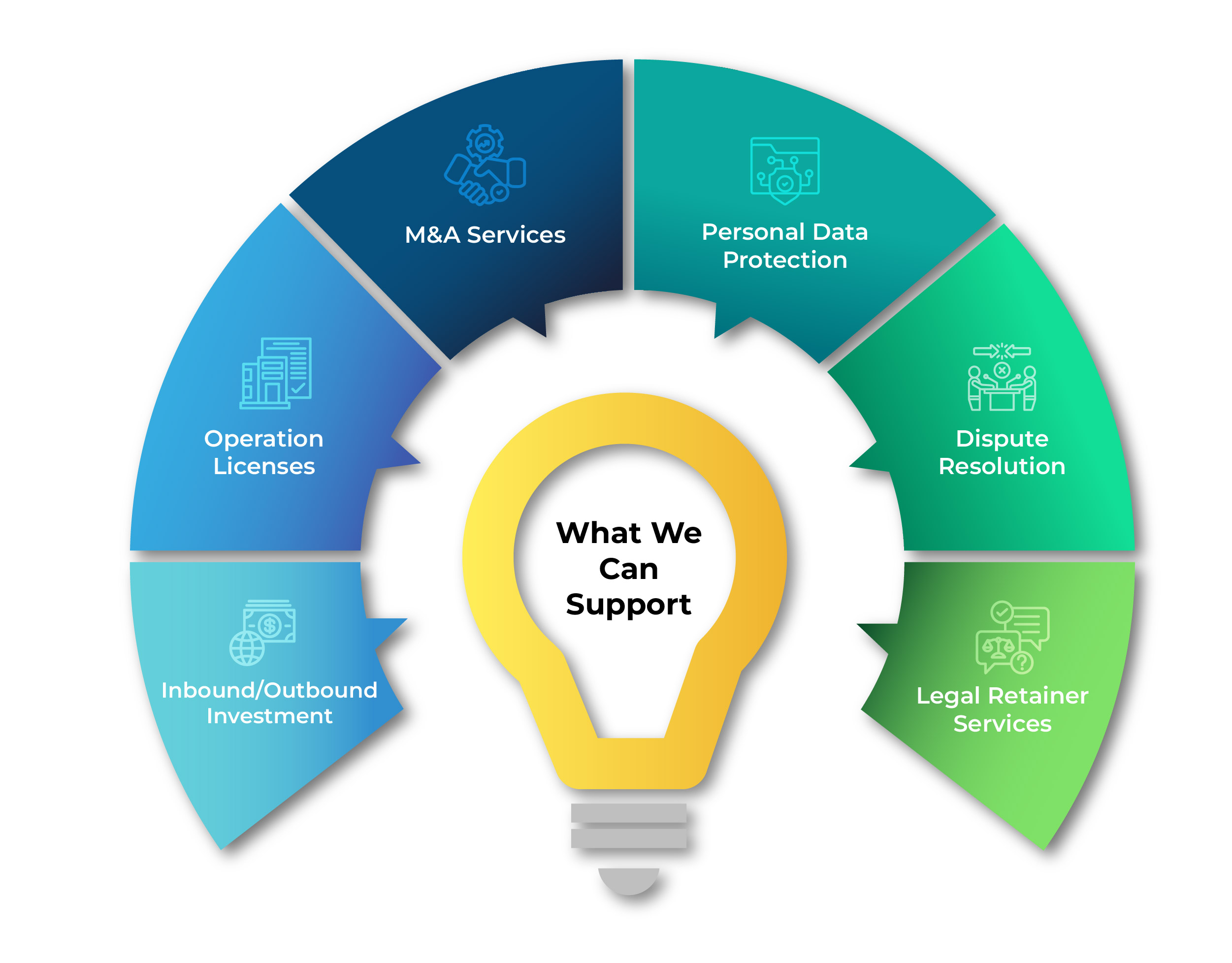
- Inbound/Outbound Investment: Company Establishment, Investment Registration and Post-registration Services in relation to tax, accounting, labor, insurance, salary, and outsourced legal department;
- Operation Licenses: We could provide support in the application for operation licenses for business activities in fields such as manufacturing, commerce, services, e-commerce, healthcare, education, or food & beverage (restaurants);
- M&A Services: Conduct legal due diligence, structure transactions, draft and negotiate transaction documents, provide advice on competition law compliance (including merger control filings and related approvals), obtain necessary regulatory approvals and licenses, and provide post-closing support;
- Personal Data Protection: Provide support in compliance with the data protection regulations, including the drafting and reviewing of Data Protection Impact Assessment (DPIAs), Data Processing/Transfer Agreement, Privacy Policies, and other necessary documents under the Personal Data Protection Decree (PDPD);
- Dispute Resolution: Litigation and Commercial Arbitration (VIAC SIAC ICC); and
- Legal Retainer Services per the clients’ requests.
Please contact Mr. Chris Luong – Partner through the email address of chris.luong@cnccounsel.com or Ms. Ngan Nguyen – Partner through the email address of ngan.nguyen@cnccousel.com for prompt and timely support.
Managed by
 |
Nguyen Thi Kim Ngan I Partner
Phone: (84) 919 639 093 Email: ngan.nguyen@cnccounsel.com |
 |
Luong Van Chuong I Partner
Phone: (84) 938 04 7969 Email: chris.luong@cnccounsel.com |
 |
Lam Kim long | Legal Assistant
Phone: (84) 28 6276-9900 Email: an.trinh@cnccounsel.com |
Contact Us
For further information, please contact:
CNC Vietnam Law Firm
Address: The Rise Building, 2A1 Nguyen Thi Minh Khai, Sai Gon Ward, Ho Chi Minh City, Vietnam
Phone: (84) 28-6276 9900
Hotline: (84) 916-545-618
Email: contact@cnccounsel.com
Website: cnccounsel
We would be delighted to welcome you at CNC’s office, where you’ll have the opportunity to consult with the lawyer best suited to your circumstances. Of course, if you are unable to meet in person, simply email us via contact@cnccounsel.com or call us via (+84-28) 6276 9900.
It would be a pleasure for CNC’s lawyers to help you build a solid legal foundation, thus ensuring the success and sustainable development of your project!
————————————
Copyright © CNC Counsel. All rights reserved. Ownership: This documentation and content (Content) is a proprietary resource owned exclusively by CNC Counsel. Use of this Content does not of itself create a contractual relationship, nor any attorney/client relationship, between CNC Counsel and any person. Disclaimers: The Content provided is for informational purposes only and may not reflect the latest legal or regulatory developments. Summaries of laws, regulations, and practices are subject to change. This Content does not constitute legal or professional advice for any specific situation and should not be relied upon as a substitute for reviewing and complying with applicable laws, rules, regulations, or official forms. Always seek legal counsel before making any decisions or taking any action based on this Content. CNC Counsel, along with its editors and contributing authors, make no guarantees regarding the accuracy of the Content and explicitly disclaim any liability for any consequences resulting from actions taken, allowed, or omitted, whether fully or partially based on any part of the Content. The Content may include links to external websites, and external sites may also link to it. CNC Counsel is not responsible for the content or functionality of any such external websites and disclaims all liability for any issues arising from their content or operation. Please note: Past results do not guarantee similar outcomes.
————————————
[1] Clause 2 Article 6 Decree 253
[2] Article 4 Decree 253
[3] Clause 6 Article 7 Decree 253, point d clause 1 Article 3 Law on Personal Income Tax 2025
[4] Clause 4 Article 12 Decree 253
[5] Article 59 Decree 253
[6] Clause 2 Article 16 Decree 253
[7] Clause 2 Article 18 Decree 253
[8] Clause 2 Article 24 Decree 253
[9] Clause 1 Article 27 Decree 253
[10] Point g, clause 2, Article 8 Decree 253
[11] Clause 3 Article 8 Decree 253
[12] Clause 5 Article 10 Decree 253
[13] Clause 1 Article 57 Decree 253
[14] Clause 5 Article 57 Decree 253
[15] Clause 1 Article 61 Decree 253
[16] Clause 3 Article 9 Decree 253