





Ministry of Justice is currently collecting opinions on the Draft of Law on Lawyers (Amendment). If this legal instrument is passed, this could be considered the most significant change to the Law on Lawyer since 2006 as it not only directly impacts the activities of lawyers and law practicing organizations but also brings forth significant change to the legal services market and the legal system of Vietnam.
Particularly, many new provisions in this Draft of the Law on Lawyers (Amendment) demonstrate the trend of aligning with international practices, thereby enhancing the role of lawyers in judicial activities, while also facilitating law practicing organizations in the development of a more professional and robust model.
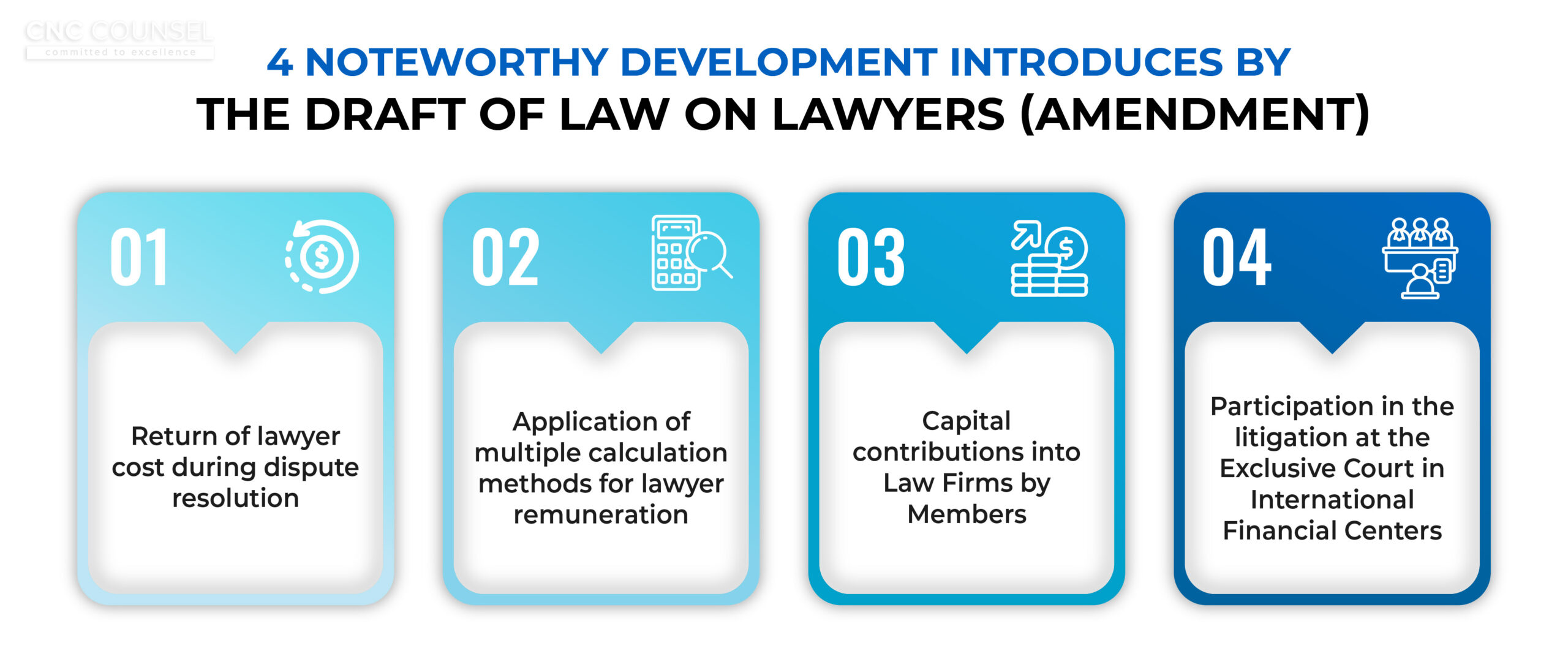
1. Return of lawyer cost during dispute resolution
Pursuant to Article 18.5 of the Draft of the Law on Lawyers (Amendment)
“The competent authorities for dispute resolution could decide whether a party must bear the full or partial remuneration or reasonable costs incurred to engage lawyers upon the request of the other party”.
This is a foundational change for the legal services market in Vietnam. As of the present, the lawyer cost is often viewed as a sum to be borne by each party, even if that party is the winner in the case. This has deterred individuals and enterprises from engaging lawyers or pursuing disputes with lesser value.
If this provision is passed, the legal cost could be considered a form of damage or the litigation cost could be subject to consideration for return. In these events, contract breaches or law violations would not only result in the common compensation obligations, but also the potential increase in litigation cost that would ultimately be borne by the breaching parties and law offenders.
From the policy perspective, this provision helps enhance the awareness of the public in legal compliance. From the professional perspective, this is a more explicit recognition of the legal services offered by lawyers for the protection of clients’ legitimate rights and interests.
In the long run, it is expected that changes in the ideology over the use of legal services could be observed in the market, with the “use of legal services for dispute prevention” ideology taking over the “legal services are only necessary when disputes have occurred” ideology.
2. Application of multiple calculation methods for lawyer remuneration
Article 18.3 of the Draft of the Law on Lawyers (Amendment) reads: “Remuneration from a case could be calculated under one or some of the following methods:
a) Based on the working hours of the lawyers;
b) Based on a lump sum basis;
c) Based on a percentage of the value of the dispute;
d) Based on the fixed remuneration as specified in the legal retainer contract.”
Although it is just a small change in the wordings, this is a rather impactful change in practice. From the theoretical perspective, this new approach opens up the possibility of applying multiple remuneration calculation methods in the same case, for example:
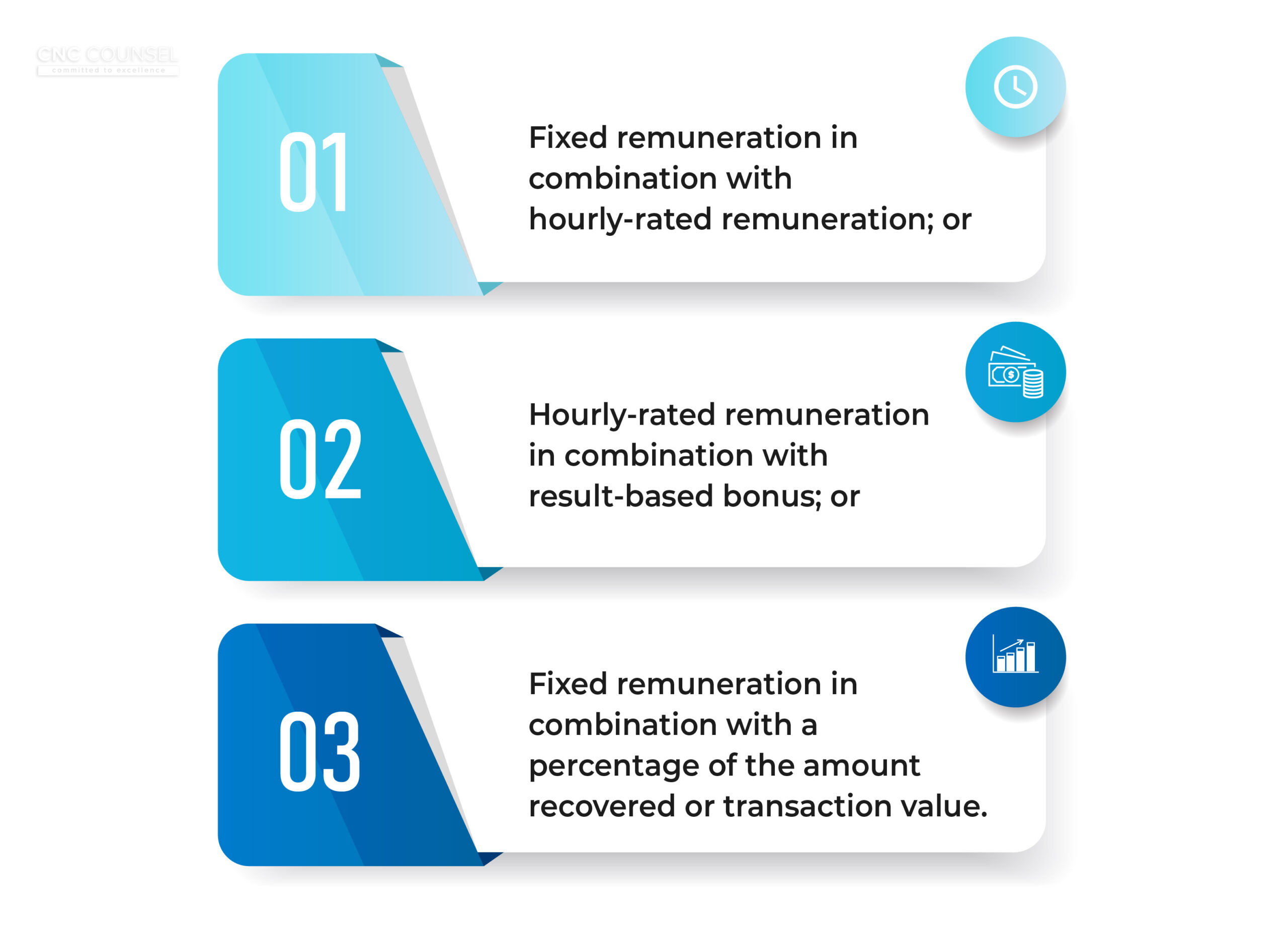
The use of models in combination has been widely popularized in developing legal services market. The flexibility offered by such combination allows lawyers and clients to easily establish an appropriate fee model to the nature of each case, while also facilitating law firms to develop more in-depth, diverse, and competitive service models.
More importantly, this regulation contributes to the transformation of the legal profession from a traditional practice model to a professional service model that places work efficiency and the value delivered to clients at its core.
A brief overview of the 2000 years of evolution of legal fee models around the world:
The challenge of finding an effective method for pricing legal services has existed for more than 2,000 years. From antiquity to the present day, the central difficulty has remained largely unchanged since legal works are inherently difficult to value due to: the flexible nature of scope of legal works, the post completion determination of value, and the general struggle of clients in the “recognition” of the value of the work performed.
Throughout most of legal history, lawyers in England and Wales, and later in the United States, were compensated through a variety of fee arrangements, including—but by no means limited to—hourly billing. Compensation could take the form of gifts, retainer fees, fixed fees, court-approved costs, statutory fee schedules, success-based bonuses, negotiated fees, and only much later, hourly rates.
Each pricing model sought to value legal work differently, yet none fully resolved the underlying problem. Fixed fees provide certainty but depend on a clearly defined scope of work, which is often difficult to determine at the outset. Contingency fees expand access to legal services but tie lawyers’ compensation to outcomes that may lie partly beyond their control. Court-assessed fees offer oversight but can be slow and cumbersome. Hourly billing records effort but does not necessarily capture value. Negotiated fee arrangements provide predictability, yet frequently rely on time-based data in their formulation.
- Antiquity (Greece – Rome): Logographers (speechwriters) and advocates were initially compensated through gifts, with formal fee arrangements emerging only later. Nevertheless, the fundamental economic premise already existed: a person possessing legal knowledge and rhetorical skill could transform a dispute into a persuasive argument, and such skill had value.
- Medieval England (1100-1500): During this period, lawyers were commonly compensated through gifts, robes, retainers, and similar forms of remuneration. This reflected the prevailing belief that knowledge was a gift from God and that selling knowledge for profit was morally questionable. Lawyers received compensation, but the profession maintained the appearance of a “vocation” rather than an ordinary commercial service.
- Early Modern Period (1300-1700): During this period, legal work was typically priced on a task-by-task basis. Lawyers could charge separately for court appearances, drafting pleadings and legal documents, providing advice, travelling, waiting time, or maintaining ongoing availability to a client. Hourly billing had not yet emerged
- The Eighteenth and Nineteenth Centuries: In England, courts exercised significant control over legal fees and required detailed accounting of charges. In the United States, fixed fee schedules developed through statutes or established practice for various legal services (such as wills, title examinations, etc.).
- Contingency Fee: The United States embraced contingency fee arrangements relatively early in the nineteenth century as a means of expanding access to justice for individuals who could not otherwise afford legal representation. England, by contrast, resisted such arrangements due to concerns about encouraging speculative litigation and did not formally embrace them until the 1990s.
- The Emergence of Billable Hour (1910-1940): Reginald Heber Smith is generally credited with pioneering the use of timesheets as an internal management tool for lawyers at Legal Aid. He later introduced and popularized the system at the law firm Hale and Dorr. Over time, hourly billing evolved into the dominant pricing mechanism for legal services worldwide. The six-minute billing unit (one-tenth of an hour) originated during this period.
- The Golden Age of Billable Hour (1940-1980): Hourly billing gained widespread acceptance because it made legal work easier to explain and document. An invoice could specify exactly which lawyer performed which task, for how long, and at what rate. This was particularly important in the United States, where increasingly sophisticated corporate clients demanded accountability. The model became closely associated with the “Cravath System,” named after Paul Drennan Cravath of the law firm now known as Cravath, Swaine & Moore.
This structure has fundamentally changed the economics of law firms. Modern firms no longer sold only the expertise of a few senior lawyers but also the coordinated efforts of teams of associates. Associate time became measurable, comparable, and billable. Law firms could monitor productivity while providing clients with detailed records of work performed.
Following the case of Goldfarb v. Virginia State Bar in 1975, hourly billing became even more entrenched as the most objective and auditable method of legal pricing.
- Peak and Crisis (1980-2008): Hourly billing became the “golden goose” of law firms around the world. It effectively addressed uncertainty and could be applied across litigation, transactions, investigations, and advisory work. However, it also exposed new tensions. Most notably, it priced effort rather than results. It explained what lawyers had done, but not necessarily the value they had created.
- The Era of Hybrid Models (2008-Present): Following the global financial crisis of 2008, corporate clients increasingly demanded greater cost discipline and budget certainty. As a result, law firms adopted a wide range of fee arrangements, including capped fees, fixed fees, blended rates, retainers, subscription models, and other alternative fee arrangements. General counsel sought clearer limits, stronger cost controls, and greater predictability in managing external legal spending.
Yet these alternative models continue to depend heavily on time-based data. Fixed fees are typically built upon projected hours. Capped fees rely on forecasts of workload. Even if invoices do not display six-minute billing increments, time remains an essential input in designing legal pricing models for clients.
Furthermore, artificial intelligence is dramatically accelerating many forms of legal work, including drafting, document review, and legal research, which consequentially put the billable-hour model into question. Lawyers cannot reasonably charge five hours for work that takes twenty minutes with AI assistance. Yet charging only for twenty minutes fails to reflect the judgment, risk allocation, responsibility, and expertise inherent in legal practice.
Evidently, no pricing model has ever been perfect. Every era has sought to balance competing objectives: predictability for clients, fairness for lawyers, and effective quality control.
Artificial intelligence is not creating a new problem. Rather, it is forcing the legal profession to revisit the same question that has persisted for more than two millennia: How should the true value of legal work be priced?
3. Capital contributions into Law Firms by Members
One of the most groundbreaking proposals in the Draft of the Law on Lawyers (Amendment) is found in Article 19.1.(b) “…Multi-membered liability law firm established by at least two partners, could also have capital-contributing members in accordance with the regulations of the Government. Capital-contributing members shall not act as the legal representative, provide legal services nor participate in the management activities of the Firm”.
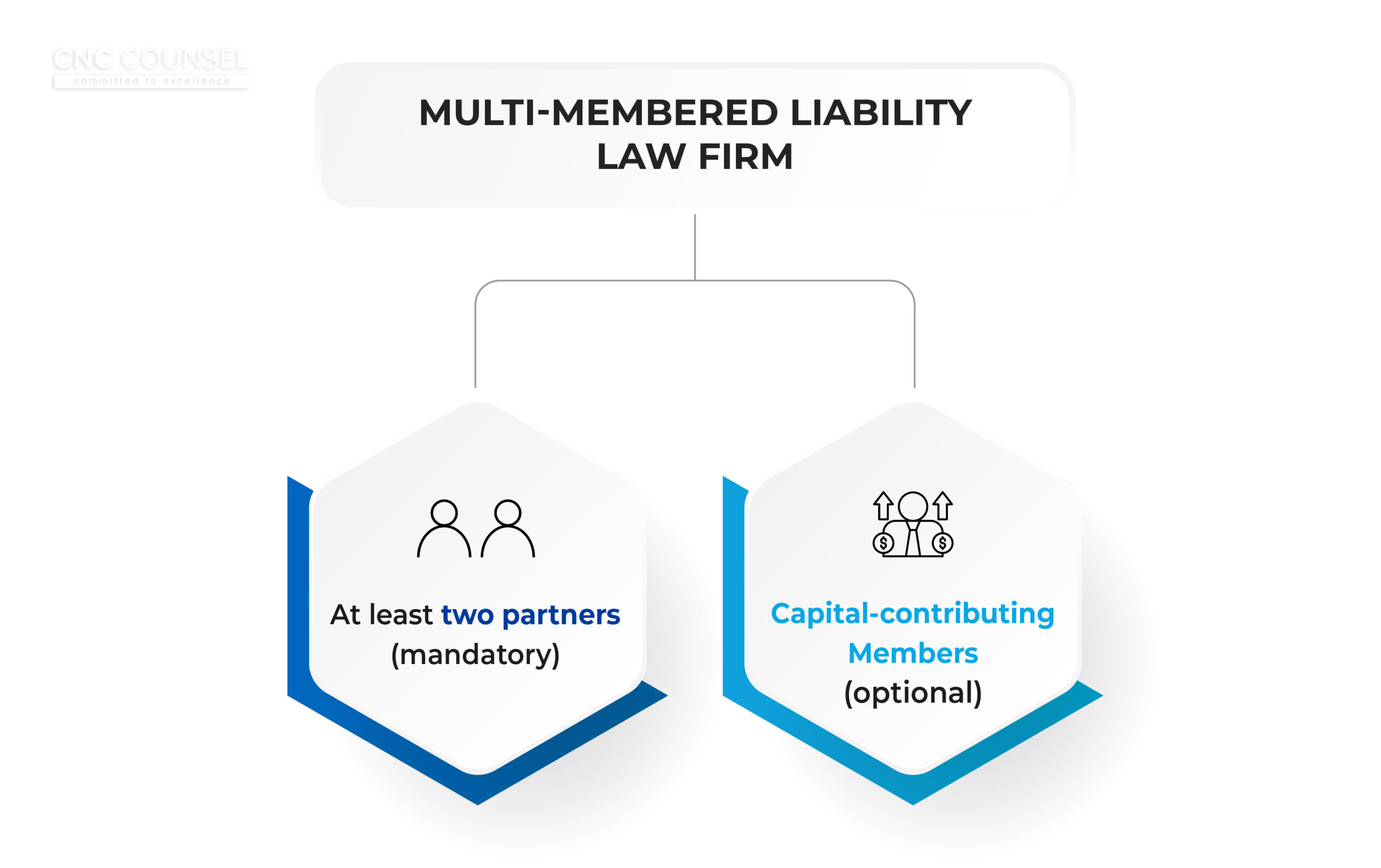
Although capital-contributing members would not be permitted to participate in management, act as the legal representative, or directly provide legal services, this proposal could nevertheless bring about a significant transformation in the development structure of law practicing organizations.
Historically, one of the greatest limitations facing Vietnamese law firms has been their ability to raise capital. Expansion, technological investment, talent development, and the growth of operational networks have largely depended on the financial resources of the partners themselves.
If the capital contribution mechanism is designed appropriately, law firms could gain access to additional resources for investment in legal technology (LegalTech), artificial intelligence, corporate governance, professional training, and brand development.
Such a framework could lay the foundation for the emergence of larger Vietnamese law firms with stronger competitive capabilities and the capacity to deliver legal services at a professional standard comparable to that of international firms.
4. More opportunities for participation in the litigation at the Exclusive Court in International Financial Centers
The Draft of the Law on Lawyers (Amendment) continues to reaffirm the principle that foreign lawyers and Vietnamese lawyers working at foreign law firms in Vietnam are not permitted to participate in proceedings before Vietnamese courts as representatives, defense counsel, or protectors of the lawful rights and interests of litigants, except where otherwise provided by law.
However, a noteworthy development is found in Article 16.3, which introduces an exception:
“…Foreign lawyers and Vietnamese lawyers working at foreign law firms in Vietnam shall not provide services regarding legal documents and notarization in relation to Vietnamese laws, or participate in the litigation as representatives, defense counsel, or protectors of the lawful rights and interests of litigants, except the case provided in clause 3 of this Article.
3. Vietnamese and foreign lawyers working in Vietnam could represents the litigants at the Exclusive Court in accordance with the laws on Exclusive Court in International Financial Centers or in other cases permitted by the laws”
This expansion of the scope of practice creates a new arena for lawyers specializing in dispute resolution at the International Financial Center. In the long term, the provision may contribute to enhancing the quality of legal talent, promoting professional competition, and increasing Vietnam’s attractiveness as a venue for resolving international disputes.
Overall, the proposals contained in the Draft of the Law on Lawyers (Amendment) are not merely technical revisions to the regulation of legal practice. Rather, they reflect a broader policy shift toward recognizing lawyers as an essential institution of a modern justice system, rather than simply professionals who become involved after disputes have arisen.
With potential recoverability of legal costs, more flexible pricing model for legal services, law firms’ ability to attract investment capital for growth, and the gradually expanding scope of legal practice, Vietnam’s legal services market may enter a new stage of development. Such changes are likely to reshape the public and enterprises’ perceptions of lawyers: from viewing legal services as an incurred expense to recognizing them as an investment in risk management, rights protection, and value creation.
If passed in its current form, the Draft of the Law on Lawyers (Amendment) could become one of the key driving forces of the ongoing professionalization of the legal profession, the enhancement of legal service quality, and the development of a more modern, transparent, and effective justice system in Vietnam.
5. What support could CNC provide?
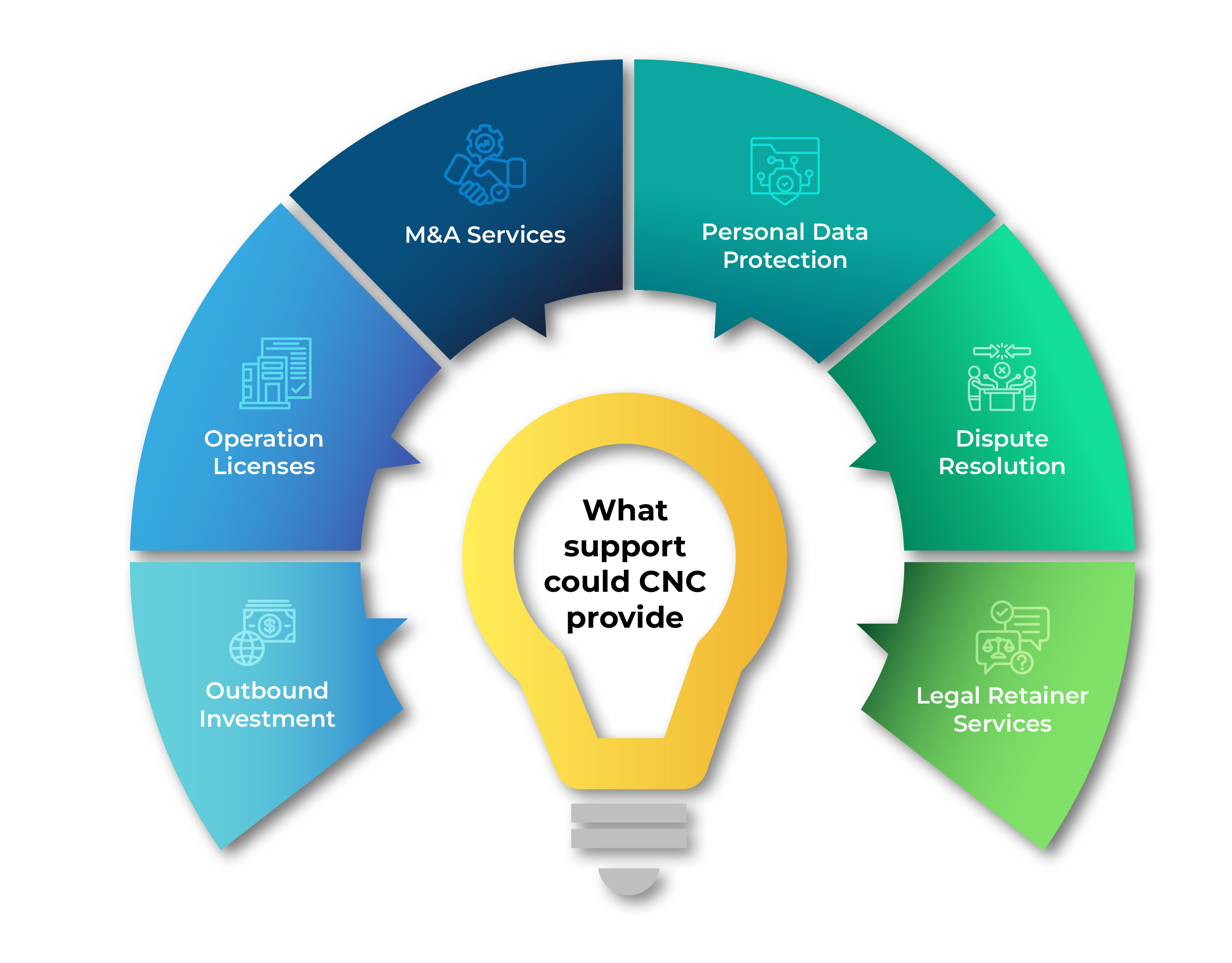
- Outbound Investment: Company Establishment, Investment Registration and Post-registration Services in relation to tax, accounting, labor, insurance, salary, and outsourced legal department;
- Operation Licenses: We could provide support in the application for operation licenses for business activities in fields such as manufacturing, commerce, services, e-commerce, healthcare, education, or food & beverage (restaurants);
- M&A Services: Conduct legal due diligence, structure transactions, draft and negotiate transaction documents, provide advice on competition law compliance (including merger control filings and related approvals), obtain necessary regulatory approvals and licenses, and provide post-closing support;
- Personal Data Protection: Provide support in compliance with the data protection regulations, including the drafting and reviewing of Data Protection Impact Assessment (DPIAs), Data Processing/Transfer Agreement, Privacy Policies, and other necessary documents under the Personal Data Protection Decree (PDPD);
- Dispute Resolution: Litigation and Commercial Arbitration (VIAC SIAC ICC); and
- Legal Retainer Services per the clients’ requests.
Please contact Mr. Chris Luong – Partner through the email address of chris.luong@cnccounsel.com or Ms. Ngan Nguyen – Partner through the email address of ngan.nguyen@cnccousel.com for prompt and timely support.
Managed by
 |
Nguyen Thi Kim Ngan I Partner
Phone: (84) 919 639 093 Email: ngan.nguyen@cnccounsel.com |
 |
Luong Van Chuong I Partner
Phone: (84) 938 04 7969 Email: chris.luong@cnccounsel.com |
 |
Tran Thi Thanh | Associate
Phone: (84) 981 317 539 Email: thanh.tran@cnccounsel.com |
Contact Us
For further information, please contact:
CNC Vietnam Law Firm
Address: The Rise Building, 2A1 Nguyen Thi Minh Khai, Sai Gon Ward, Ho Chi Minh City, Vietnam
Phone: (84) 28-6276 9900
Hotline: (84) 916-545-618
Email: contact@cnccounsel.com
Website: cnccounsel
We would be delighted to welcome you at CNC’s office, where you’ll have the opportunity to consult with the lawyer best suited to your circumstances. Of course, if you are unable to meet in person, simply email us via contact@cnccounsel.com or call us via (+84-28) 6276 9900.
It would be a pleasure for CNC’s lawyers to help you build a solid legal foundation, thus ensuring the success and sustainable development of your project!
————————————
Copyright © CNC Counsel. All rights reserved. Ownership Rights: This document and the content contained herein (Document) are proprietary resources exclusively owned by CNC Counsel. Access to or use of this Document does not, by itself, create any contractual relationship or lawyer-client relationship between CNC Counsel and any person or entity. Disclaimer: All Documents are provided solely for informational purposes and may not reflect the most current legal developments. Summaries of laws, regulations, and practices are subject to change. This Document is not intended to constitute legal, professional, or other advice with respect to any specific matter. Nor is it intended to substitute for reference to, or compliance with, the detailed provisions of any applicable law, regulation, rule, or official form. Readers are strongly encouraged to seek independent legal advice before taking, or refraining from taking, any action based on the information contained in this Document. CNC Counsel, together with its editors and authors, makes no representations or warranties as to the accuracy, completeness, or currency of the Document and disclaims all liability to any person or entity arising from reliance on all or any part of the Document. This Document may contain links to external websites, and external websites may contain links to this Document. CNC Counsel is not responsible for the content, operation, availability, or practices of any such external websites and expressly disclaims any liability in connection therewith. Note: Past results do not guarantee similar outcomes in future matters. Each matter is unique and must be assessed based on its own facts and circumstances.