




Overview
On April 17, 2026, the Ministry of Industry and Trade (“MOIT”) issued Circular No. 20/2026/TT-BCT (“Circular 20“), effective from June 2, 2026, amending and supplementing certain articles of Circular No. 10/2025/TT-BCT (“Circular 10“) regarding the methodology and principles for applying the Avoided Cost Tariff (“ACT“) for small renewable energy (RE) power plants while also modifying several provisions of the power purchase agreement (“PPA“) applicable to this type of project.
The Avoidable Cost Tariff (ACT) is an electricity tariff pricing mechanism applied to small RE plants, formulated on the basis of costs that the national power system can “avoid” by receiving electricity from these power sources. In essence, instead of determining the electricity tariff based on the investment and operational costs of each specific project, the ACT mechanism calculates the tariff based on the economic benefits the power source brings to the system, encompassing generation costs, capacity costs, and transmission costs that the system is spared from incurring or can successfully save.
The ACT mechanism is designed to encourage the development of small-scale RE projects through a simpler pricing methodology, which facilitates the calculation and application, compared to the individualized tariff negotiation mechanism, which requires project investors to fully and comprehensively demonstrate the components constituting the electricity tariff. In the context of an advancing competitive power market like Vietnam, the ACT continues to serve as a crucial transitional mechanism, facilitating the participation of small RE projects in the power market while ensuring a balance between RE development objectives and the operational efficiency of the national power system.
Circular 20 was issued against the backdrop of the amended and supplemented Electricity Law 2024 and the ongoing refinement of Vietnam’s power market toward greater competitiveness. Despite not fundamentally altering the ACT mechanism, Circular 20 introduces several critical regulations aimed at enhancing transparency, predictability, and alignment with the practical operations of the power system.
In this article, CNC Counsel summarizes the most notable updates that project developers, power generation entities, credit institutions, and energy investors should bear in mind.
1. Expansion and Enhanced Flexibility of ACT Applicability
A paramount modification in Circular 20 is the revision of the definition of a “small renewable energy power plant”.
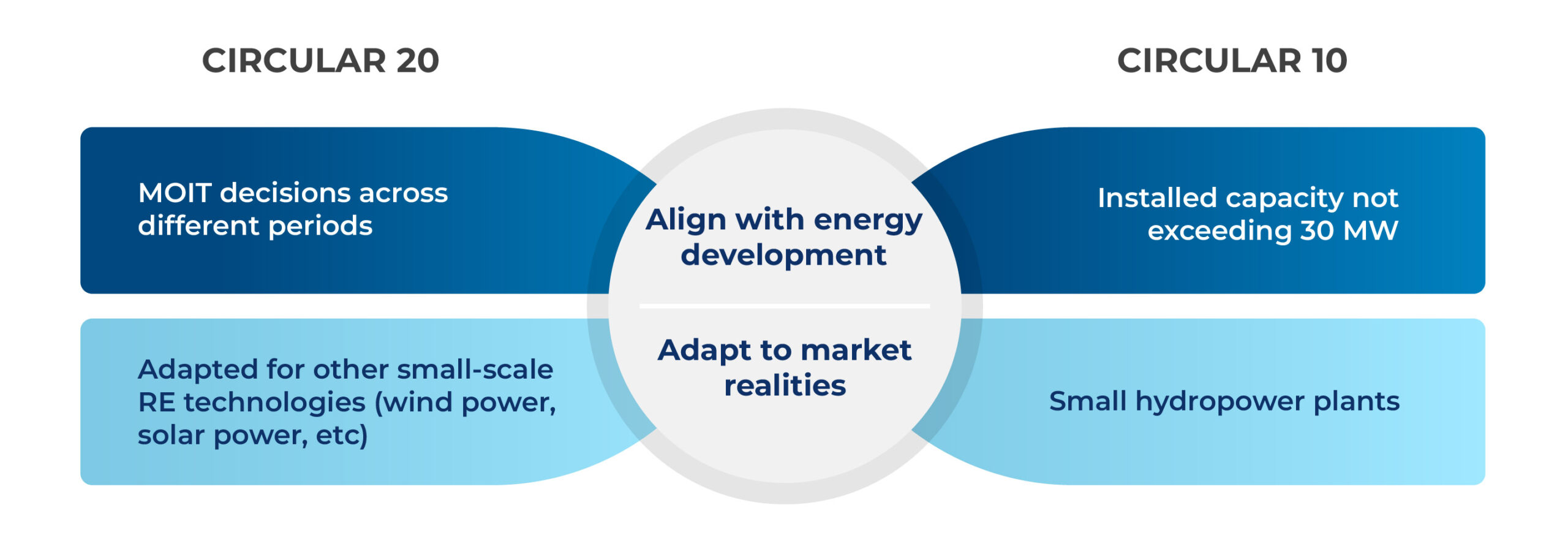
Under Circular 10, the categories of RE plants eligible for the ACT mechanism were rigidly defined, exclusively encompassing small hydropower plants with an installed capacity not exceeding 30 MW, as listed in Decision No. 2394/QD-BCN dated September 1, 2006, by the Ministry of Industry.[1]
Circular 20 shifts this approach by referencing capacity scales determined by MOIT decisions across different periods.[2] This grants the regulator greater flexibility to adjust the scope of ACT applicability in alignment with energy development strategies and market realities.
From a policy perspective, this signals that the ACT mechanism is no longer exclusively tailored for small hydropower but can be adapted for other small-scale RE technologies in the future (wind power, solar power, etc).
2. Specific Demarcation of Dry Season and Rainy Season by Region
This is considered one of the most operationally impactful amendments regarding ACT calculations.
Circular 10 previously applied a uniform timeframe for the rainy and dry seasons nationwide[3]. However, practical power system operations indicate substantial hydrological disparities among the Northern, Central, and Southern regions.
Circular 20 officially delineates the rainy and dry seasons by geographic region [4], detailing the modifications in the table below:
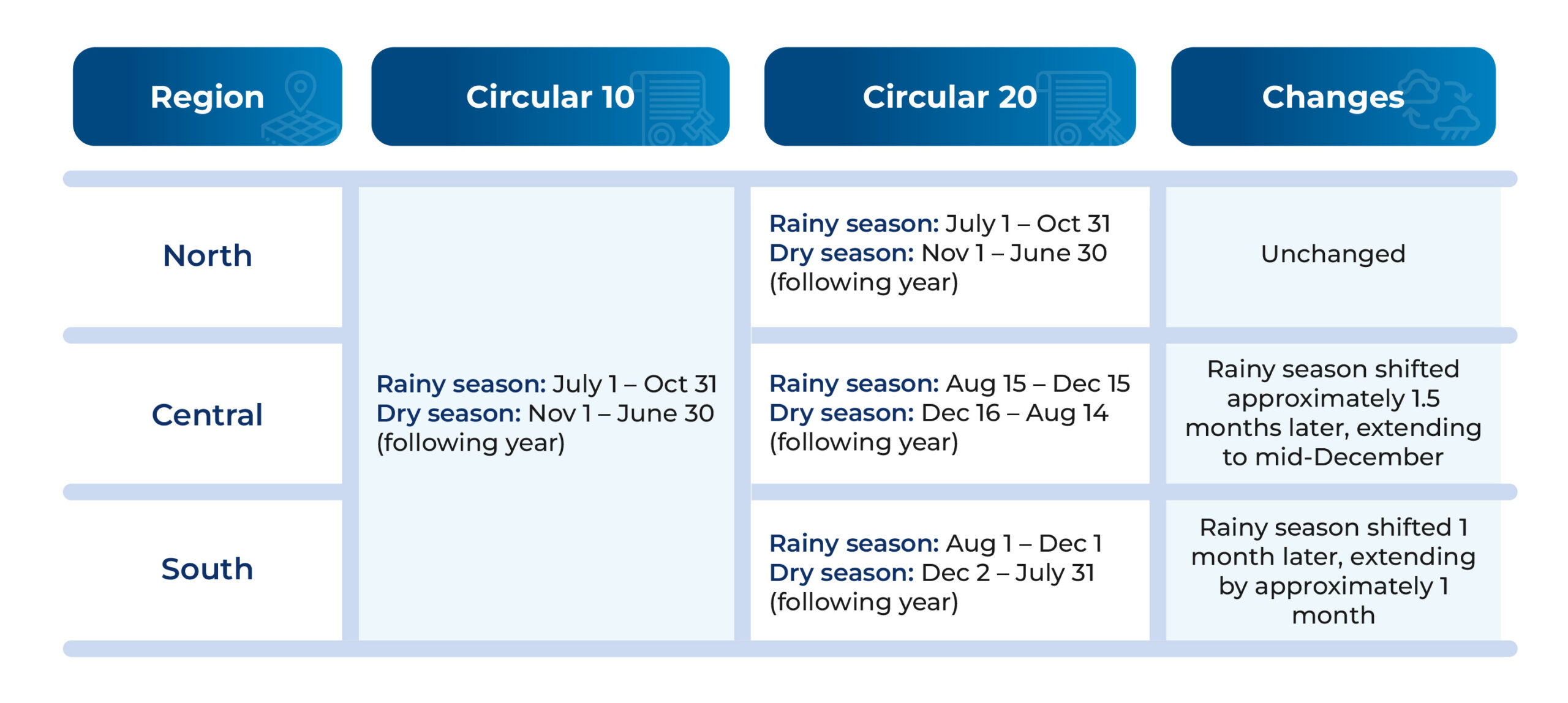
The North, Central and Southern regions specified in Circular 20 are delineated according to the power system boundaries under the control jurisdiction of the Regional Power System Load Dispatch Centers, pursuant to the Regulation on dispatching, operation, maneuvering, incident handling, black start, and restoration of the national power system issued by the MOIT.[5]
This regionalization more accurately reflects the specific hydrological characteristics and actual power generation capabilities of each area. For small hydropower projects, this represents a vital change, as the temporal designation of rainy or dry seasons directly impacts the energy tariff structure during distinct periods
Investors developing new projects must accordingly update their financial efficiency evaluations and revenue models to reflect this newly implemented regionalization mechanism.
3. Realignment of the Tariff Calculation Methodology with Market Realities
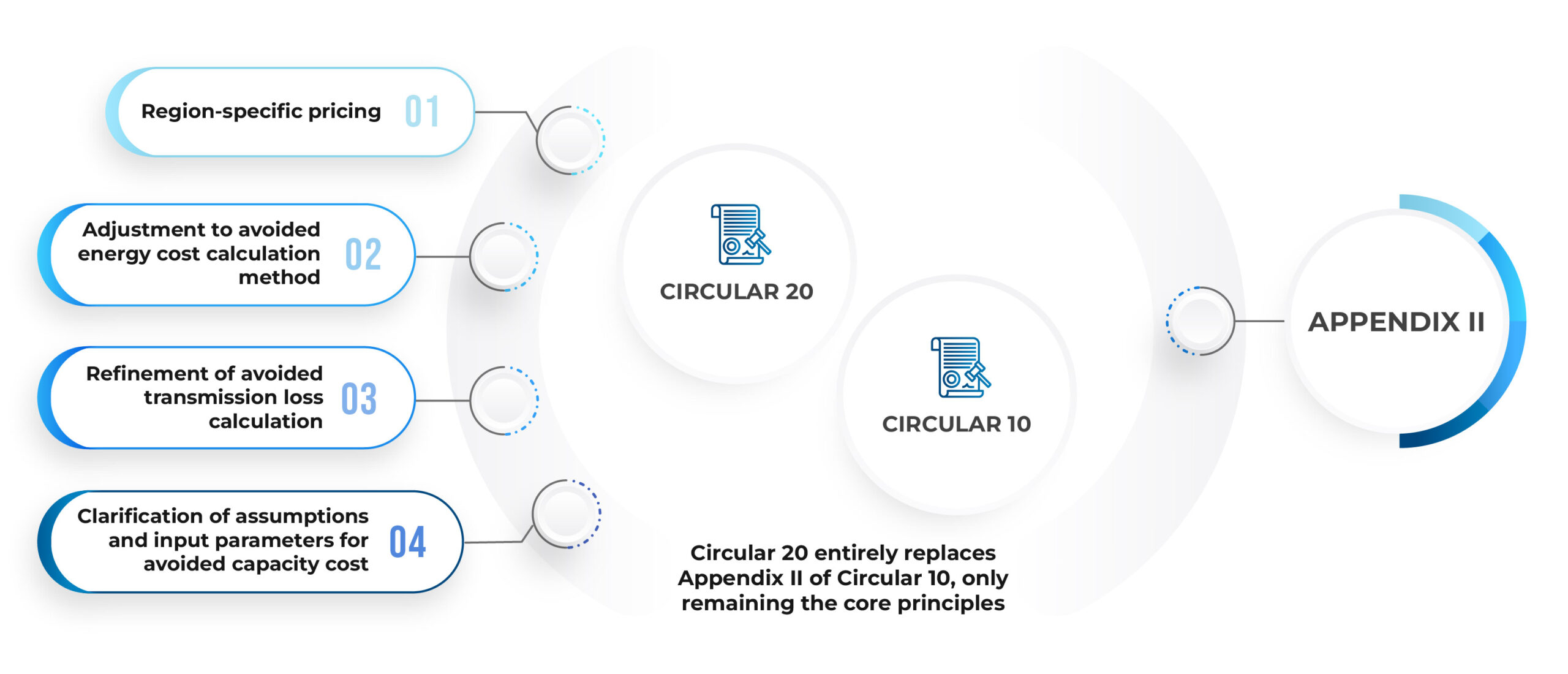
Circular 20 entirely replaces Appendix II of Circular 10, reconstructing the ACT calculation methodology. While the core principles of the ACT mechanism remain intact, notable amendments include:
(i) Implementation of region-specific pricing mechanisms
A principal amendment in Circular 20 is the transition from a uniform nationwide approach to a regional power system methodology. Consequently, rainy and dry seasons are independently established for the North, Central, and South, replacing the previous homogeneous national timeframe. Corresponding to the distinct seasonal periods in each region, varying tariff rates will apply for peak, normal, and off-peak hours.
This regionalization aims to better capture regional hydrological patterns and operational realities, particularly for small hydropower plants, serving as the foundation for determining components of avoided tarrif tailored to each region.
(ii) Adjustment to the avoided energy cost calculation method
Circular 20 revises the avoided energy cost calculation method by updating input data and the selection criteria for reference power sources within the system. Certain categories of power plants are explicitly excluded from the calculation dataset to ensure the results accurately mirror the marginal cost of the power system.[6]
In addition, Circular 20 also supplements a price adjustment mechanism via coefficient k (not exceeding 1.0), to be determined annually by the MOIT. This mechanism provides regulator with an additional tool to modulate the applicable tariff in response to prevailing operational conditions and policy directions over time.
In addition, Circular 20 incorporates a tariff stability safeguard, stipulating that the average avoided energy price promulgated for the ensuing year (Year N) shall not fall below the average avoided energy price of the preceding year (Year N-1).[7] This regulation aims to enhance revenue predictability and mitigate policy volatility risks for investors.
(iii) Refinement of the avoided transmission loss calculation
Circular 20 amends the method of calculating the value of avoided transmission loss, shifting from the previously homogenized relative calculation to a framework aligned with the specific transmission profiles of each region.
Variables relating to power flows on the inter-regional transmission network, notably the 500 kV system, are integrated into the computational model.[8] This integration provides a more precise reflection of the benefits accrued by the power system when electricity is generated proximate to load centers, thereby reducing inter-regional transmission demands.
In essence, avoided transmission costs represent the transmission expenditures and losses the power system averts when generation is optimally situated, diminishing the need to import power from disparate regions. Both Circular 10 and Circular 20 enforce a “reward-penalty” adjustment mechanism predicated on a power source’s impact on the inter-regional transmission grid. Accordingly, generation sources that alleviate transmission grid loads or curb power losses receive an added value (reward) to their avoided transmission component, whereas sources that exacerbate inter-regional transmission demands may face a downward adjustment (penalty).
For example, a RE plant in the North supplying electricity to local loads during a period of regional power shortages mitigates the need to transmit power from Southern plants to the North, therefore, it will be rewarded with an avoided transmission loss premium.
(iv) Clarification of assumptions and input parameters for avoided capacity cost
In addition to avoided energy costs and avoided transmission losses, the ACT mechanism features an “avoided capacity cost” component, reflecting the value a power source provides by negating the need for the system to invest in or dispatch new generation units to meet peak load demand. Essentially, this is the value the power system “avoids” expending due to the availability of standby capacity from small RE plants.
Pursuant to Appendix I of Circular 10, the avoided capacity cost is exclusively applicable during dry season peak hours, as this is when the power system typically endures maximum capacity constraints, with high load demands juxtaposed against diminished generation capabilities from numerous sources, particularly hydropower. Consequently, generation capacity dispatched during these timeframes holds paramount value for the system, entitling it to the avoided capacity cost component alongside standard energy tariffs.
Circular 20 continues to utilize Combined Cycle Gas Turbine (CCGT) power plants as the reference substitute source for determining avoided capacity costs[9]. However, the assumptions and input parameters are more structurally standardized and elucidated than prior regulations.
Parameters including reference capital expenditure, debt-to-equity ratios, cost of capital, international reference interest rates, project economic lifespans, and associated financial variables are now explicitly prescribed. Standardizing these assumptions bolsters transparency and strengthens the predictability of the pricing mechanism..
Collectively, these methodological adjustments underscore the MOIT’s endeavor to ensure the ACT mechanism more closely approximates the actual costs bypassed by the power system upon integrating generation from small RE sources.
However, it must be emphasized that the ACT remains an administrative pricing mechanism calculated via state regulatory formulas, rather than a price formed entirely through pure market signals or competitive bidding mechanisms.
4. Clarification on the term of power purchase agreements (PPAs)
Circular 20 refines several clauses within the template PPA to explicitly clarify inter-party liabilities upon contract expiration and the protocol for force majeure events during project operations.
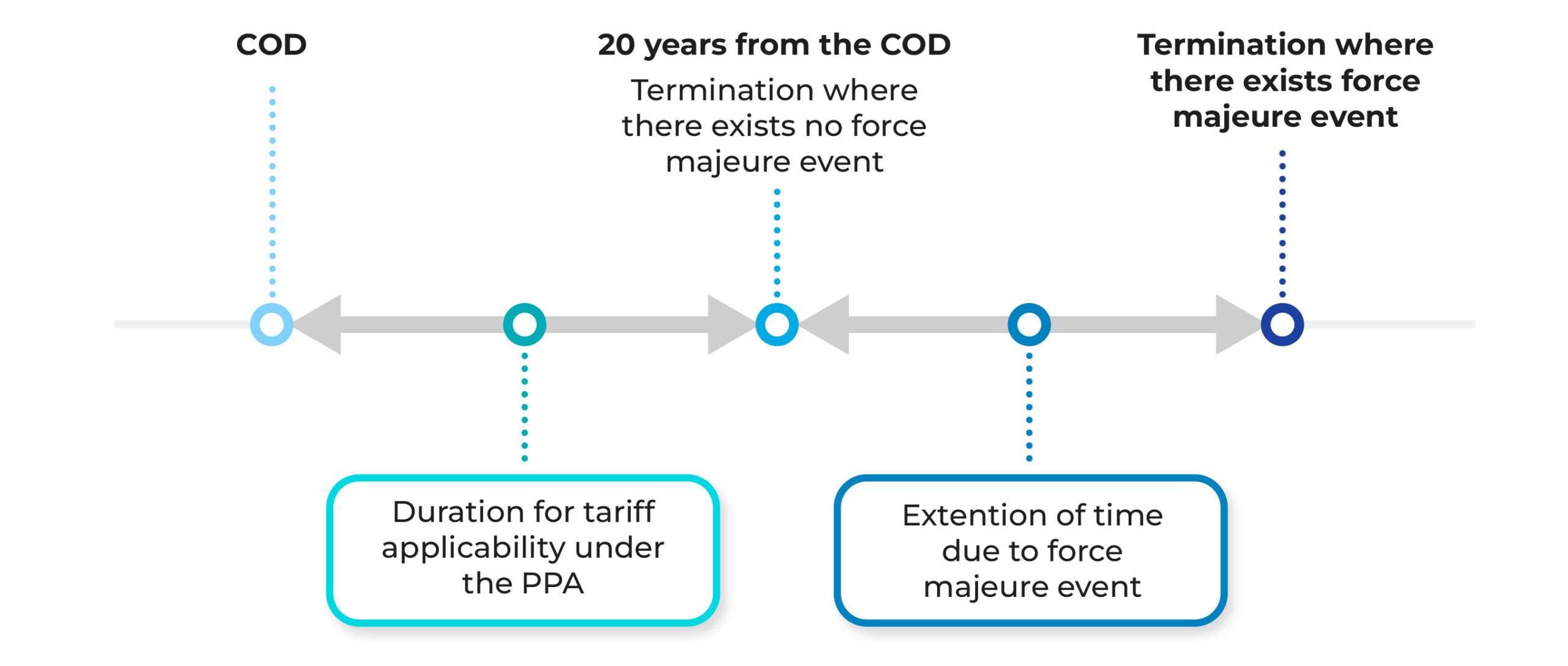
Accordingly, the PPA continues to have a term of 20 years from the date of commercial operation (COD). However, Circular 20 introduces a stipulation that upon contract expiration, the parties remain obligated to fulfill outstanding duties, including invoice formulation and reconciliation, execution of payments, and any obligations manifesting prior to the termination date.[10] This regulation contributes to circumscribing disputes related to the final accounting and settlement of long-term PPAs.
Moreover, Circular 20 supplements procedures governing scenarios where a plant must cease or curtail generation due to Force Majeure events such as typhoons, floods, earthquakes, landslides, or other natural disasters. Under the new framework, the power purchaser and seller may mutually agree to extend the contract execution period correlative to the duration affected by the force majeure event.[11]
This represents a salient amendment for small hydropower and RE projects situated in regions perpetually susceptible to natural disasters that disrupt generation activities. Nonetheless, developers must be cognizant that the aggregate duration for tariff applicability under the PPA, inclusive of any granted extensions, remains strictly capped at 20 years post-COD
5. Transitional provisions to ensure stability for investors
Circular 20 embeds transitional provisions designed to safeguard stability for projects currently operational or under development. Accordingly, small hydropower plants that have PPAs executed under the ACT mechanism prior to the effective date of Circular 20 will continue to operate under the rainy/dry season categorizations and regional tariff applicability stipulated within their extant contracts.[12]
For projects possessing investment approval that may subsequently fail to satisfy the revised criteria for small hydropower plant scales, Circular 20 permits these projects to elect either to retain the ACT mechanism or to participate in the competitive power market, contingent upon fulfilling specific transitional prerequisites. However, once a plant formally opts to enter the competitive power market, it is strictly prohibited from reverting to the ACT mechanism. ipate in the electricity market, the plant will not be allowed to return to apply the ACT mechanism.[13]
These provisions serve to mitigate legal exposure for projects undergoing development or those that have finalized financial close predicated on previous financial assumptions.
Conclusion
While the ACT mechanism continues to offer distinct advantages regarding simplicity, predictability, and diminished transaction costs for small hydropower projects, Circular 20’s integration of the adjustment coefficient k for avoided energy costs indicates that future ACT tariffs may be subject to heightened regulatory intervention. Overall, the amendments within Circular 20 are concentrated on refining the ACT tariff calculation methodology to align more rigorously with empirical power system operations, concurrently supplementing PPA and transitional frameworks to fortify transparency, predictability, and stability for existing projects.
From a market vantage point, the ACT and the negotiated tariff mechanism should not be viewed as absolute substitutes, but rather as optimal alternatives customized for distinct project profiles. For small hydropower projects prioritizing cash flow stability and revenue predictability, the ACT remains a compelling framework. Conversely, projects exhibiting superior generation efficiency and targeting augmented revenue yields may find direct tariff negotiations or power market participation economically advantageous, albeit accompanied by elevated risk profiles and volatility.
Accordingly, developers are advised to conduct concurrent comparative evaluations of the ACT mechanism against power market participation or prevailing direct negotiation frameworks to ascertain the optimal structural model for each specific project. Amidst the progressive maturation of Vietnam’s competitive power market, the ACT is projected to retain its status as a vital support mechanism for small-scale RE sources, functioning as a strategic bridge facilitating the gradual transition toward fully market-driven electricity pricing mechanisms in the future.
Managed by
 |
Tran Pham Hoang Tung I Partner
Phone: (84) 901 334 192 Email: tung.tran@cnccounsel.com |
 |
Tran Anh Thy I Asssociate
Phone: (84) 347 924 900 Email: thy.tran@cnccounsel.com |
Contact Us
For further information, please contact:
CNC Vietnam Law Firm
Address: The Rise Building, 2A1 Nguyen Thi Minh Khai, Sai Gon Ward, Ho Chi Minh City, Vietnam
Phone: (84) 28-6276 9900
Hotline: (84) 916-545-618
Email: contact@cnccounsel.com
Website: cnccounsel
We would be delighted to welcome you at CNC’s office, where you’ll have the opportunity to consult with the lawyer best suited to your circumstances. Of course, if you are unable to meet in person, simply email us via contact@cnccounsel.com or call us via (+84-28) 6276 9900.
It would be a pleasure for CNC’s lawyers to help you build a solid legal foundation, thus ensuring the success and sustainable development of your project!
Disclaimers:
This article has been prepared and published for the purpose of introducing or informing our Clients and potential clients on information pertaining to legal issues, opinions and/or developments in Vietnam. Information presented in this article does not constitute legal advice of any form and may be adjusted without advance notice.
—————————————
[1] Article 2.10 of Circular 10.
[2] Article 1.1(a) of Circular 20 amends Article 2.10 of Circular 10.
[3] Article 2.7 and Article 2.8 of Circular 10.
[4] Article 1.1(a) of Circular 20.
[5] Article 1.1(b) of Circular 20.
[6] Point a, Section 1, Appendix II of Circular 20.
[7] Point h, Section 1 Appendix II of Circular 20.
[8] Section 2 Appendix II of Circular 20.
[9] Section 3 Appendix II of Circular 20.
[10] Article 1.3 of Circular 20.
[11] Article 2.3 of Circular 20.
[12] Article 2.4 of Circular 20.
[13] Article 2.2 of Circular 20.