



Bidding in 2025: The significance of legal consulting
Introduction
Is legal consulting truly necessary in the bidding process? Are tender documents truly so complex that they require a separate consulting unit? These are the questions that many enterprises, especially contractors who have only joined the market recently, often encounter upon their participation in a highly competitive and strategic bidding.
In this article, CNC shall clarify the indispensable role of the bidding consulting, as well as the reasons why the correct understanding and handling of tender documents are vital to increasing the enterprise’ success rate of bidding as well as the mitigation of legal risks throughout the bidding process.
Definition of bidding consulting
Bidding is the process to select the most appropriate unit based on the criteria set out by the procuring party to perform certain works. Accordingly, the procuring party[1] shall enter contracts with contractors for consulting services, non-consulting services, provisions of goods, and construction. Or enter contracts with investors for implementation of business investment projects. The process must also comply with the principles for ensuring competition, fairness, transparency, economic efficiency, and accountability in accordance with the laws on Bidding.[2]
From the above definition, it could be understood that bidding consulting is the legal consulting services for enterprises and organizations who participate in the bidding, covering from the preparation phase to the conclusion of the contract. The primary objective of bidding consulting is to optimize the success rate in the biddings while minimizing the unnecessary risks that enterprises and organizations could be exposed to.
Furthermore, a distinction should be made between bidding consulting and bidding for consulting services as people are often confused between these two concepts. Bidding consulting are legal consulting services for the bidding process, while bidding for consulting services is the bidding process to select the contractor who shall enter into consulting services contract, which often include works such as: preparation and assessment of the planning report; economic – technical assessment report; provision of advice on activities related to bidding, inspection, evaluation, supervision, project management, financial arrangements, etc.[3]
It should be noted that, solid understanding of the above concepts would help employer, procuring party and even contractors to have clear plans, thereby mitigating legal risks while also opening up opportunities for participation in healthy, transparent, and efficient competition in both procurement activities as well as projects funded by sources outside of the state budget.
The role of the bidding consultant
In the bidding “battlefield”, a single small mistake could cause unimaginable consequences. For example, mistakes in the fulfillment of the technical standards, provision of inaccurate information or insufficient and unclear proofs of credentials could be causes for elimination in the preliminary round by the procuring party.
During the pre-bidding phase, the bidding consultant holds the role of “legal architects” who shall aid the procuring entity in the preparation of tender documents and organization of contractor selection. On the other hand, for contractors, the bidding consultant serves as the “barrier and guiding post” that helps prevent the bidding party from committing mistakes while also allow the contractors to optimize their legal leverage during the bidding process.
Furthermore, bidding consulting also plays an important role in the post-bidding phase, especially when there are petitions, claims, or disputes. A consulting team that has in-depth expertise in bidding laws and experience in contract implementation would be tremendously helpful to enterprises in their protection of legitimate rights in a convincing manner before the competent authorities or in the negotiation process.
As such, the neglection of the role of bidding consulting would simply put one’s own enterprises, organization into a passive position that is prone to the risks entailed with the bidding “battlefield”.
From the procuring party’s perspective: Different from the assumptions, tender documents are rather complex
Due to its complexity, tender documents are often referred to as a “test” on the project/package given by the procuring party. To be specific, the tender documents shall specify the requirements of a project, package, business investment project, which all shall serve as the bases for the procuring entity to “score” the bidding documents.[4] The information include the requirements on experience, capacity; technical prowess, finance, schedule, and other necessary information.[5]
Moreover, due to their complexity, extensive structure, and highly technical legal nature, the ability to review, understand, and analyze bidding documents requires a high level of legal expertise. Such expertise extends beyond procurement law and encompasses related areas such as contract law, construction law, land law, and investment law. In certain cases, it may also require familiarity with international regulations and standards, particularly where the project is financed by ODA funds or adopts FIDIC contract forms.
At CNC, we do more than provide legal advice on the preparation of tender documents in compliance with Vietnamese and international regulations. We are also among the pioneers in delivering FIDIC Contract Management training programs. Our training courses, ranging from introductory to advanced levels, equip employers and procuring parties with the legal knowledge and practical skills necessary to identify, manage, and mitigate risks from the earliest stages.
Benefits of the FIDIC Contract Training Course at CNC:
- Learn from industry experts with extensive hands-on experience in dispute resolution and contract advisory services for large-scale construction and infrastructure projects.
- Comprehensive yet practical course materials that combine international best practices with real-world case studies and practical scenarios drawn from the Vietnamese market.
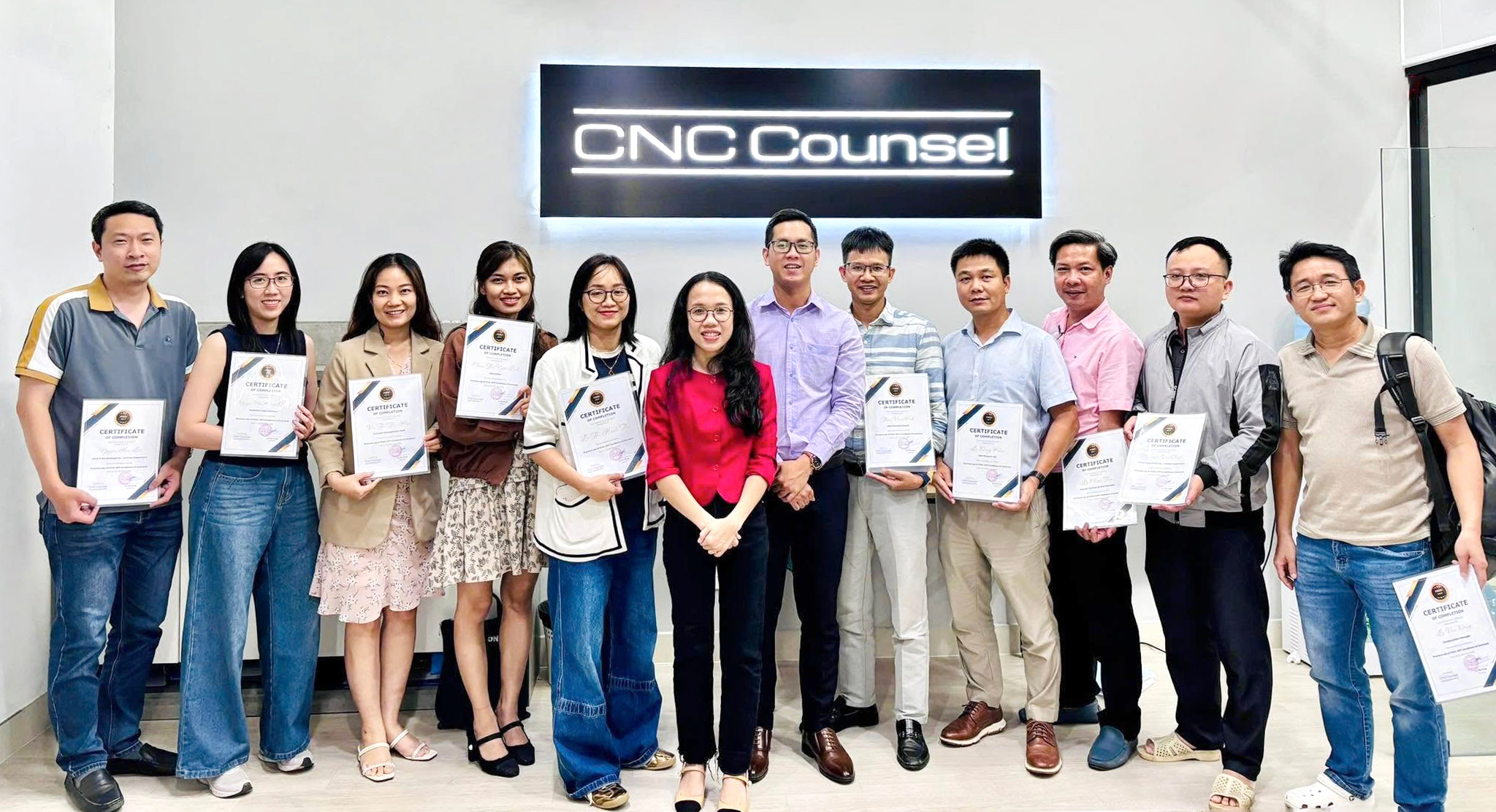
- Fellow participants are from Coteccons, Unicons and other leading construction and engineering companies, thus forming a high-quality environment for learning.
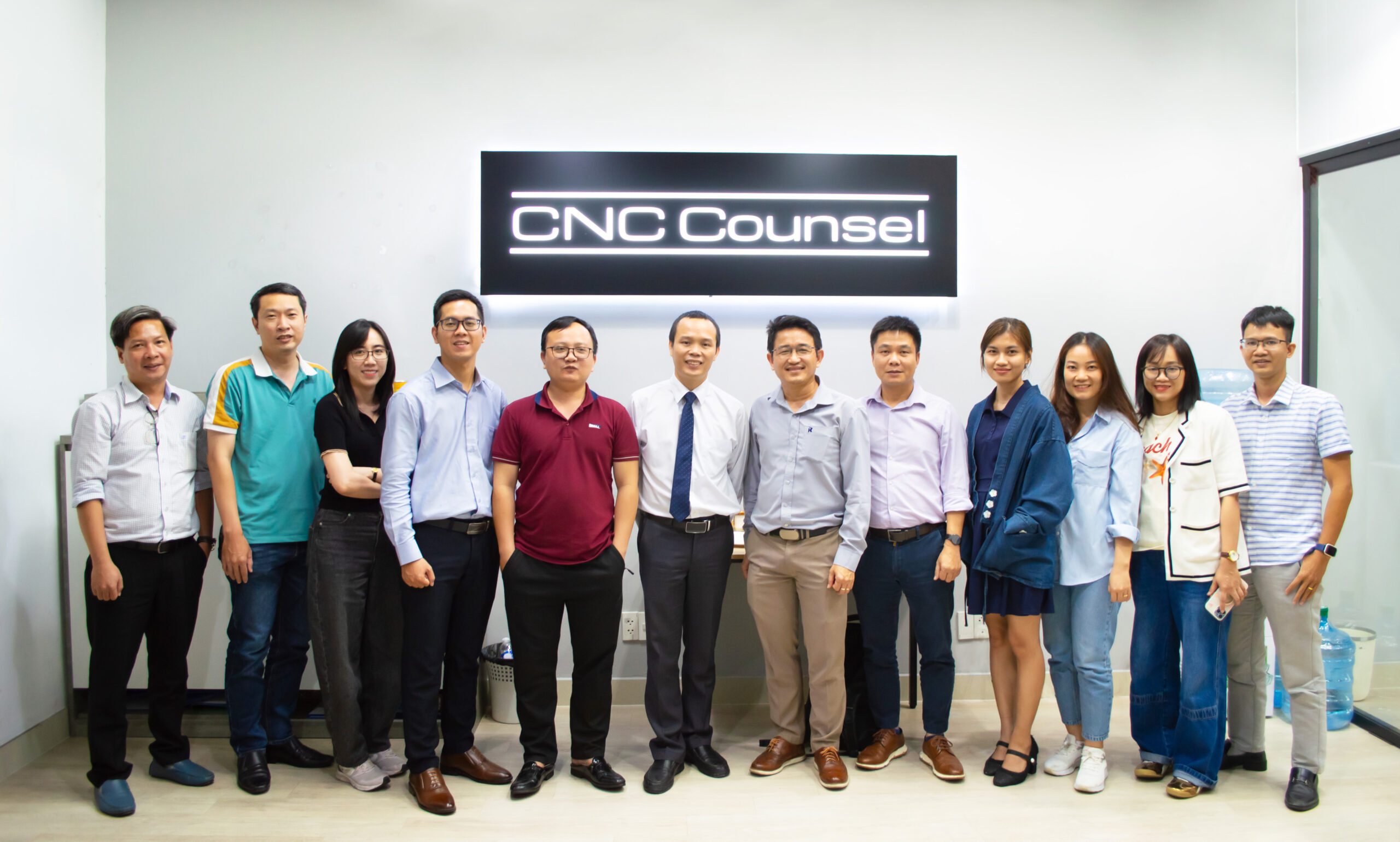
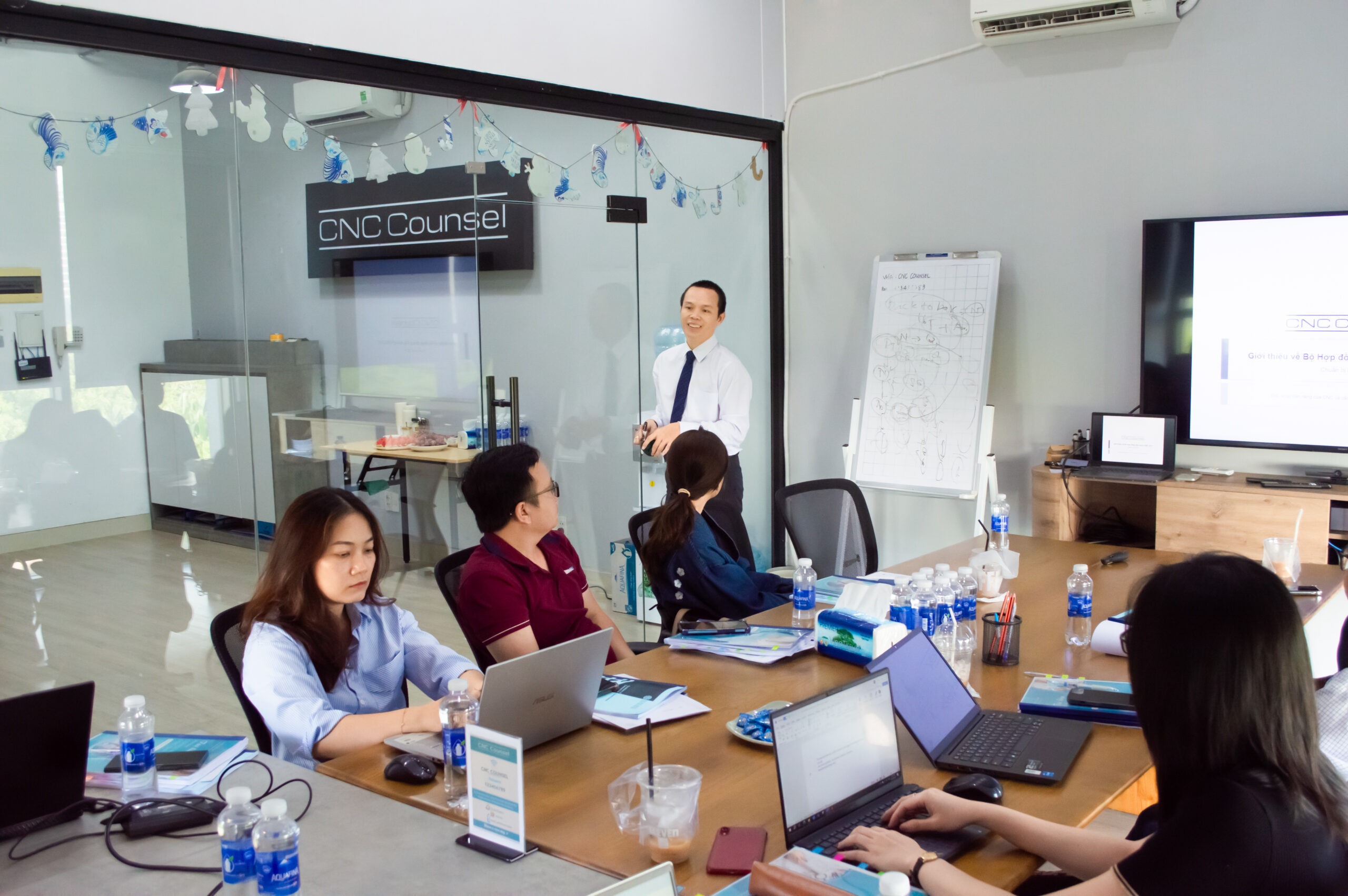
Mr. Le The Hung – Managing Partner of CNC Counsel provide thorough and passionate instructions at the training course
Learn more about the training course: https://cnccounsel.com/tin-tuc/khoa-hoc-fidic-2017-hop-dong-xay-dung
From the Bidder’s Perspective: The bidding document is the “key” that decide success or failure.
Alongside the tender documents, the bidding document may be viewed as the bidder’s or investor’s “solution” presented to the procuring party so that the former could participate in a specific procurement package.[6] It is the critical factor that directly determines whether a bidder will successfully pass the evaluation stage, be considered responsive to the procurement requirements, and ultimately achieve the primary objective of winning the contract.
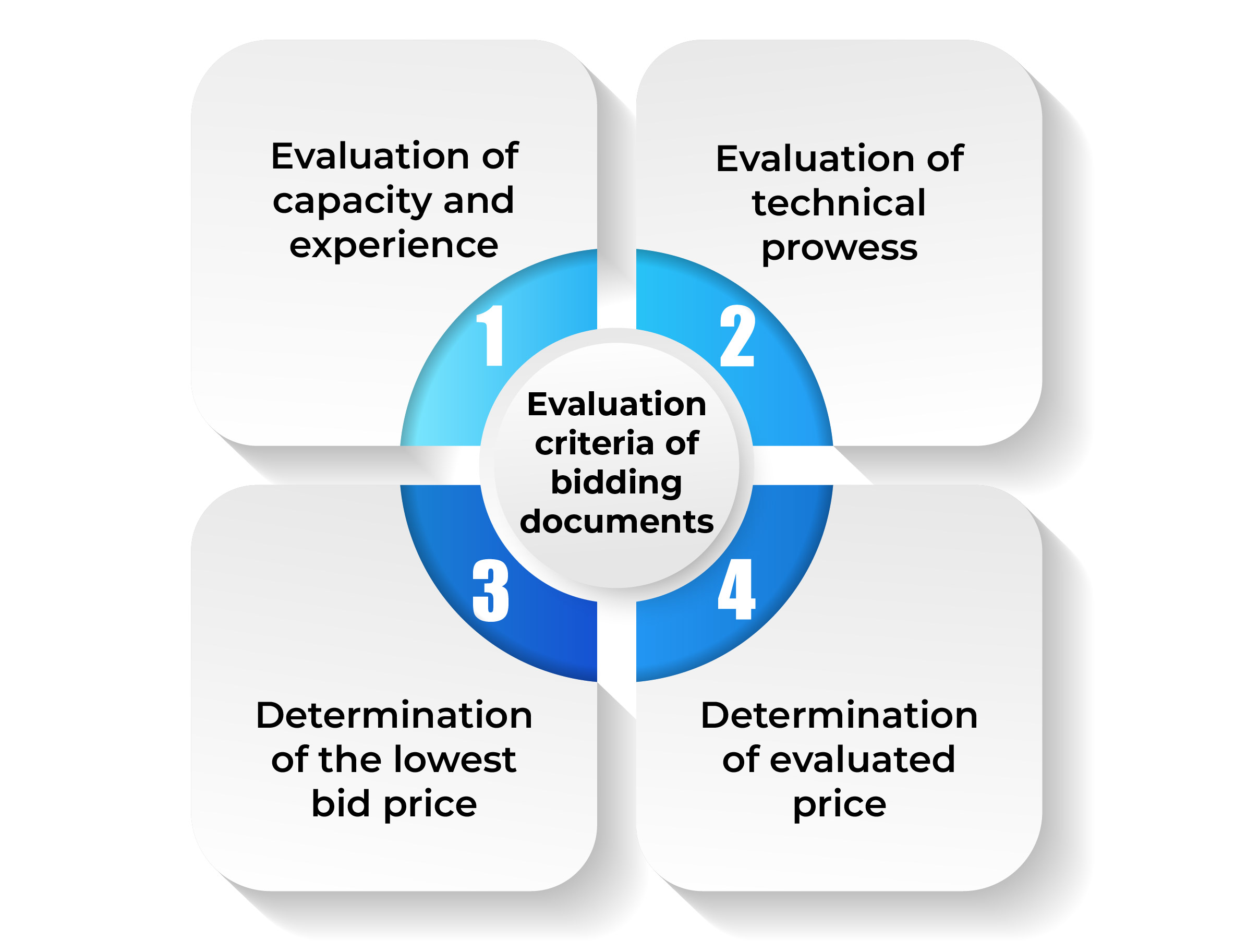
However, preparation of bidding documents that are complete, accurate, and fully compliant with all requirements set by the procuring party is far from straightforward. Bidding documents are typically evaluated based on a range of criteria, including: (i) Evaluation criteria for capacity and experience; (ii) technical evaluation criteria; (iii) the determination of the lowest bid price; and (iv) Criteria for the determination of evaluated price[7]. Given how strict the criteria are, the involvement of legal professionals with a thorough understanding of procurement regulations and practical industry experience can be invaluable. Such support helps bidders avoid unnecessary errors, safeguard their legitimate interests, and ultimately improve their competitiveness and prospects of winning the bids.
Why should CNC be chosen to be the legal consultant during the bidding process?
Procurement is not merely a technical or financial exercise—it is equally a legal one.
Complete, valid, and compelling bidding documents are often the first ticket that brings an enterprise closer to securing a contract award. To achieve that, the support of a specialized legal advisor such as CNC can provide the confidence, preparedness, and strategic advantage needed to navigate every stage of the procurement “battlefield”.
CNC takes pride in being a dedicated legal advisory firm with a team of lawyers and industry experts possessing extensive experience in procurement, construction contracts, public investment, and private-sector projects. We have assisted hundreds of clients and successfully handled complex procurement and tendering matters in both domestic and international contexts.
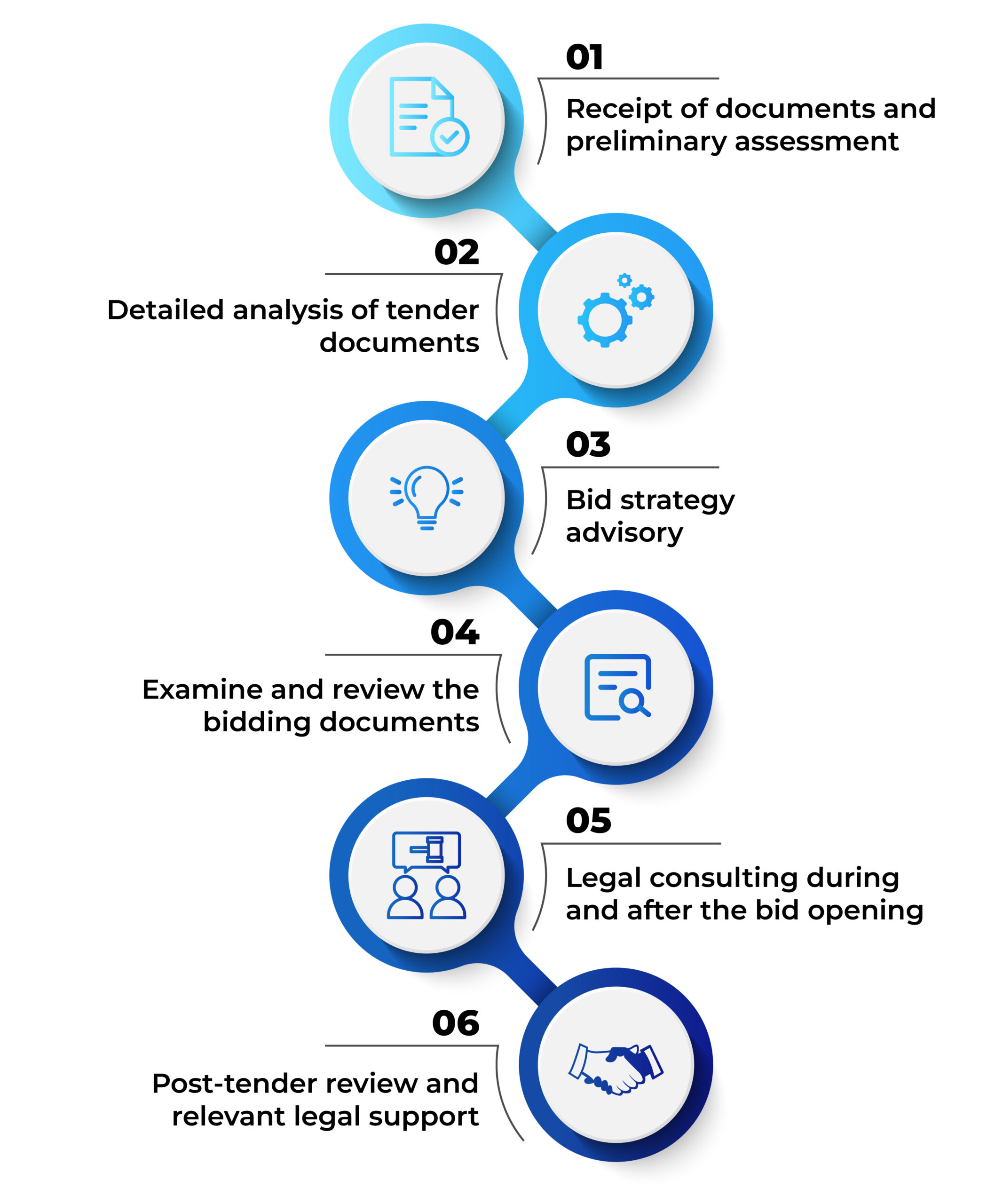
Process of Working with Clients at CNC includes the following steps:
- Receipt of documents and preliminary assessment
- Detailed analysis of tender documents
- Bid strategy advisory
- Examine and review the bidding documents
- Legal consulting during and after the bid opening
- Post-tender review and relevant legal support
Managed by
 |
Trinh Minh An | Legal Intern
Phone: (84) 28 6276-9900 Email: an.trinh@cnccounsel.com |
Contact
For more information, please contact:
Address: The Sun Avenue, 28 Mai Chi Tho, Binh Trung Ward, Ho Chi Minh City, Vietnam
Phone: 028 6276 9900
Hotline: 0916 545 618
Email: contact@cnccounsel.com
Website: cnccounsel
———————————————————
[1] Article 4.1, Law on Bidding 2023
[2] Article 4.8, Law on Bidding 2023
[3] Article 4.4, Law on Bidding 2023
[4] Article 4.21, Law on Bidding 2023
[5] Article 44.1, Law on Bidding 2023
[6] Article 4.23, Law on Bidding 2023
[7] Article 24.4, 24.5, 24.6 of Decree No. 24/2024/ND-CP