



The Law on E-Commerce 2025 will officially take effect from 1 July 2026, marking a significant development in the legal framework governing e-commerce activities in Vietnam. Instead of focusing solely on the regulation of individual transactions, the Law adopts a more comprehensive approach to the governance of the entire e-commerce ecosystem, with particular emphasis on enhancing business transparency, clarifying the responsibilities of stakeholders, and strengthening consumer protection.
Notably, a number of new provisions will, for the first time, directly regulate live stream selling, affiliate marketing, seller identification, the responsibilities of e-commerce platforms, and cross-border e-commerce platforms. These are all significant changes expected to have a material impact on businesses, sellers, and digital platforms from 1 July 2026.
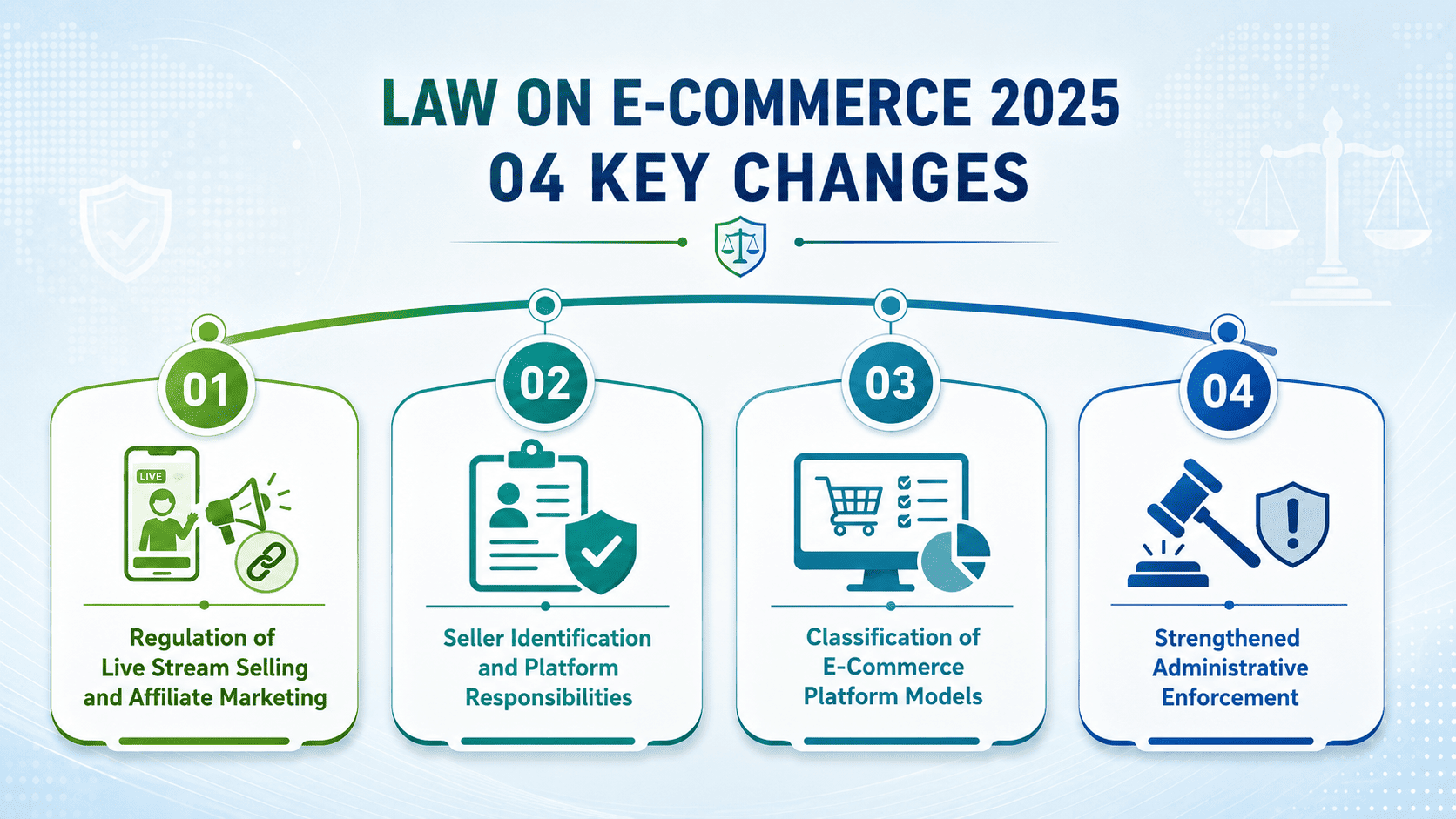
Heavier Regulations Imposed on Live Stream Selling and Affiliate Marketing Activities
The Law on E-Commerce 2025 introduces, for the first time, a dedicated legal framework governing live stream selling and affiliate marketing, with a view to enhancing transparency and protecting consumer rights.
The introduction of these provisions reflects a broader shift in Vietnam’s regulatory approach, moving beyond the regulation of electronic transactions to overseeing the entire digital marketing and sales process.
As live stream commerce and affiliate marketing continue to emerge as major sales channels, the establishment of legal responsibilities for participating stakeholders is expected to improve market transparency and strengthen consumer protection.
Seller Identification and Responsibilities
In addition to strengthening the regulation of live stream selling and affiliate marketing, the Law on E-Commerce 2025 also introduces a number of provisions aimed at enhancing transparency in the activities of sellers in the digital environment.
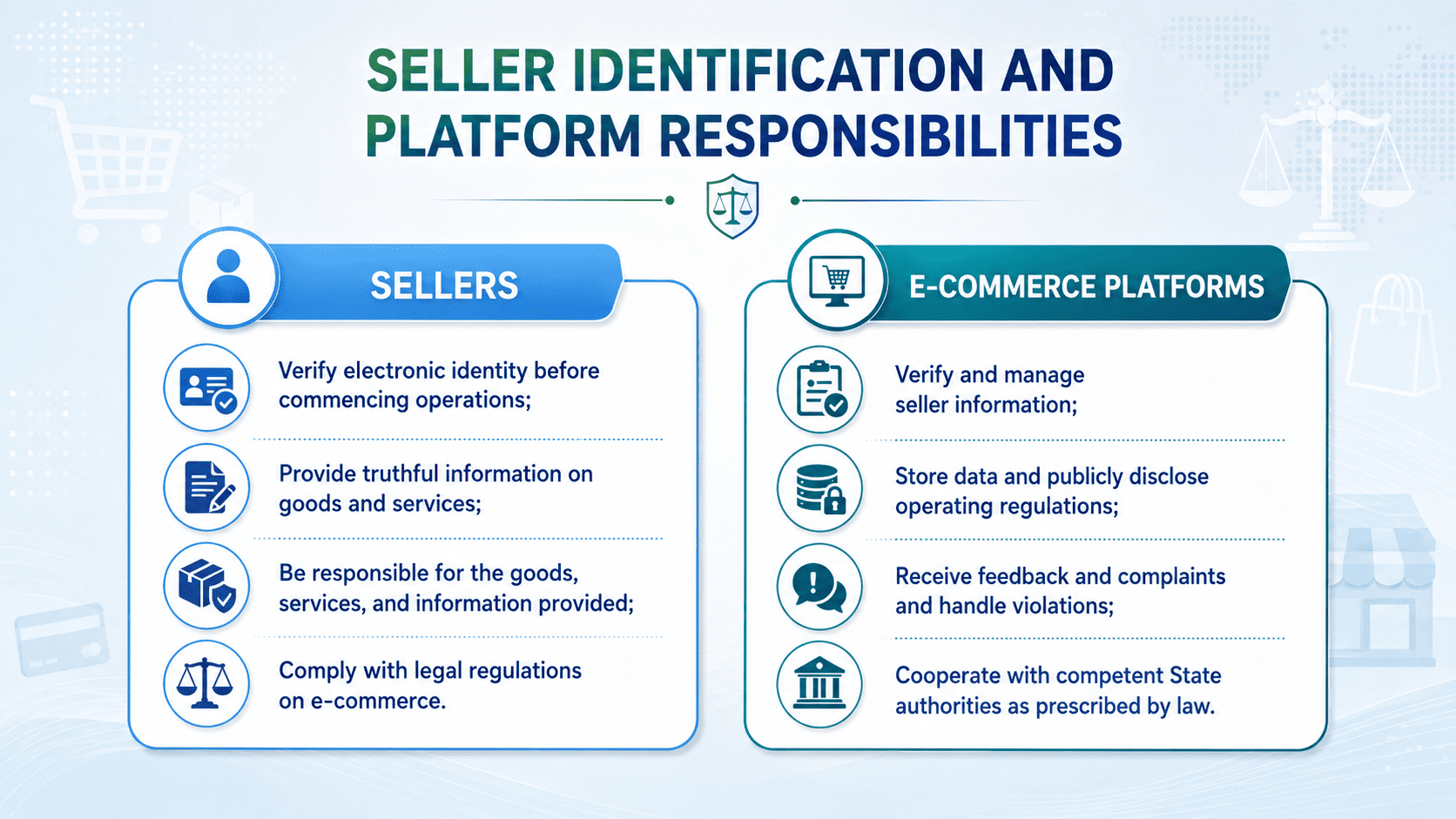
Accordingly, the new provisions focus on clearly identifying sellers from the time they join an e-commerce platform, while simultaneously expanding the responsibilities of e-commerce platform operators, particularly cross-border e-commerce platform operators.
Specifically, sellers and e-commerce platform operators have the following responsibilities:
Classification of E-Commerce Platform Models
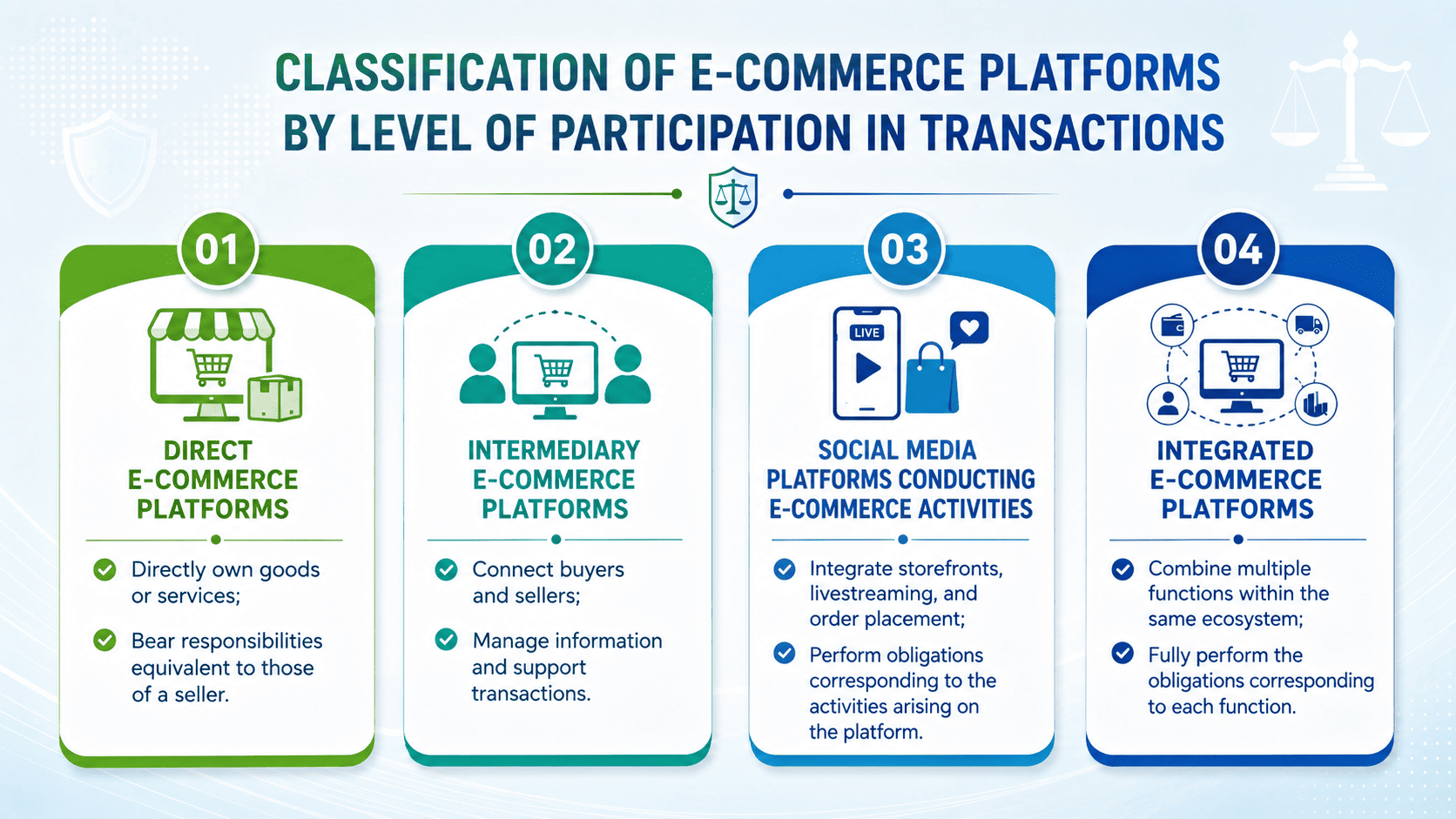
One of the fundamental reforms introduced by the Law on E-Commerce 2025 is the classification of e-commerce platforms into distinct models, instead of applying a uniform regulatory mechanism as previously done.
The development of the digital economy has given rise to various business models with very different levels of participation in, and control over, transactions. While some platforms directly sell goods and services to consumers, others merely act as intermediaries or combine multiple functions within the same ecosystem. Applying the same legal mechanism to all models is no longer appropriate and may reduce the effectiveness of State management.
On that basis, the Law on E-Commerce 2025 classifies e-commerce platforms into four models and determines the corresponding legal responsibilities for each model, thereby providing a basis for allocating obligations in line with the role and degree of control exercised by each stakeholder.
Strengthened Administrative Enforcement in the Digital Environment
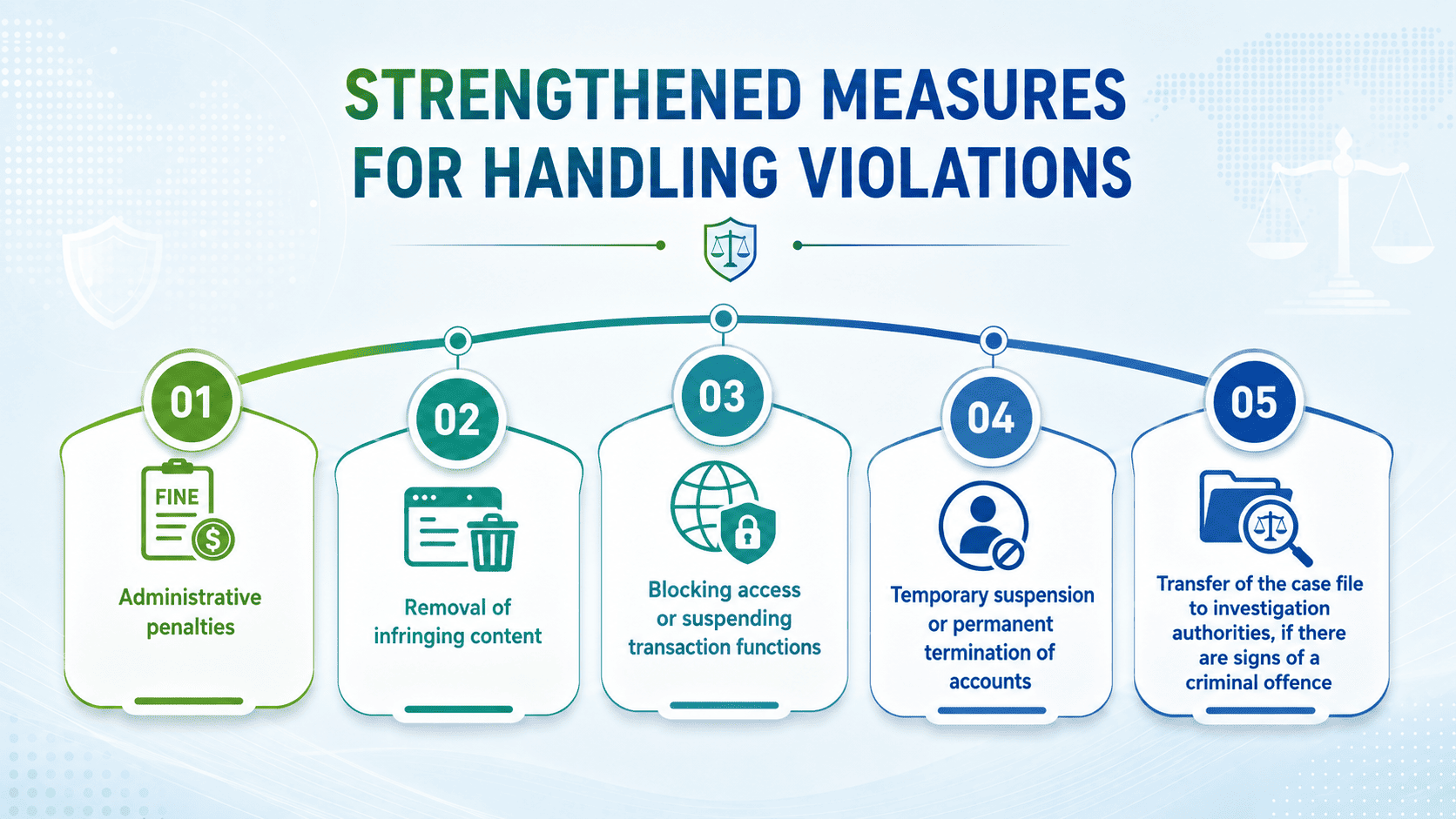
In addition to introducing new obligations for stakeholders participating in e-commerce activities, the Law on E-Commerce 2025 also strengthens enforcement effectiveness by clearly providing sanctions for violations, specifically as follows:
First, pursuant to Article 39, organisations and individuals committing violations may, depending on the nature, severity, and consequences of the violation, be subject to administrative penalties in accordance with applicable laws.
Second, competent authorities may also apply measures such as blocking access, suspending transaction functions of e-commerce platforms, removing unlawful content, temporarily suspending or permanently terminating violating accounts, requiring the implementation of remedial measures, and ordering compensation for affected parties.
Third, where a violation exhibits signs of a criminal offence, the relevant case file will be transferred to competent authorities for consideration of criminal liability in accordance with applicable laws.
It can be seen that these provisions do not stop at administrative sanctions, but establish a comprehensive enforcement mechanism combining administrative penalties, remedial measures, civil liability, and criminal liability where necessary. This approach helps enhance regulatory deterrence, improve the effectiveness of law enforcement, and create a basis for building a more transparent, safe, and accountable e-commerce environment.
What CNC can support?
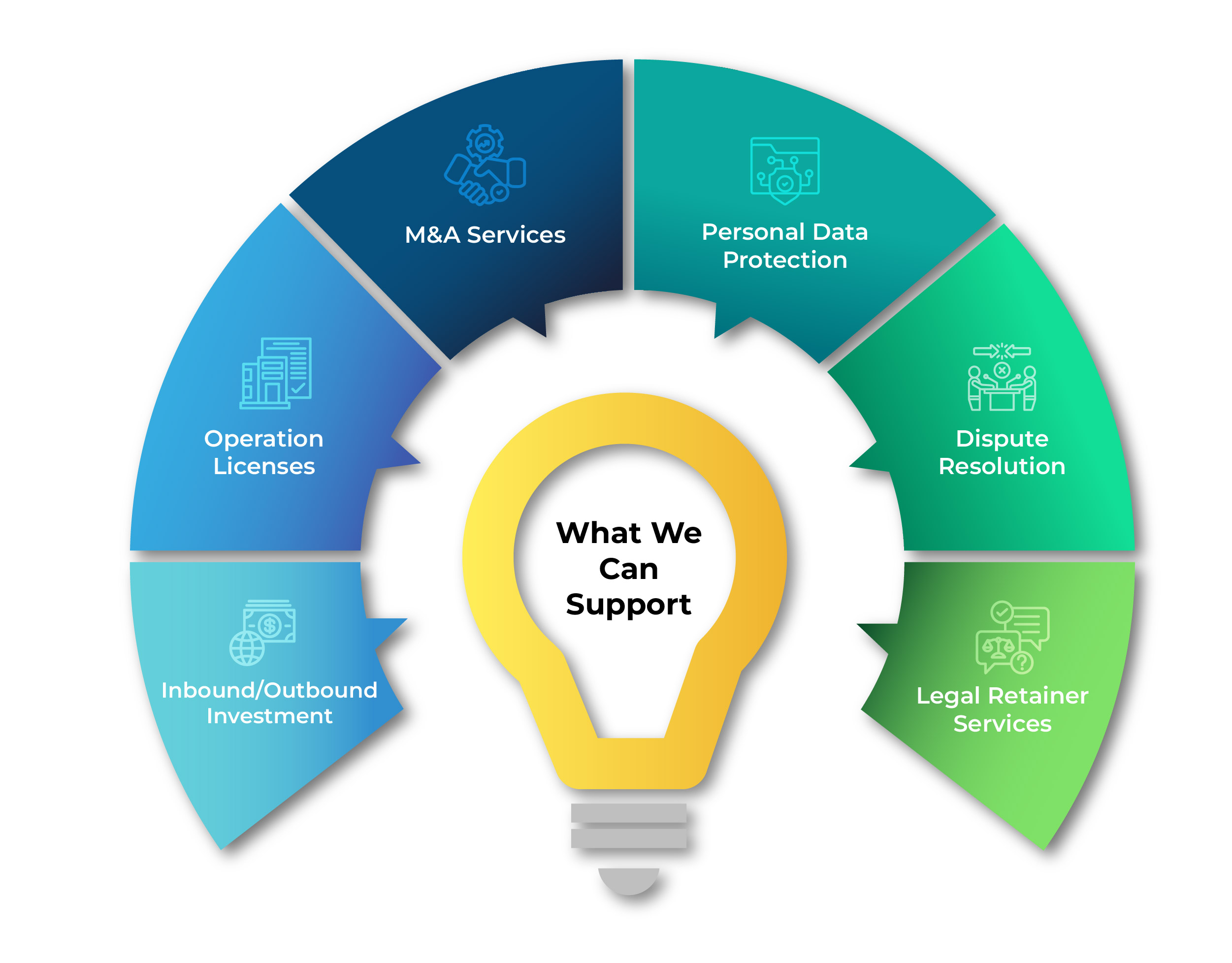
- Inbound & Outbound Investment: Company establishment, Investment registration, and Post-registration compliance such as tax, accounting, labor, insurance, payroll, and Outsourced Legal Department services;
- Business Operating Licenses: We assist in obtaining operating licenses for specific business activities including manufacturing, trading, services, e-commerce, healthcare, education, or food & beverage (restaurants), etc.;
- M&A Services: Conducting Legal Due Diligence Reports; Structuring transaction frameworks; Drafting and Negotiating transaction documents; Advising on competition law compliance, including economic concentration control filings and related approvals; Obtaining necessary approvals and licenses; and Post-closing support;
- Personal Data Protection: Support in complying with personal data protection regulations, including drafting and reviewing Data Protection Impact Assessments (DPIAs), Data Processing/Transfer Agreements, Privacy Policies, and other required documents under the Personal Data Protection Law (PDPL);
- Dispute Resolution: Court litigation and commercial arbitration (VIAC, SIAC, ICC); and
Please contact Mr. Chris Luong – Partner through the email address of chris.luong@cnccounsel.com or Ms. Ngan Nguyen – Partner through the email address of ngan.nguyen@cnccousel.com for prompt and timely support.
Managed by
 |
Nguyen Thi Kim Ngan I Partner
Phone: (84) 919 639 093 Email: ngan.nguyen@cnccounsel.com |
 |
Luong Van Chuong I Partner
Phone: (84) 938 04 7969 Email: chris.luong@cnccounsel.com |
 |
Trinh Minh An | Legal Intern
Phone: (84) 28 6276-9900 Email: an.trinh@cnccounsel.com |
Contact Us
For further information, please contact:
CNC Vietnam Law Firm
Address: The Rise Building, 2A1 Nguyen Thi Minh Khai, Sai Gon Ward, Ho Chi Minh City, Vietnam
Phone: (84) 28-6276 9900
Hotline: (84) 916-545-618
Email: contact@cnccounsel.com
Website: cnccounsel
————————
Copyright © CNC Counsel. All rights reserved. Ownership: This documentation and content (Content) is a proprietary resource owned exclusively by CNC Counsel. Use of this Content does not of itself create a contractual relationship, nor any attorney/client relationship, between CNC Counsel and any person. Disclaimers: The Content provided is for informational purposes only and may not reflect the latest legal or regulatory developments. Summaries of laws, regulations, and practices are subject to change. This Content does not constitute legal or professional advice for any specific situation and should not be relied upon as a substitute for reviewing and complying with applicable laws, rules, regulations, or official forms. Always seek legal counsel before making any decisions or taking any action based on this Content. CNC Counsel, along with its editors and contributing authors, make no guarantees regarding the accuracy of the Content and explicitly disclaim any liability for any consequences resulting from actions taken, allowed, or omitted, whether fully or partially based on any part of the Content. The Content may include links to external websites, and external sites may also link to it. CNC Counsel is not responsible for the content or functionality of any such external websites and disclaims all liability for any issues arising from their content or operation. Please note: Past results do not guarantee similar outcomes.